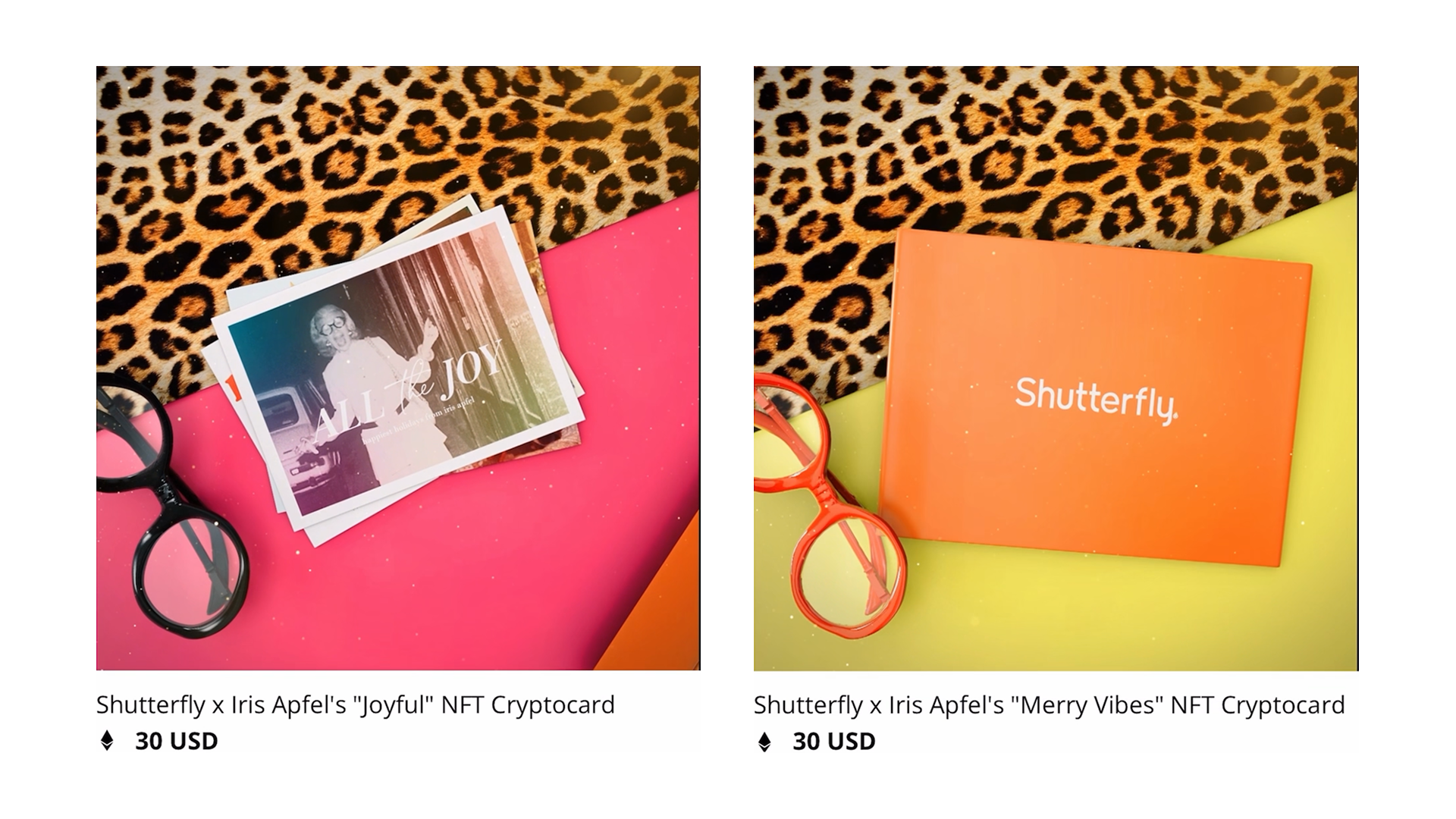
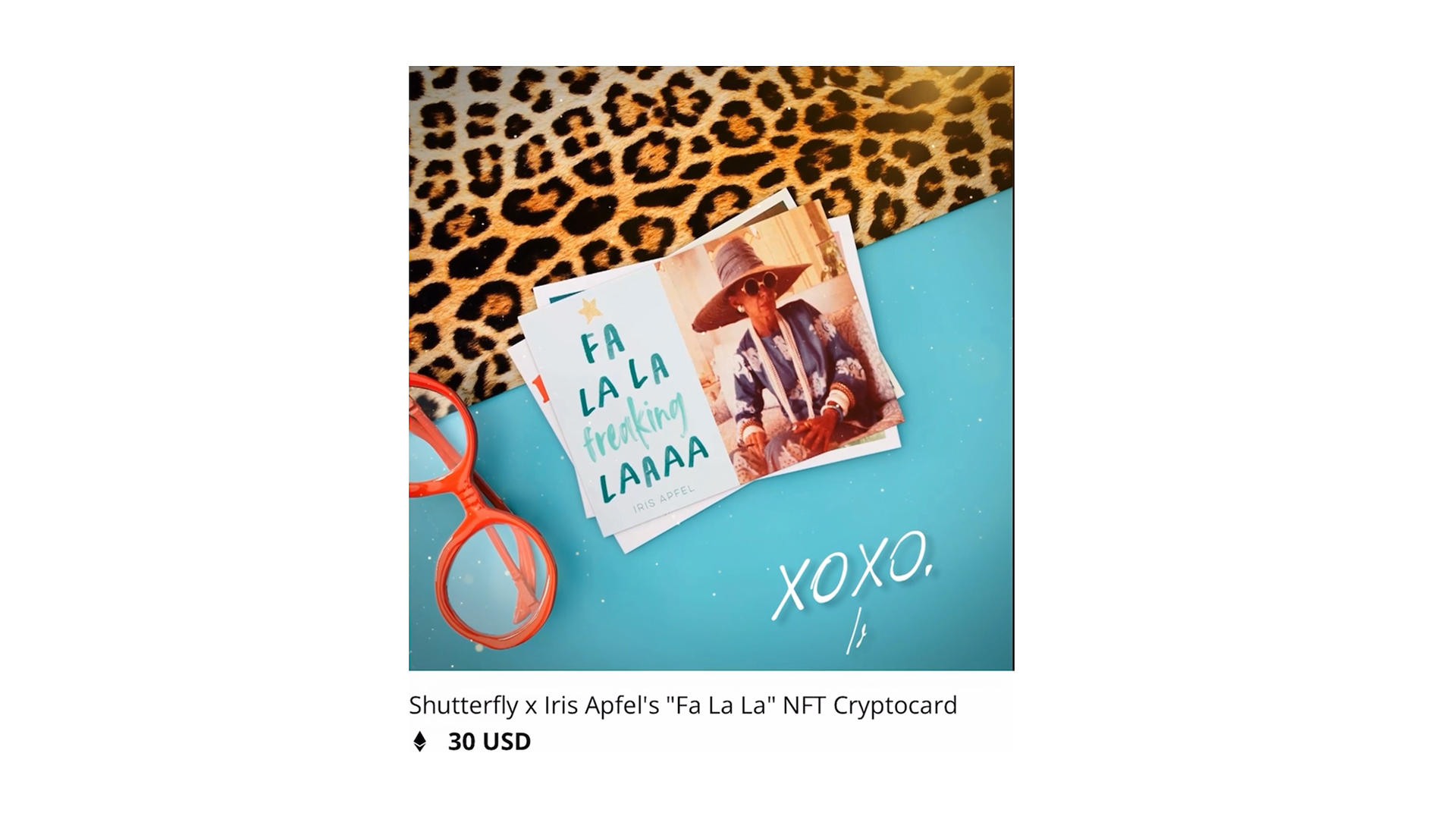
Iris Apfel × Shutterfly — NFTs as Holiday Gifts
Three holiday NFTs for the 100-year-old style icon — designed for gift-buyers who had never heard of a wallet. Bidding ran in dollars from $10 to $1,500, all of it to Boys & Girls Clubs of America.




Making NFTs feel like holiday gifts, not speculative assets.
Business
- Ride the NFT moment with Shutterfly's gift-buyer audience
- 100% of proceeds to Boys & Girls Clubs of America
User
- Zero crypto familiarity — no wallets, no gas-fee anxiety
- Receiving one must feel like a gift, not a token
Technical
- NFT minting infrastructure via Rare Circles
- Fiat checkout bridged to on-chain custody
Speculation vs. sentiment
Crypto culture optimizes for flipping; gift culture optimizes for meaning.
An icon's identity
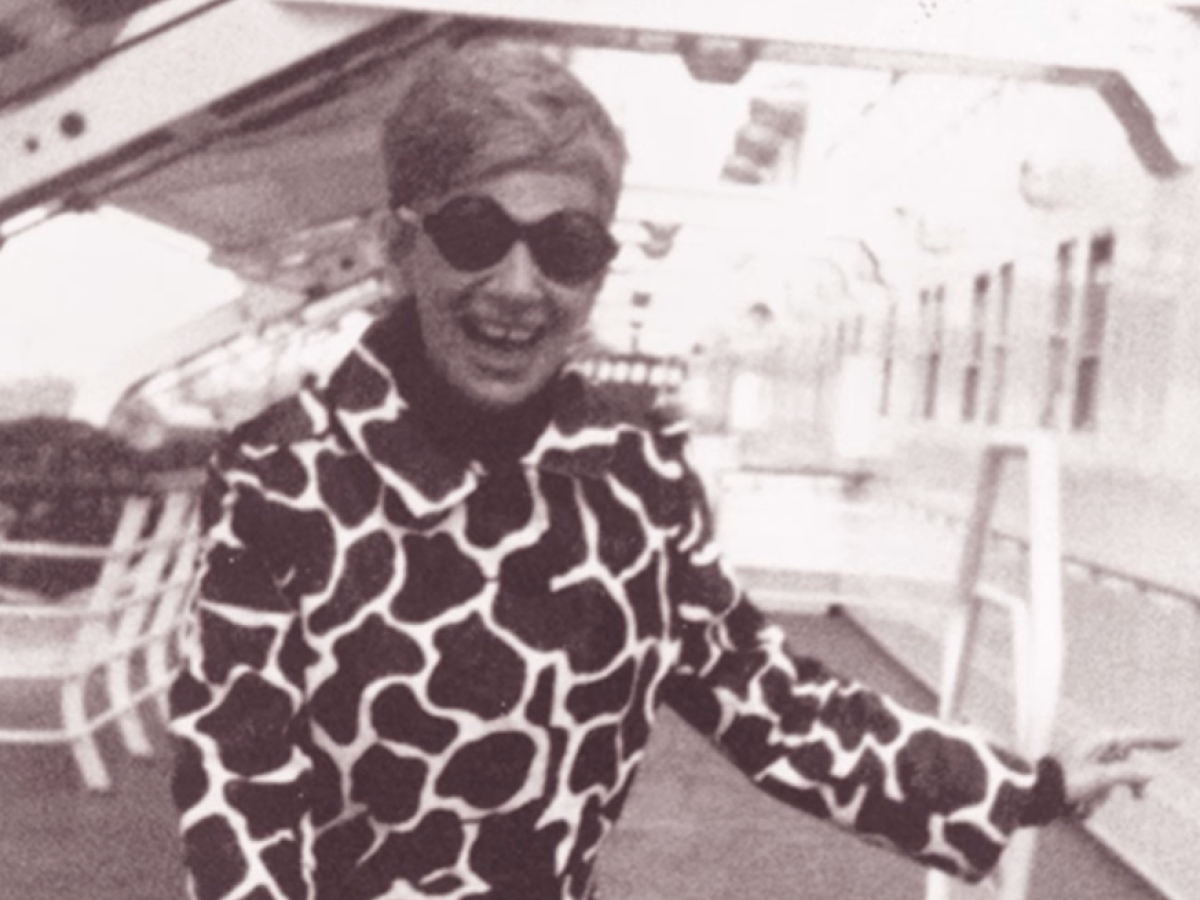
Iris's maximalism abstracted into digital art without losing authenticity.
First-timer onboarding
Wallet setup deferred until after the card payment cleared.
Three-party coordination
Shutterfly, the Iris Apfel studio, and Boys & Girls Clubs of America.
I produced the collection end to end — friction audit to final bid.
Owned
- Collection Strategy
- Gifting UX
- Art Direction & Production
- Launch Materials
Collaborated with
- Creative Director — Bajibot
- Account Team — La Force PR
- Marketing Team — Shutterfly
- Platform Team — Rare Circles
Designing a gift, not a drop.
Bid in dollars, wallet later
An ETH-denominated bid asks a gift-buyer to decode the price, fund a wallet, and absorb gas — three refusals before they ever see the art.
Bid in US dollars alongside crypto, check out in one click with a credit card, then hand the winner a single link that walks them into a wallet after the auction closes.
Custody is the price of ownership, not the price of entry — every crypto step moved behind the payment is a step that stops costing bidders.
Bidding opened at $10 and ran to $1,500 without a first-time buyer ever needing to hold ETH first.
Nothing to the brand, everything to the kids
In 2021 a legacy brand selling NFTs to a young audience read as a cash grab before anyone looked at the art.
Shutterfly committed 100% of proceeds to Boys & Girls Clubs of America; I made that commitment load-bearing in the flow — stated at the bid, the confirmation, and the claim — instead of leaving it in the press release.
With no revenue at stake the question flips from “what is the brand extracting?” to “what is it supporting?” — and the money lands with the same young generation the brand wanted to reach.
Every dollar bid went to Boys & Girls Clubs of America, alongside a separate $25,000 gift from Shutterfly.
Three cards, not a rarity ladder
Tiered supply frames NFTs as an asset class — the wrong register for something bought in December.
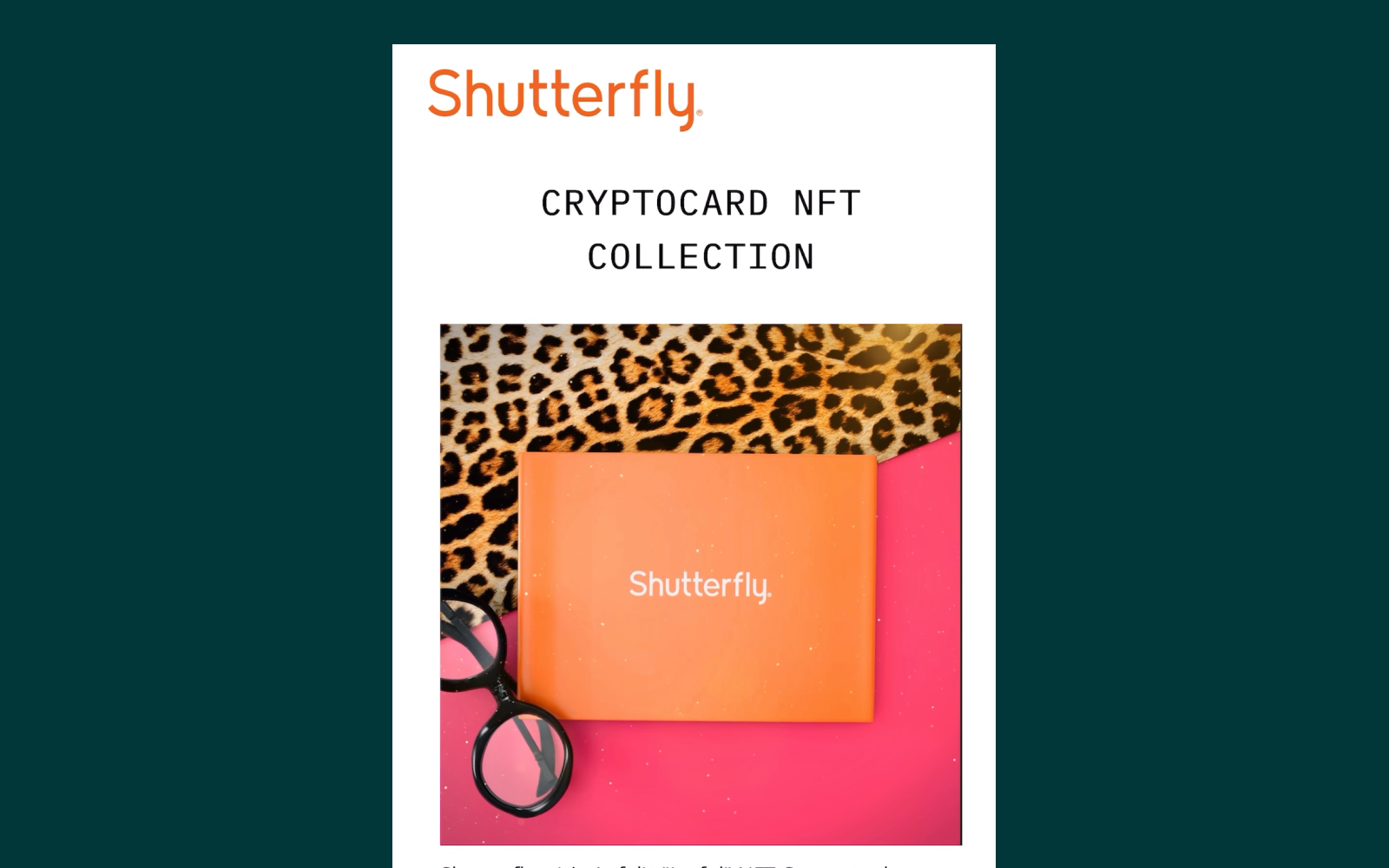
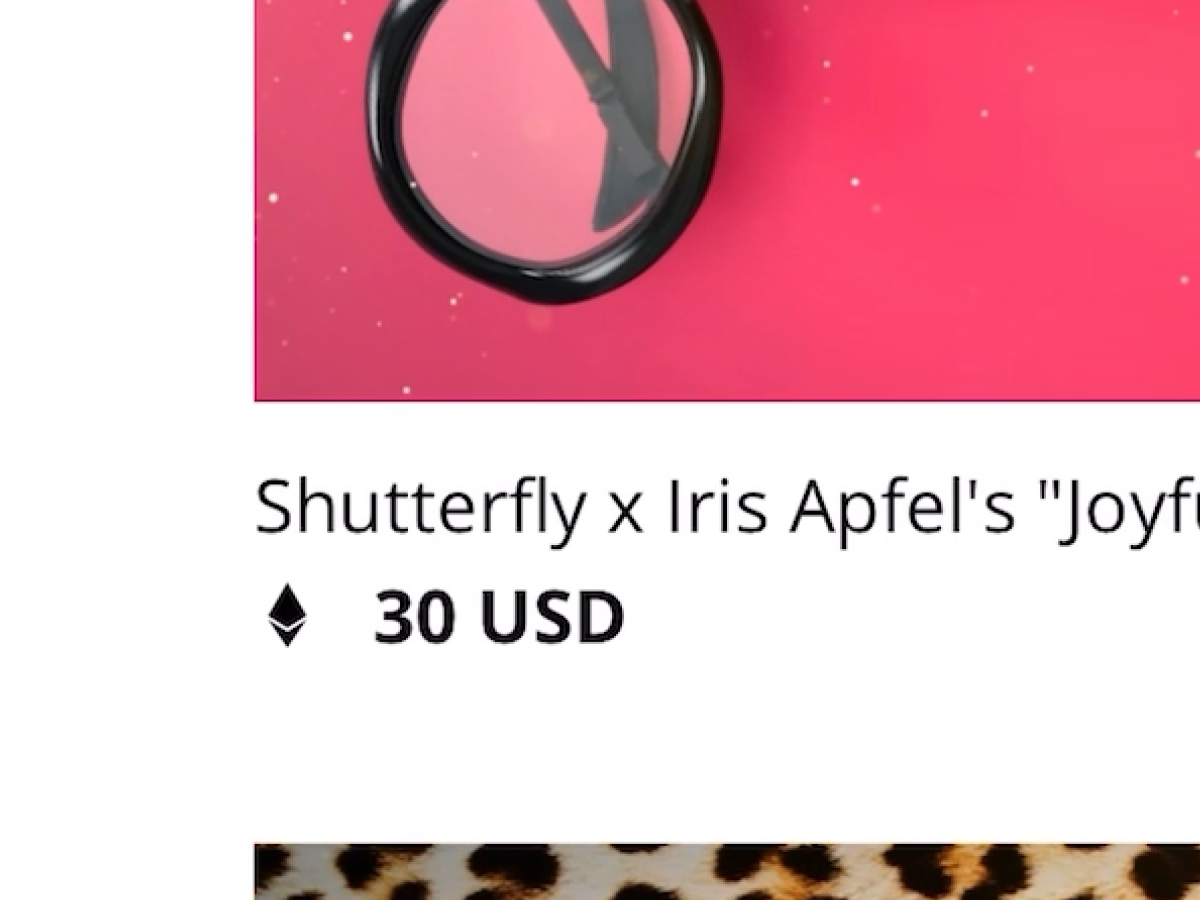
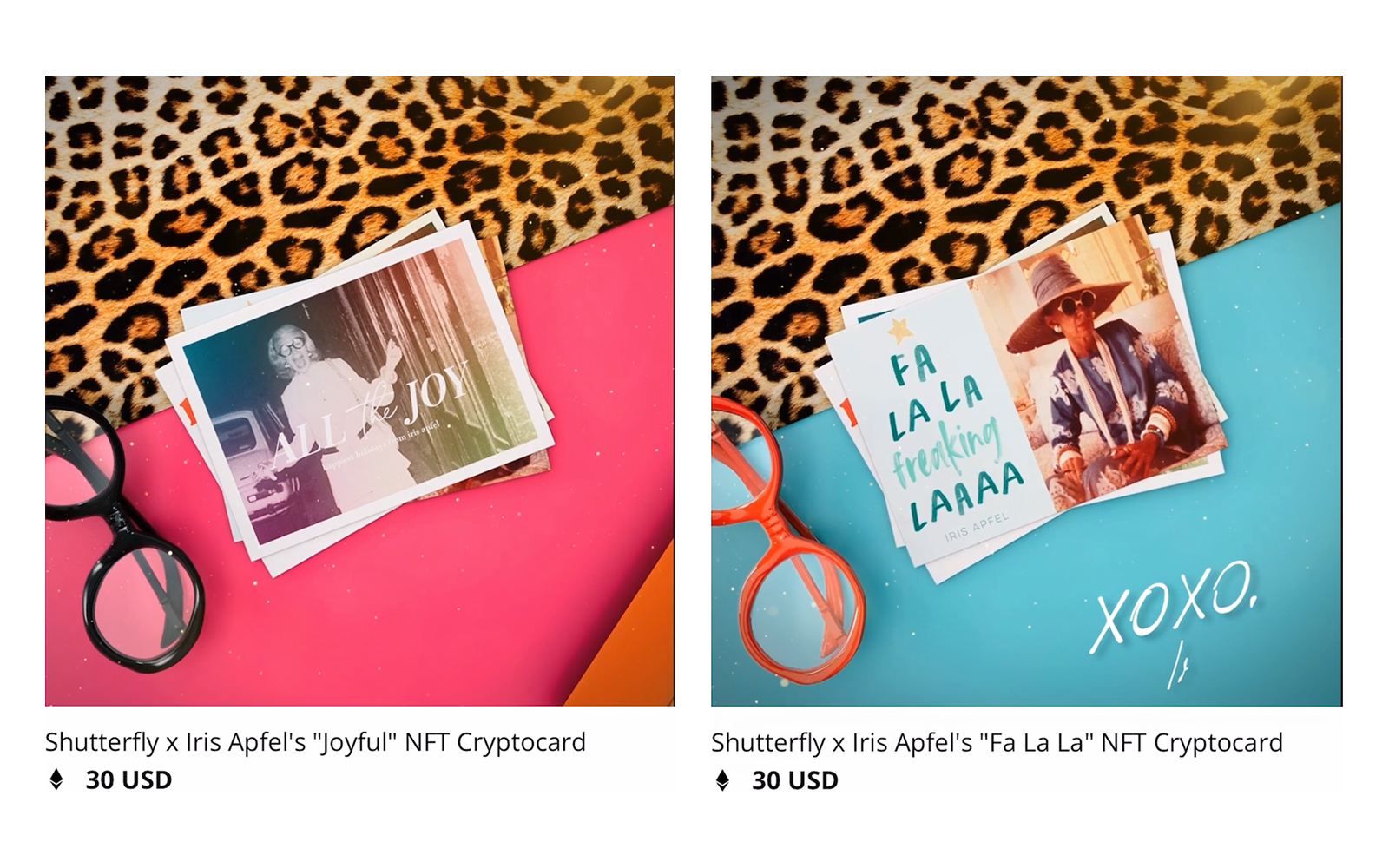
Three pieces, each unveiling one never-before-seen holiday moment from Iris's life, wrapped in a holiday-card design drawn from Shutterfly's 2021 season.
A century-old icon's real archive and hand-crafted maximalism are the opposite of generative PFP art — the warmth is the differentiator, so scarcity had to come from the edition, not a tier chart.
Press framed the collection as holiday art for charity, not a crypto investment.
Friction audit
Every crypto decision point scored by abandonment risk before design began.
Dollar-first checkout
Card payment up front, custody handed over by a single post-auction link.
Icon translation rules
A style guide abstracting Iris's signatures with authenticity.
The trade-off — I chose dollar bidding and deferred custody on Rare Circles over a crypto-native drop on a bigger marketplace. That cost us the collector traffic those platforms bring — but the audience we were actually built for could finish a purchase without ever touching an exchange.
What I'd improve — testing the claim flow with genuinely non-crypto users earlier; internal and crypto-adjacent testing missed the friction only true first-timers hit.
Next time — cultural translation is the design work — understand why someone buys a photobook, then make the new technology speak that language.