Works Info
← Back to All Work

iStaging Account — One Identity Across Every Product

Designing a single sign-on system that unifies seven products and introduces self-service commerce to reduce sales dependency.

Role
Lead Product Designer
SSO architecture, account UX, self-service checkout design
Duration
6+ months
Tools
Figma, After Effects, Jira
Team
Web Tsai Platform Director
Jafee Cho Product Manager
Jerry Liao Technical Manager
Abner Wang Front-End Developer
Sam Chen Front-End Developer
Jessie Hu Back-End Developer
Product by

Seven products, seven logins, zero self-service

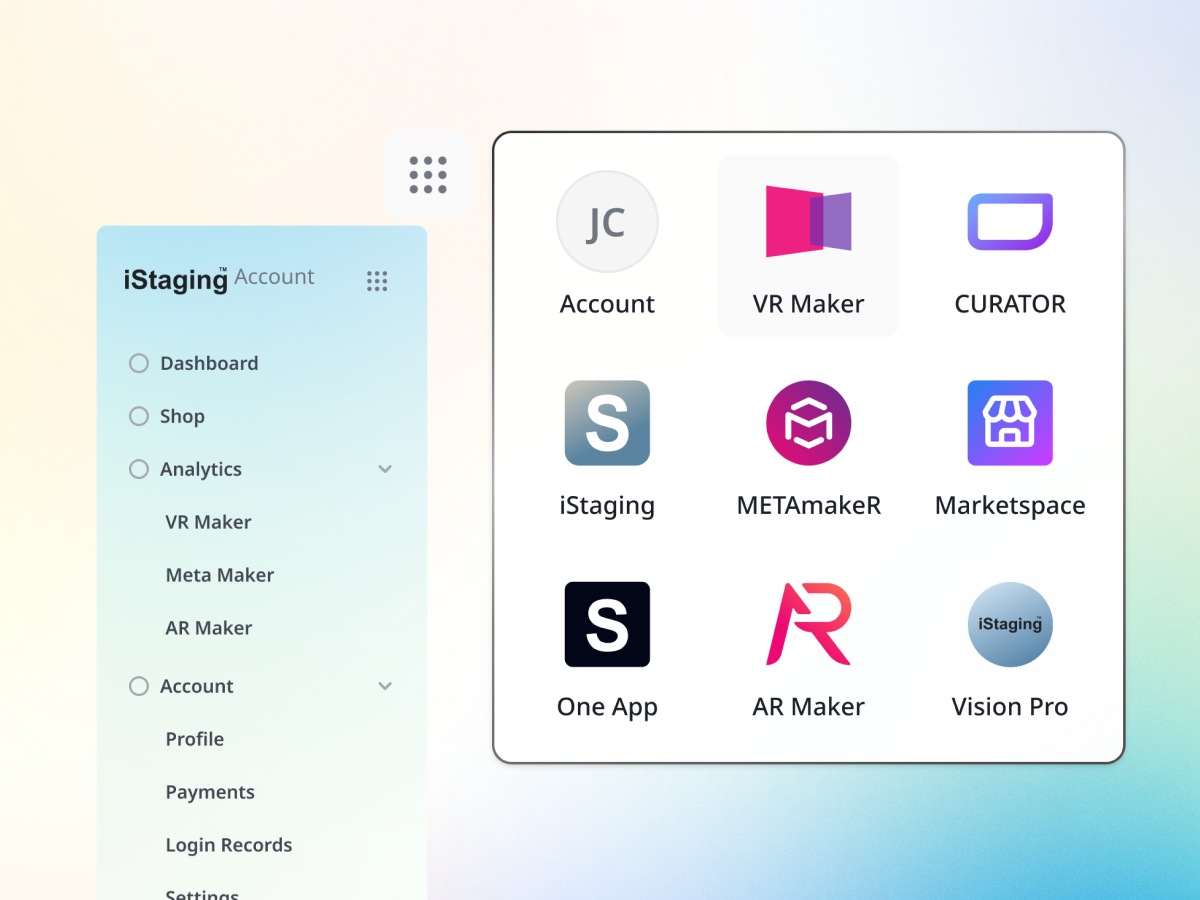
iStaging had grown into a multi-product ecosystem — VR Maker, META Maker, AR Maker, Marketspace, FAQ live customer service, iStaging ONE (mobile), and iStaging Viewer (Vision Pro) — but each product maintained its own account system. Users who worked across multiple products managed separate credentials for each, with no shared settings, no unified billing, and no way to see their full relationship with iStaging in one place. Purchasing add-on services like Deco AI credits or additional storage required contacting the sales team directly, creating a bottleneck that slowed revenue and frustrated customers who wanted to buy on their own terms.

The SSO system needed to do three things simultaneously: unify authentication across all seven products into a single identity, centralize account settings and product management in one dashboard, and introduce a self-service checkout system where customers can purchase subscriptions, add-on features, and credits without sales team involvement. The migration challenge was significant — existing users across all products needed to transition to the unified system without losing access or disrupting their workflows.

7
separate products with independent account systems to unify
0
self-service purchase options. every transaction required sales team involvement

One account to rule them all

Account Architecture

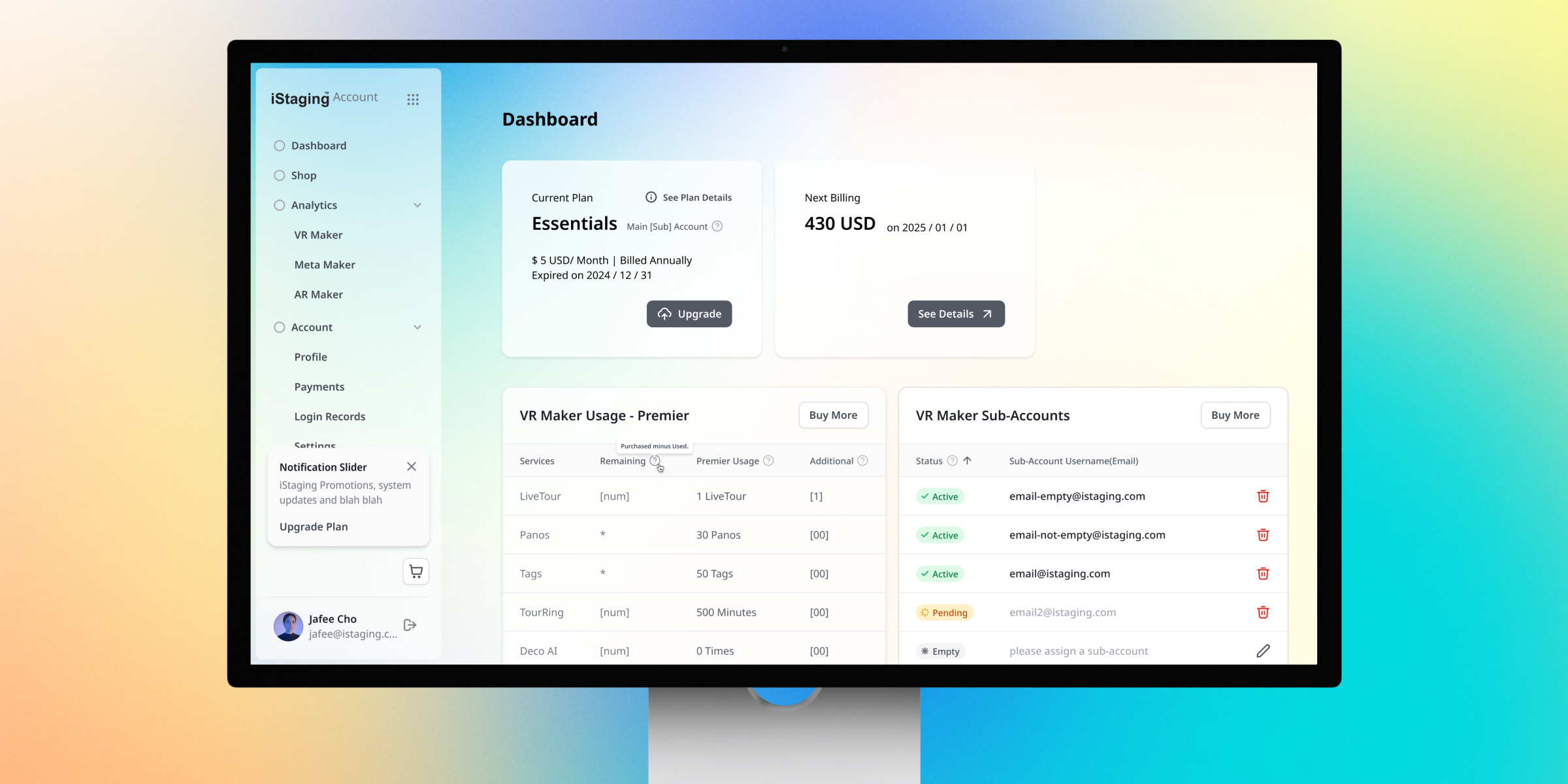
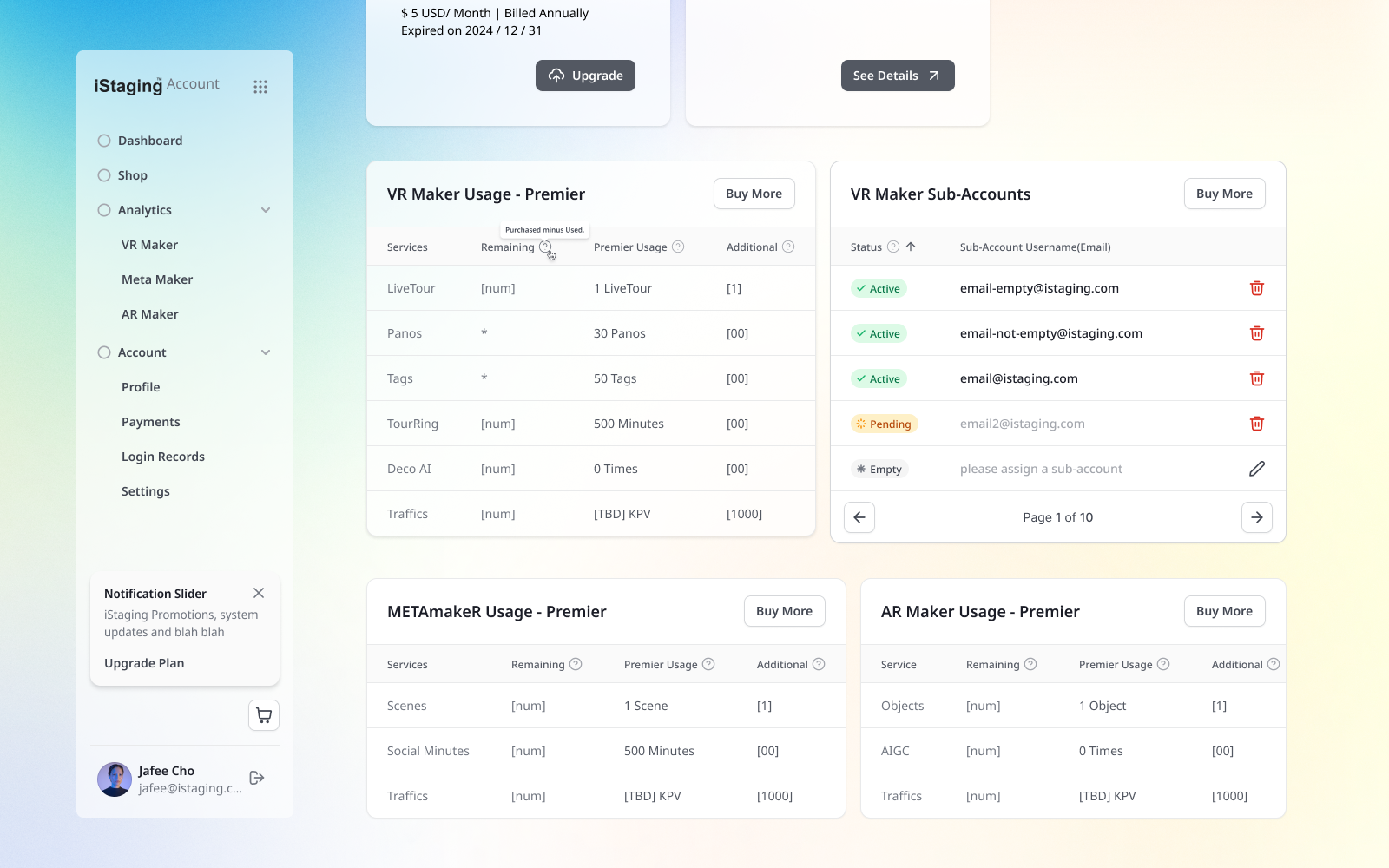
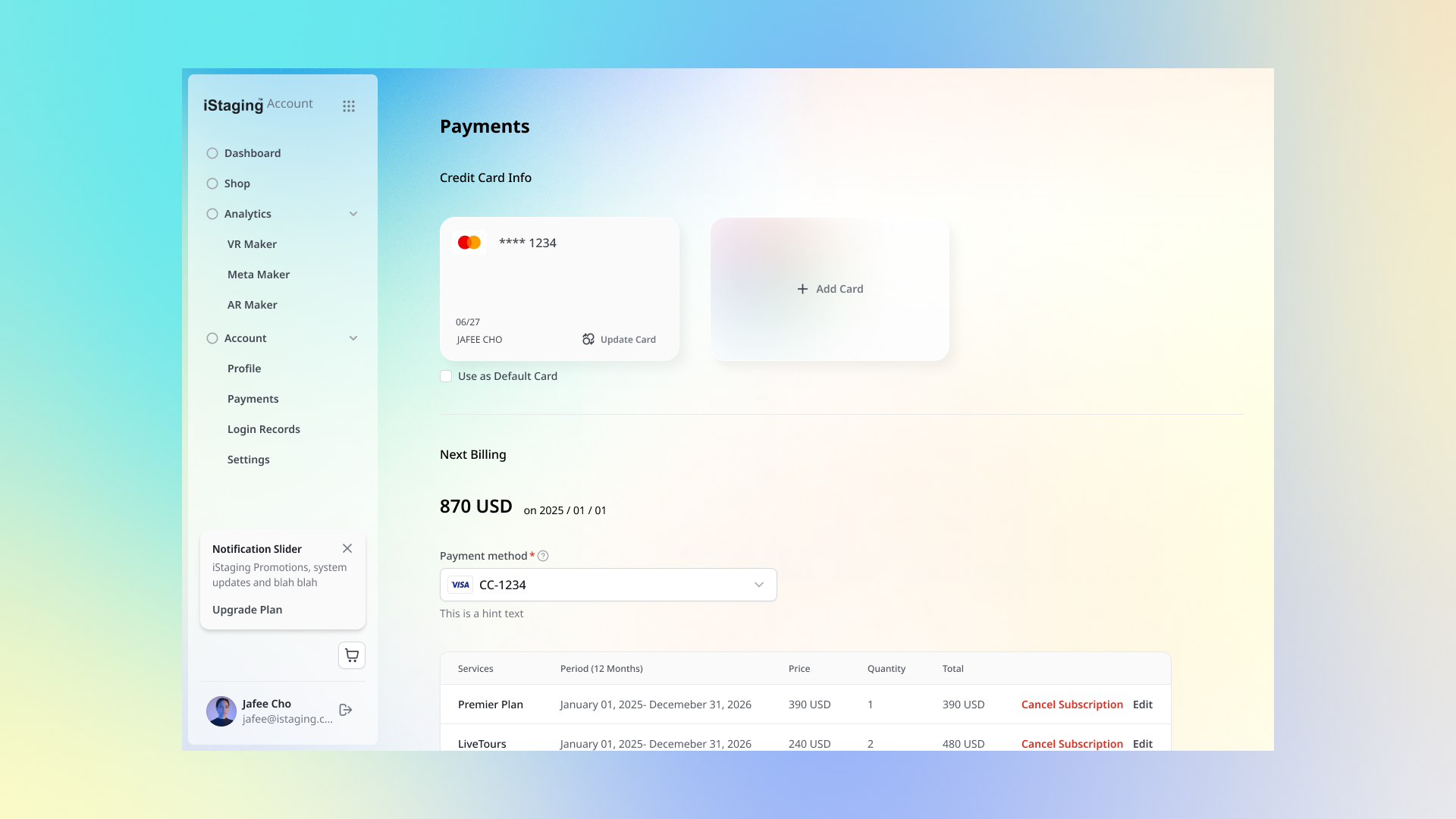
I designed the unified account model to support the full complexity of iStaging product relationships. A single identity connects to all seven products, with product-specific settings and permissions preserved per service. The account dashboard provides a central view of all active products, subscriptions, usage, and billing — something that previously required logging into each product separately to piece together.

Authentication & Transition

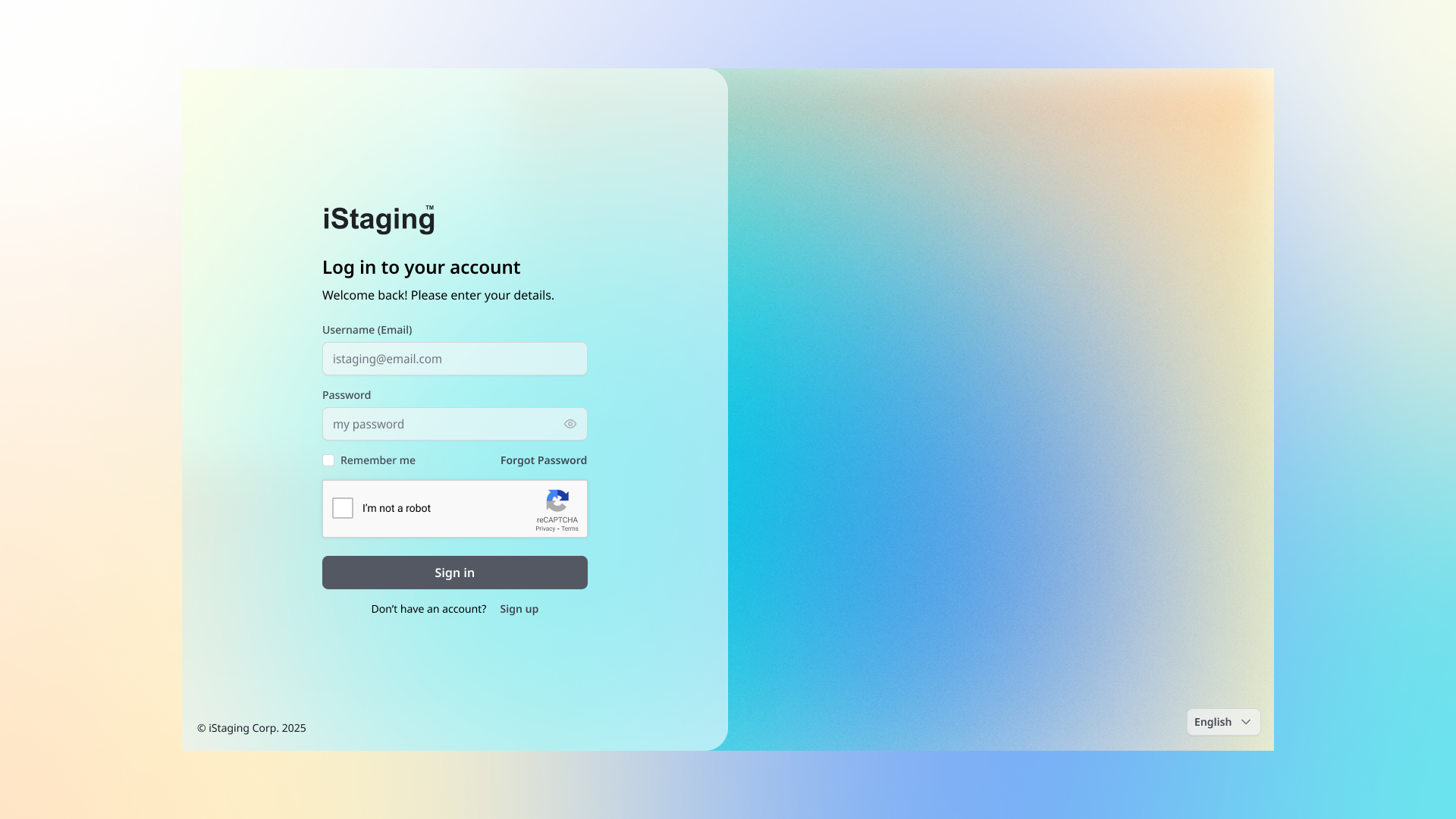
The sign-on experience needed to feel effortless while handling complex routing. Users authenticate once and access any iStaging product without re-entering credentials. I designed the login flow to detect which product a user is coming from and route them back after authentication. For existing users, the transition was handled through a one-time account merge flow that linked their fragmented accounts into a unified identity.

Self-Service Commerce

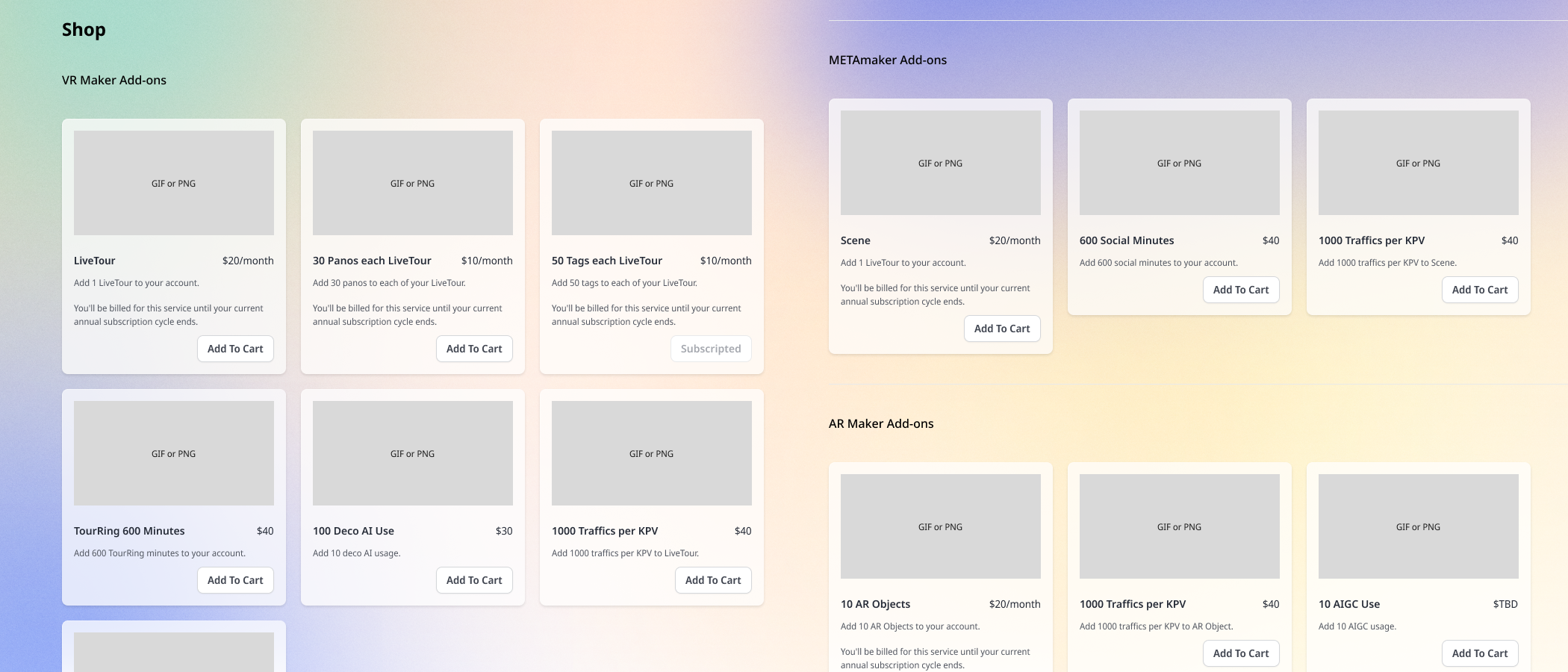
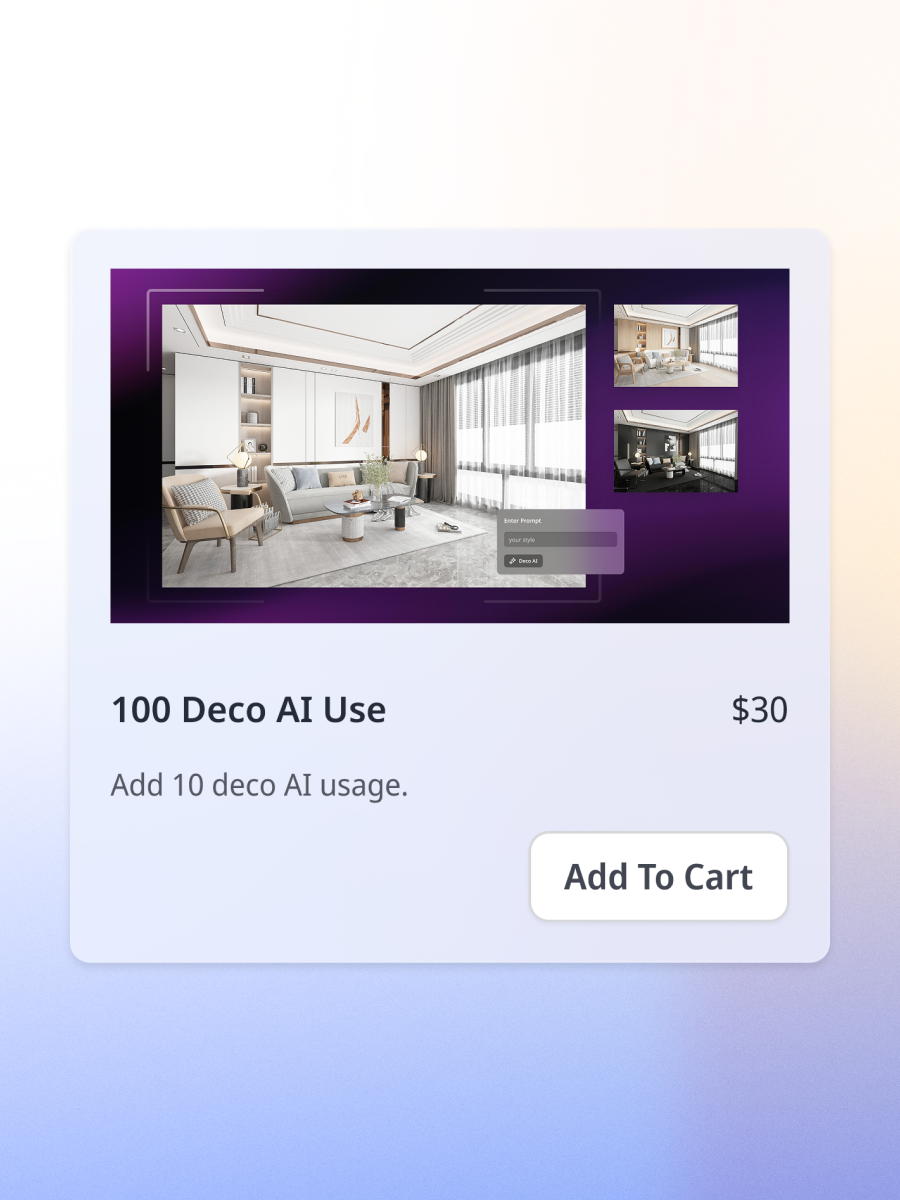
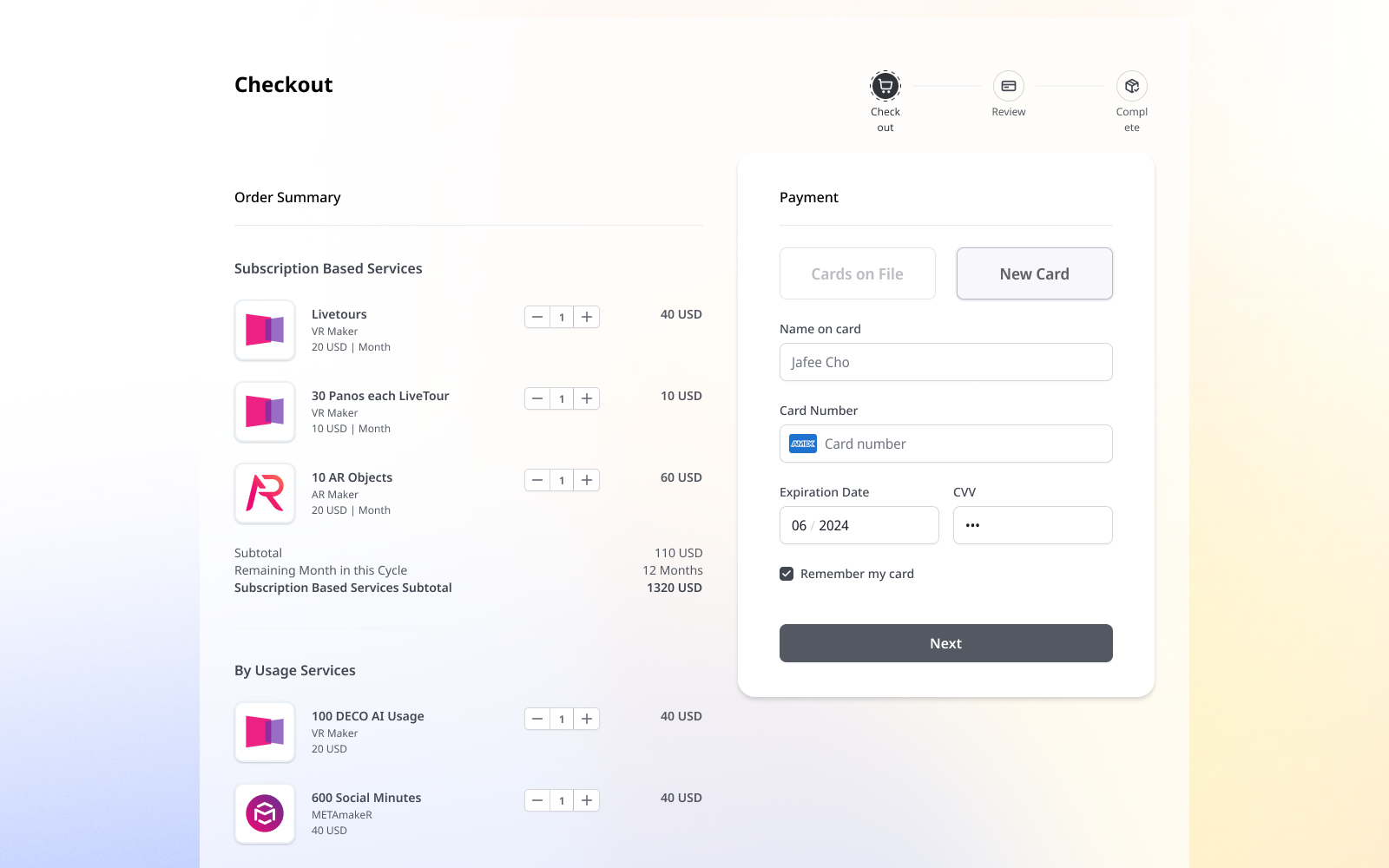
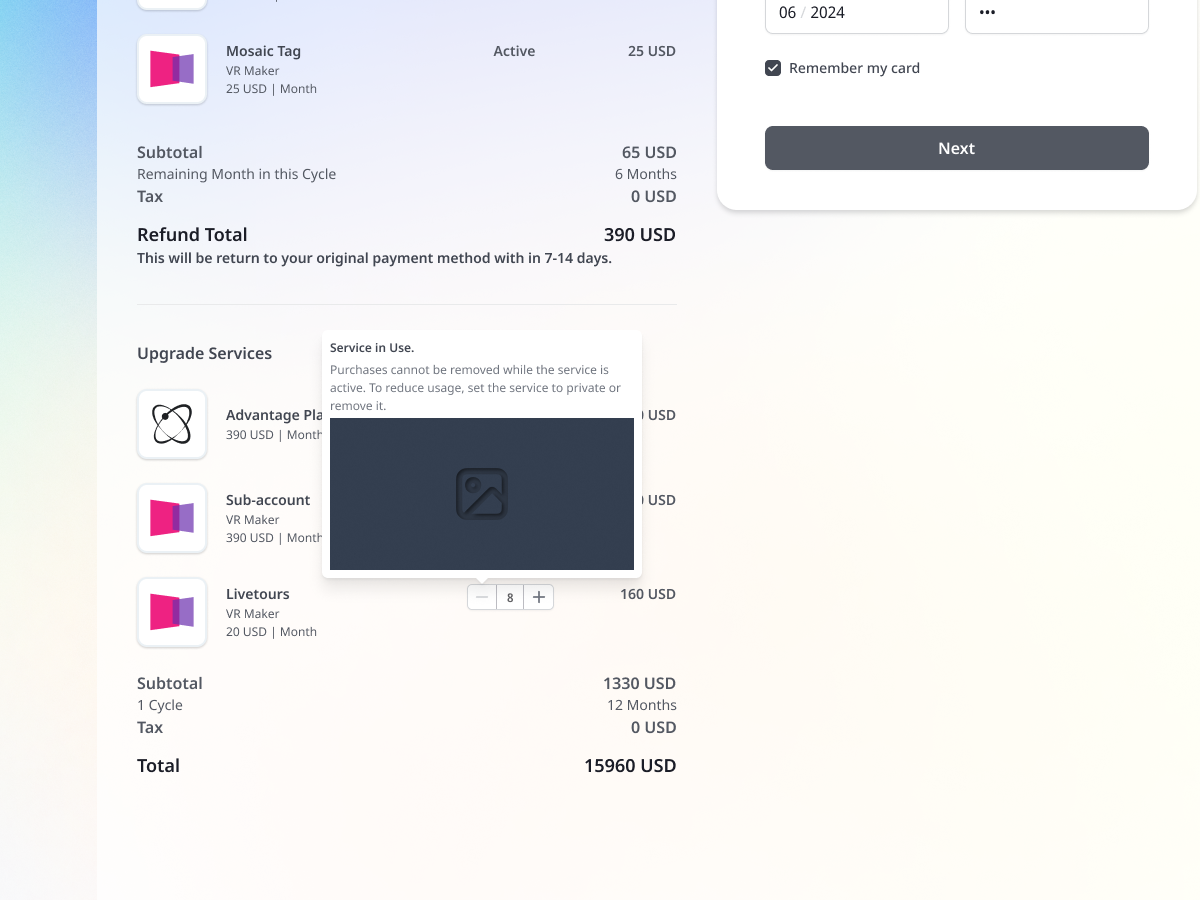
The self-service checkout was the revenue-critical component. I designed purchase flows for three transaction types: new subscriptions (choosing a product plan and tier), add-on services (Deco AI credits, extra storage, premium features), and subscription upgrades (scaling from one tier to the next). Each flow is contextual — users can initiate purchases from within any product when they hit a capability limit, or browse available options from the central account dashboard. The checkout includes transparent pricing, plan comparison, and immediate activation — no waiting for sales team approval.

Settings Centralization

I consolidated all account-level settings into a single hub: profile management, security, notification preferences, billing history, and per-product configurations. The settings architecture uses a global + product-specific model — core settings like email and password apply everywhere, while product-specific preferences (like VR Maker default publish settings) live under their respective product sections. This keeps the settings organized without forcing users to visit each product.

Infrastructure that enables growth

System Architecture 01

Global + product-specific settings model

Rather than duplicating settings across products or forcing everything into one flat list, I designed a layered model: global settings (profile, security, billing) apply universally, while each product maintains its own preference section within the same hub. This scales naturally as new products join the ecosystem — each adds a section without disrupting the existing structure.

Business Strategy 02

Self-service commerce to reduce sales dependency

Every transaction that previously required a sales call — subscription purchases, add-on credits, tier upgrades — now happens through an automated checkout. This removes the revenue bottleneck, enables impulse purchases for add-ons, and frees the sales team to focus on enterprise deals rather than routine transactions. The checkout is designed to be contextual: when a user hits a feature limit, the upgrade path appears right there.

UX Strategy 03

Contextual purchase triggers within products

Rather than sending users to a separate storefront, I designed in-product purchase triggers that appear at the moment of need. Running out of Deco AI credits? The upgrade prompt appears in the Deco AI interface. Need more storage? The prompt appears during upload. This contextual approach converts at a much higher rate than a standalone pricing page because users encounter the offer when they are actively trying to do the thing that requires it.

Building the foundation for ecosystem growth

7
Products unified under a single authentication and account system
1
Self-service checkout replacing manual sales processes for standard purchases
In development — projected to increase online purchase conversion and reduce sales bottleneck

The iStaging Account system is in development as the foundational infrastructure layer for the entire product ecosystem. Once live, it will provide a single identity across all seven products, centralized settings and billing, and self-service commerce that enables customers to purchase and upgrade without sales team involvement.

This project taught me that the most impactful design work is often the most invisible. Nobody showcases a login screen in a portfolio. But an SSO system that works well is the difference between a product ecosystem that feels coherent and one that feels like seven separate tools. The self-service commerce layer will directly impact revenue by removing friction from the purchase path. Sometimes the highest-leverage design work is the infrastructure that makes everything else possible.

Explore the iStaging Account system — unified login, product dashboard, and self-service checkout.