CURATOR Sales Page — Selling the Invisible
One sales page for a hardware-plus-subscription offering sold separately — replacing 10+ scattered portals with a single high-trust purchase experience.


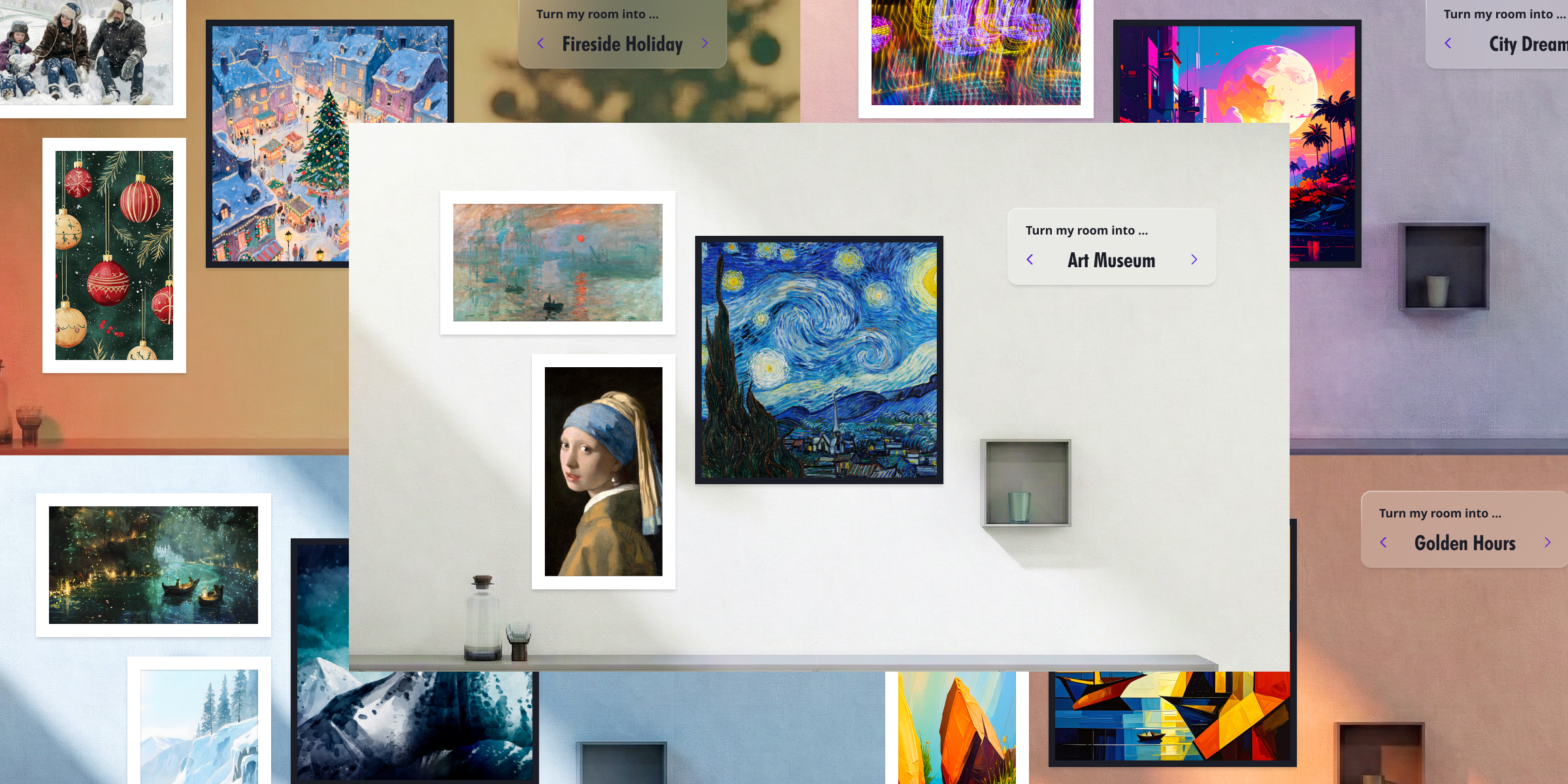
A device and a subscription, sold separately — on one page.
Business
- Replace 10+ fragmented sales portals
- Sell atmosphere, not display resolution
User
- Know exactly what's hardware, what's subscription
- Buy either — or both — without confusion
Technical
- Tier logic — one tier covers ten devices
- Stripe and installment payment paths
The bundle illusion
Buyers assumed software ships with the device — it doesn't.
Layered purchase math
Devices × sizes × tiers × payment methods, in one flow.
Selling the unreleased
One live device line, two future lines needing reserved space.
A trust deficit
Fragmented portals had buyers asking whether the site was legitimate.
I owned the page from narrative to checkout — every section earns its place.
Owned
- Conversion Strategy
- Information Architecture
- Content Design
- Purchase Flow Design
Collaborated with
- Product Manager
- Platform Director
- Front-End Developer
Making the complex feel simple.
Sell the atmosphere, not the hardware
Non-technical buyers care about ambiance, not display resolution.
Lead with art transforming real spaces and a 3D globe of 10,000+ artworks; specs nest in tabs.
The narrative order converts the buyer the spec sheet loses.
+42% page traffic with unified branding and one shareable URL.


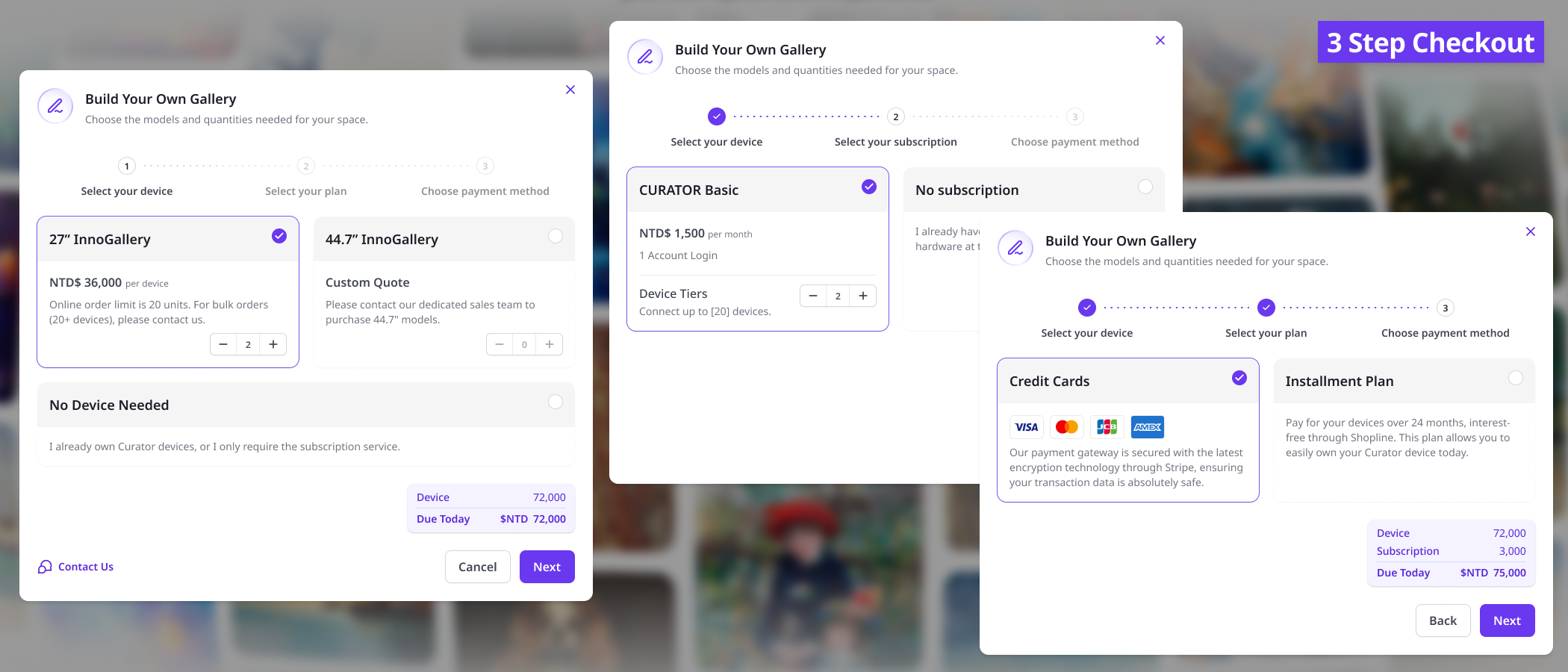
Every CTA leads to one modal
Device-only, subscription-only, and bundled purchases threatened three separate checkouts.
One 3-step modal with conditional logic — irrelevant steps disappear per path.
Buyers should always land in the same familiar flow, whatever the entry point.
+28% conversion — and one flow for developers to maintain.
Hardware and subscription — visibly separate
The costliest confusion was assuming software ships with the device.
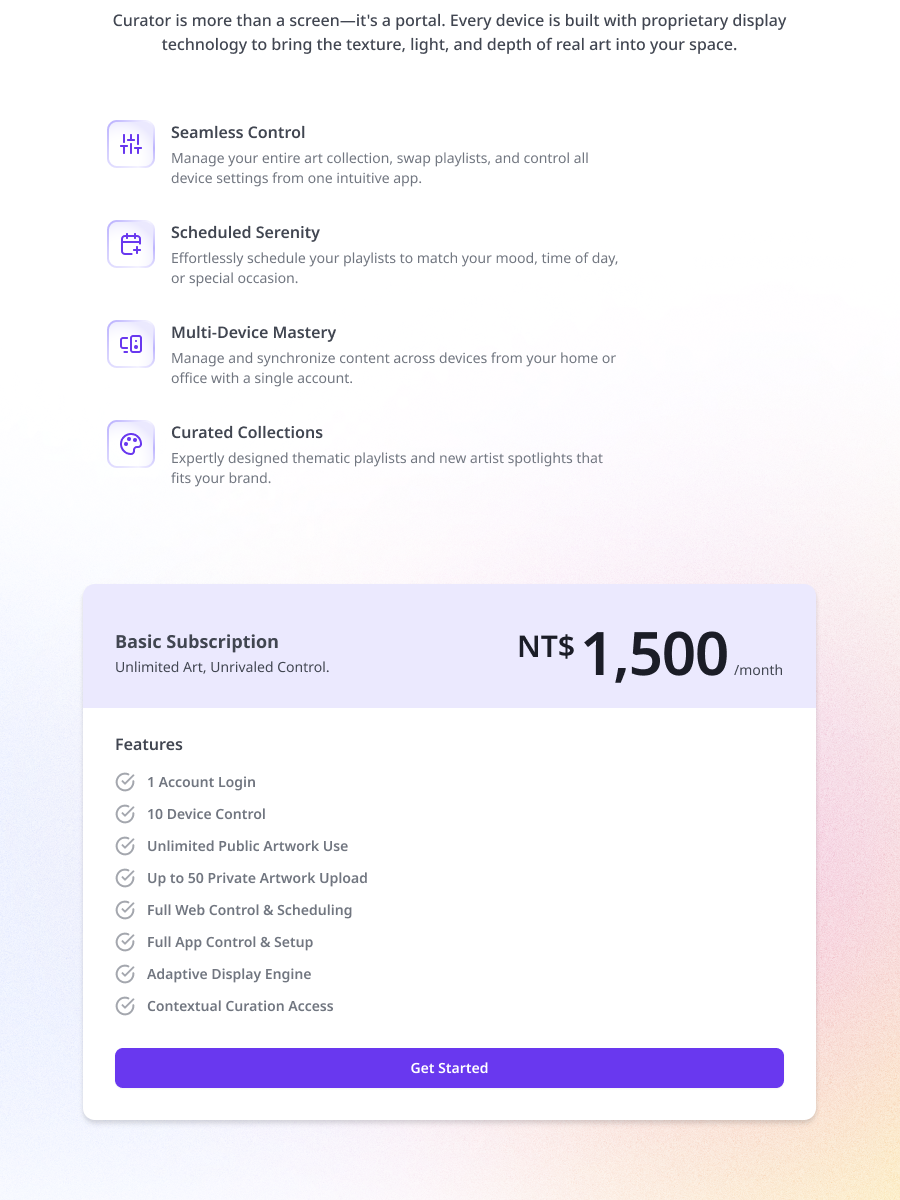
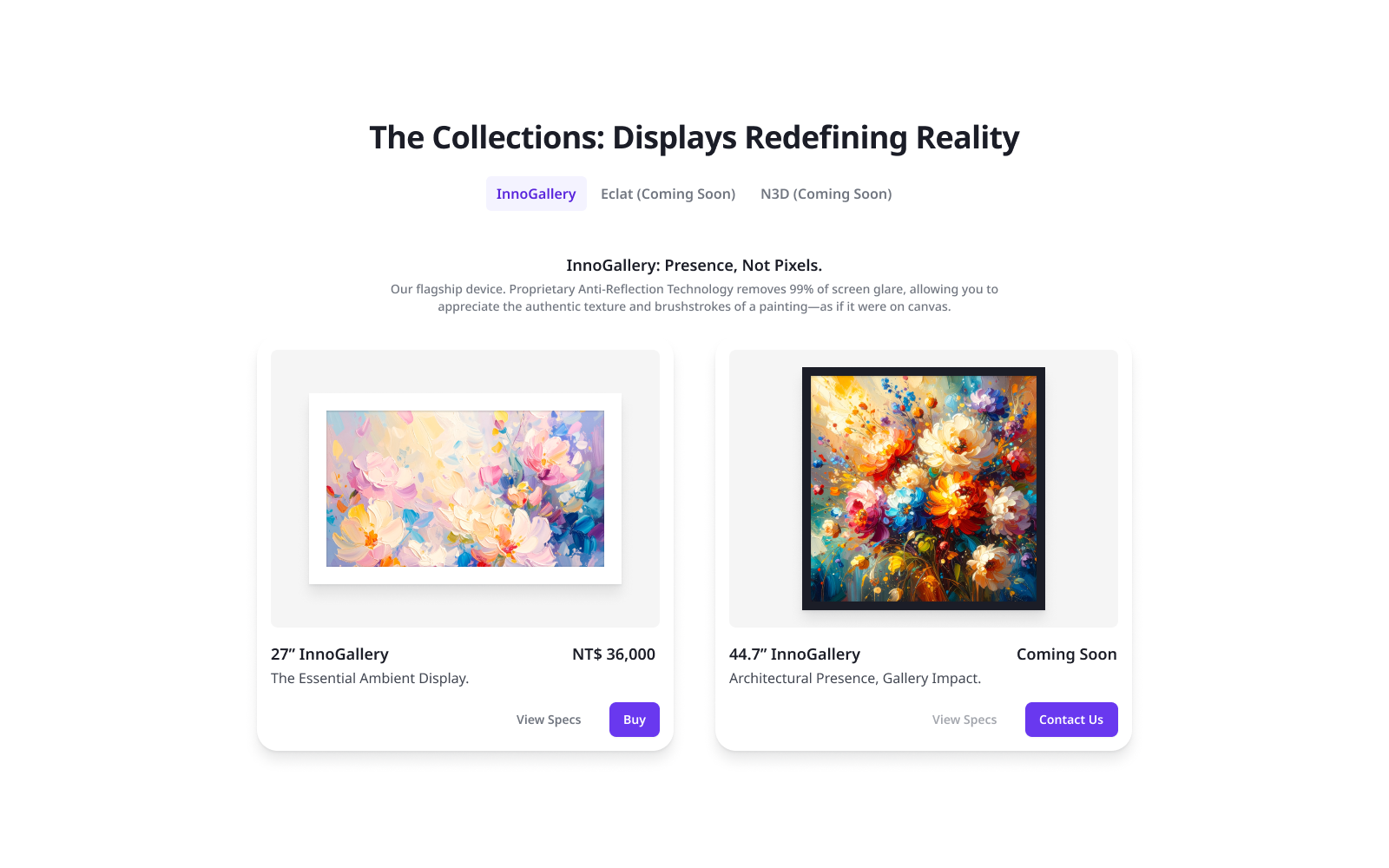
Distinct visual languages for hardware cards and the subscription section, with tier math shown as a simple scale.
Pricing clarity is trust — and trust is conversion.
The independence of the two purchases became unmistakable.
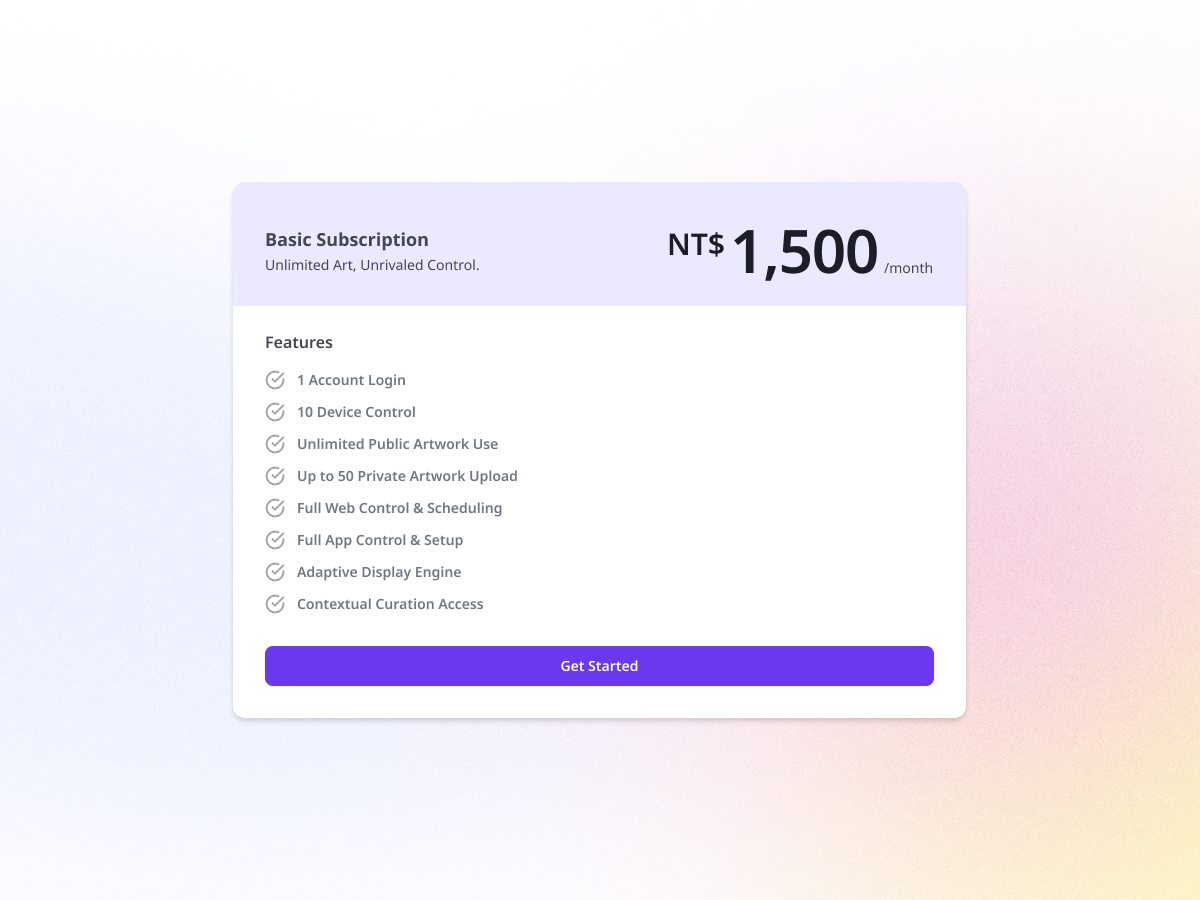
Conditional 3-step modal
One checkout adapting to device-only, account-only, or bundle paths.
Interactive 3D globe
10,000+ artworks from worldwide artists, spinnable on the page.
Placeholder product slots
Future device lines launch as content swaps, not redesigns.
The trade-off — I nested specifications behind tabs to lead with atmosphere. Spec-first buyers dig one level deeper, but the emotional lead converts the larger audience.
What I'd improve — reseller attribution runs on query strings. A proper partner dashboard is the natural next layer.
Next time — trust is a design-system property — the “is this legit?” doubt disappeared the moment every step shared one visual identity.