Invisible Essential
Is it possible to describe fashion technology as a cyborg?

We already extend the body with machines. What if the machine were the cloth?
Glasses sharpen sight, hearing aids amplify sound, a phone holds memory. All of them are additions — separate objects, carried or worn, and the boundary stays visible.
This imagines the other case: sensors stitched into the textile, the circuit and the garment the same object, nothing to put on or take off. Not wearable technology added to clothing, but clothing that is already technological.
What if your clothing could sense what your body is doing and make the invisible essential visible?
What if the future of wearables isn't a device you put on but a material you wear?
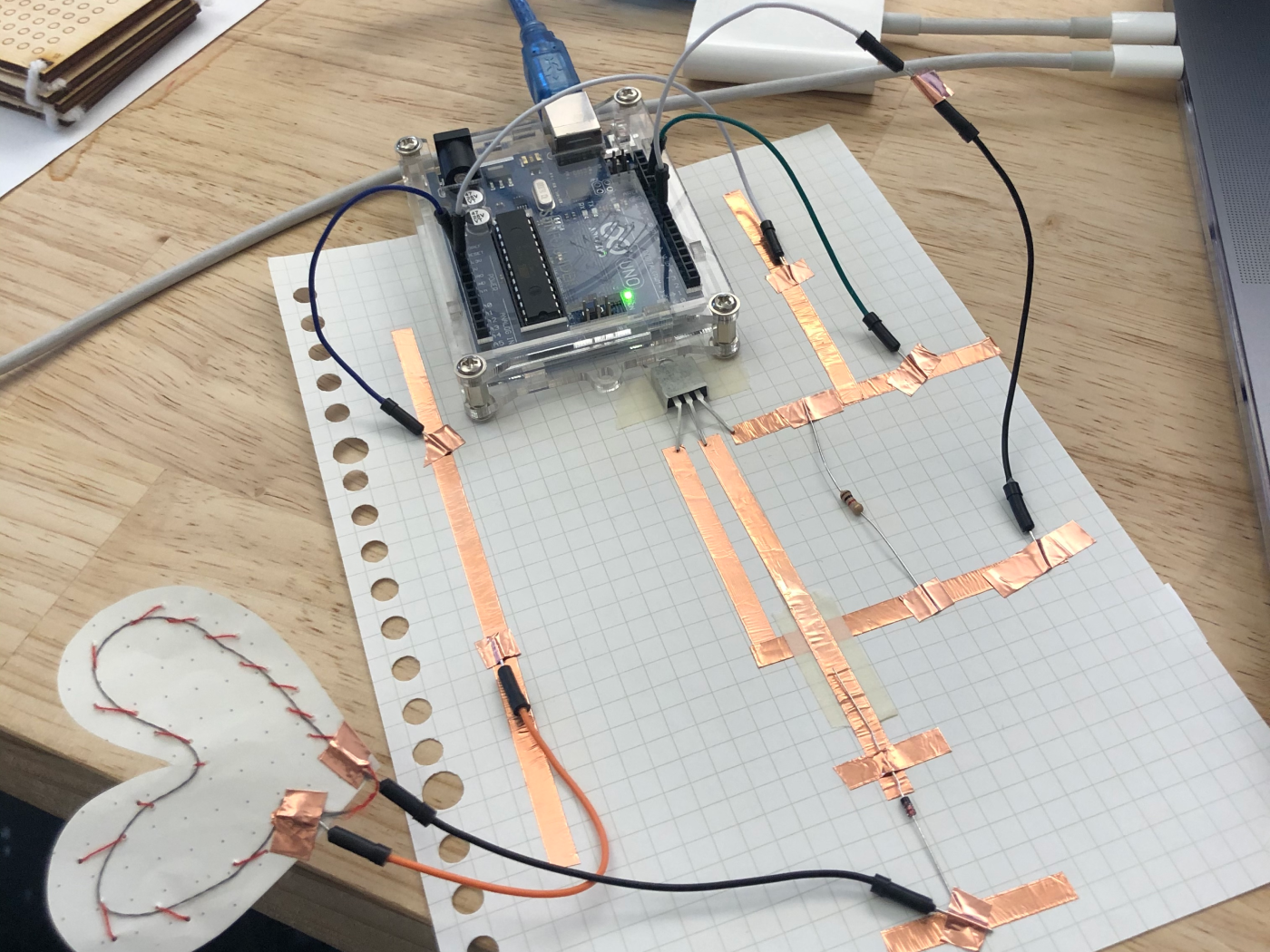
Learning the material
E-textiles need a fashion designer and an electrical engineer in the same head. I worked with conductive thread, flexible sensors and different substrates to learn how a circuit behaves once it is soft, foldable and washable. A circuit that works on a breadboard fails in jersey knit — the fabric stretches and the connection moves.
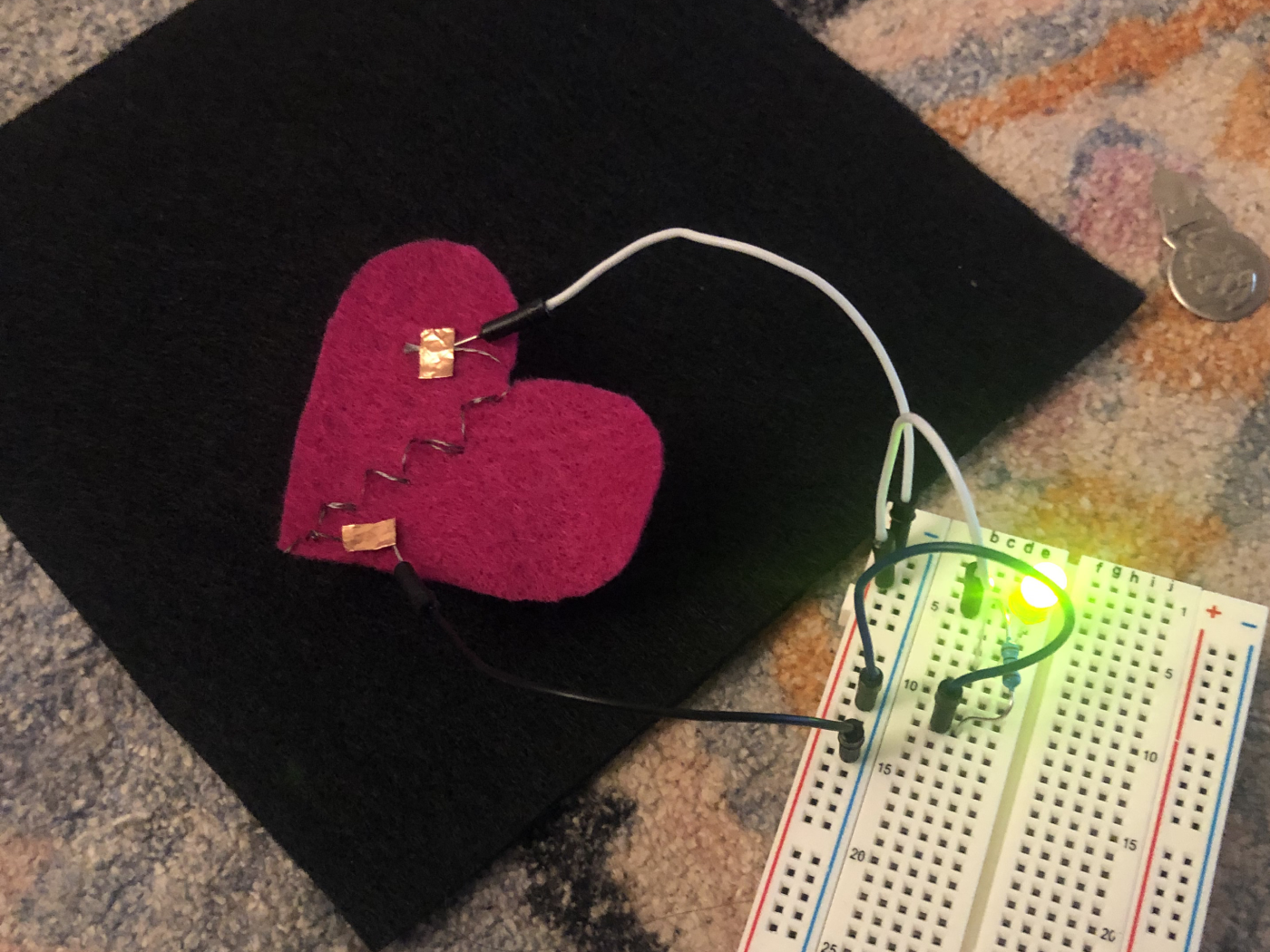
Making the circuit decorative
The technology had to disappear, which meant stitching patterns that were beautiful on the outside and functional on the inside. The decoration is the circuit path. Form and function stopped being a relationship and became the same gesture.
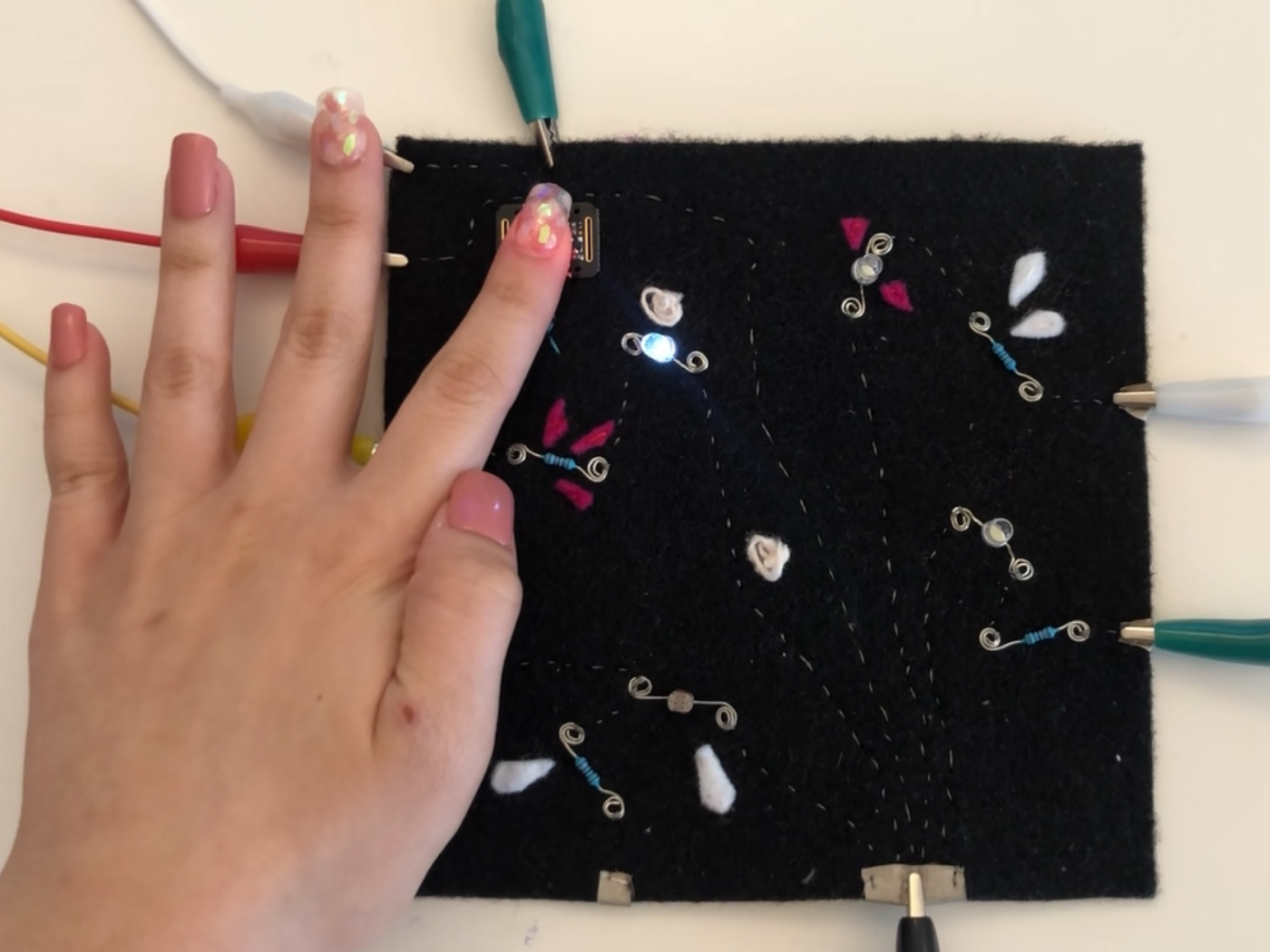
Extending the body
The prototype senses temperature, movement and skin conductance and turns them into visual or AR expressions of the wearer's state — the garment as an extension of a communication system the body already has but cannot show.
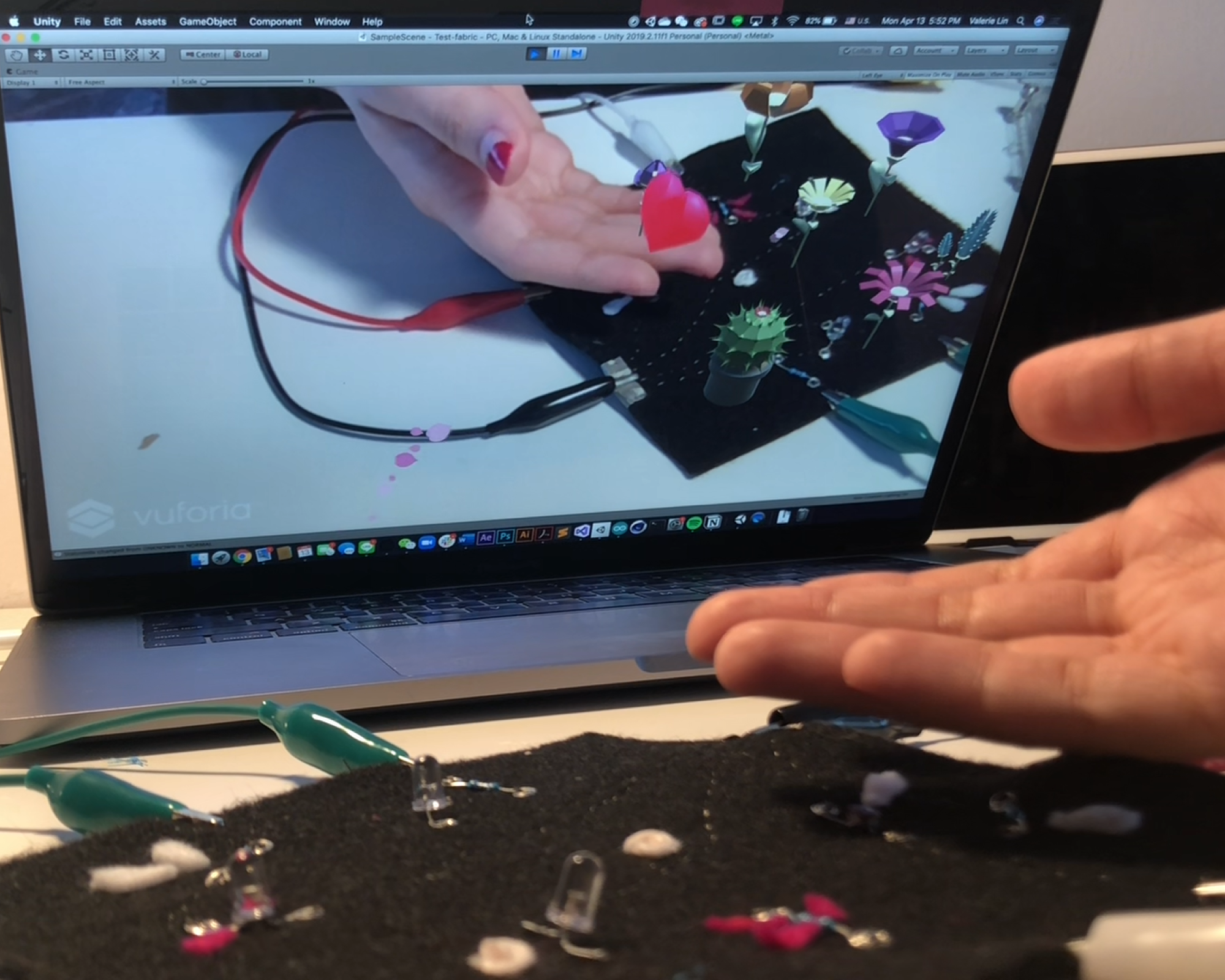
Why a real garment, and not a render?
Whether fashion technology makes a cyborg can only be answered by wearing one. A video can't transmit what it feels like to have a garment respond to your body; you put it on and the thesis is immediately obvious.
AR carries the expression past the fabric, making body data legible to other people. The textile senses, the body generates, the augmented layer speaks.
E-textile garment with embedded sensors and AR visualization
A garment where the stitch is the circuit.
The finished prototype looks like clothing. Conductive thread runs the decorative pattern and the electrical path at once, embedded sensors read temperature, movement and skin conductance, and an AR layer makes those readings visible to someone else.
The stitch is the circuit
The most elegant solution let a single pattern be both ornament and electrical path. Craft and technology were never opposed here; they were the same thread.
Wearing is understanding
People who put the prototype on understood the argument instantly, in a way that looking at it never produced. The sensation does the explaining.
The future of wearables is invisible
The best part of the result was that it looked like ordinary clothing. Not visible gadgets — materials that are quietly intelligent.
The best technology doesn't announce itself — it disappears into the fabric of the experience.