Weaving Line
Can strangers connect without a single word or written instruction?

The only instruction was no instruction at all.
Public installations arrive with a label, a sign, some clear invitation. We removed all of it — chairs and cotton thread placed in the path of the Jersey City to New York ferry, and nothing at all to explain them.
The question underneath is simple and slightly uncomfortable: given an inviting object and no permission, will anyone touch it? And if they do, what shape does that take?
What if removing instruction reveals an instinct to connect, touch and play?
What if some people are too polite to interrupt art — and what does that say about public space?
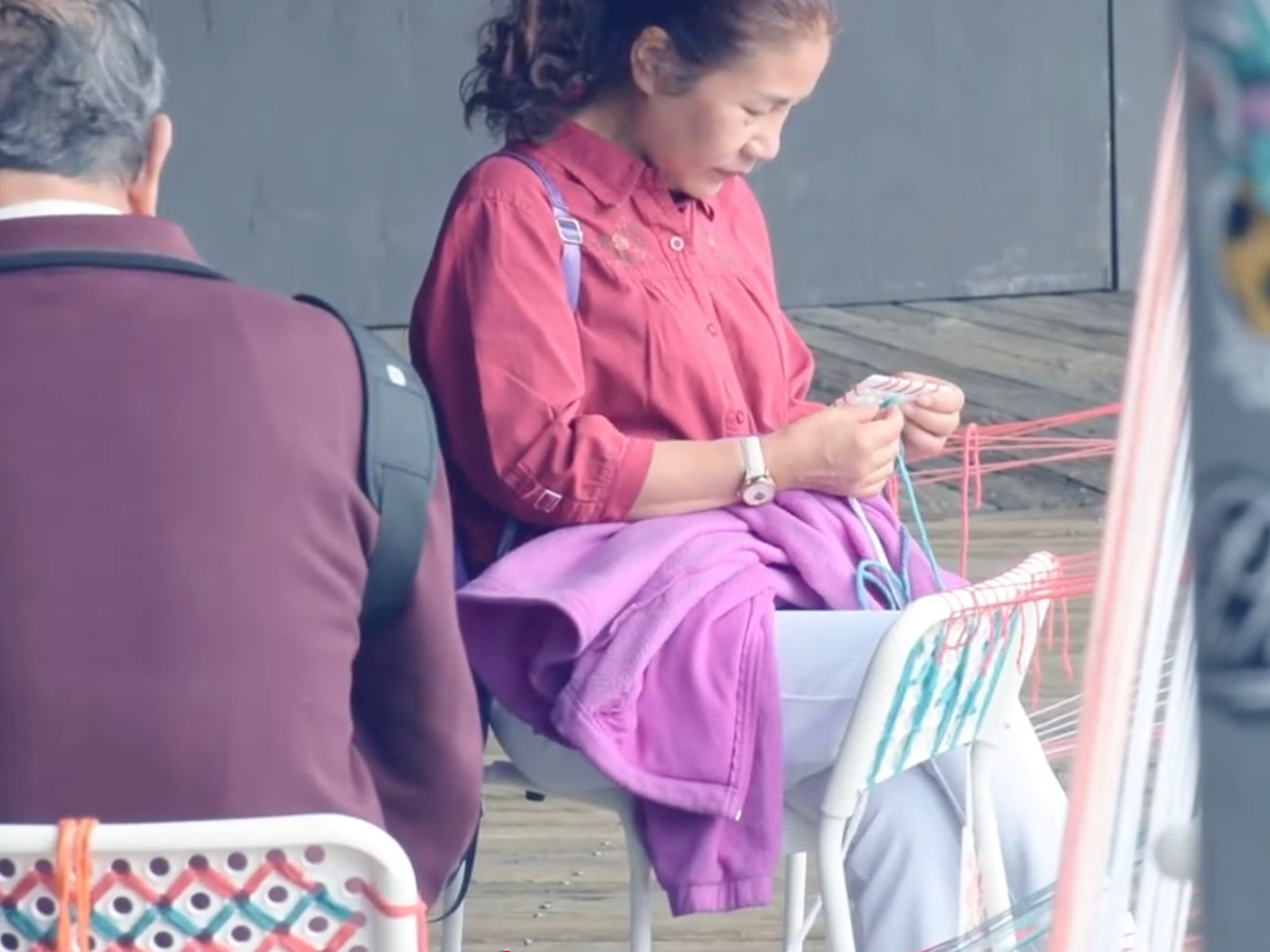
Designing the non-instruction
The hard part was making something inviting enough to approach and ambiguous enough to need no explanation. Chairs suggest sitting. Cotton thread suggests pulling. A pad with holes suggests threading through. Every element was chosen because its affordance was physical rather than written — the material was the only instruction.
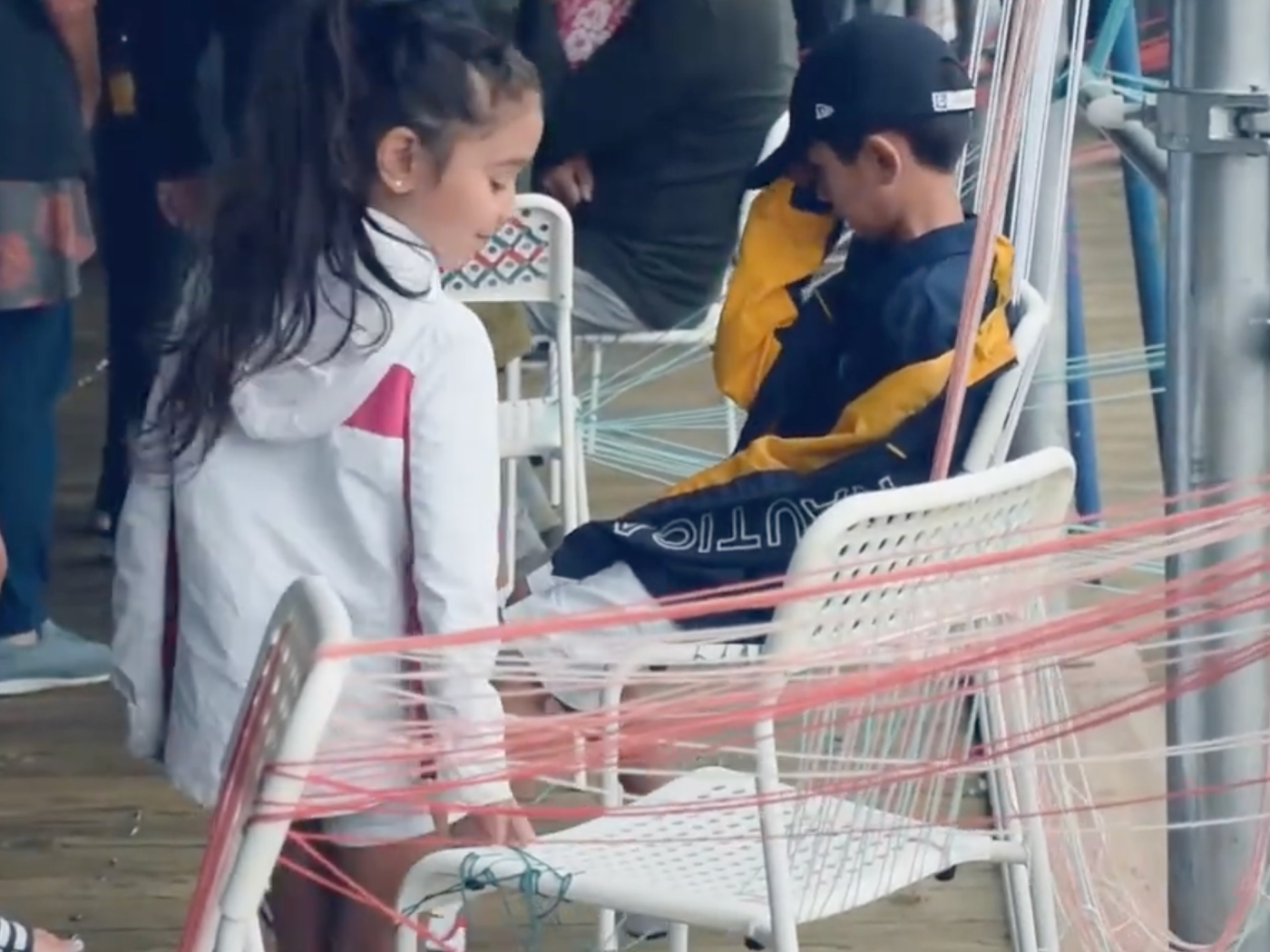
Watching strangers decide
We documented every interaction across several days. Some sat down and began weaving immediately. Others circled, watched, committed late. Many stayed away entirely, too polite to disturb what might be someone else's work — and that avoidance turned out to be as interesting as the participation.
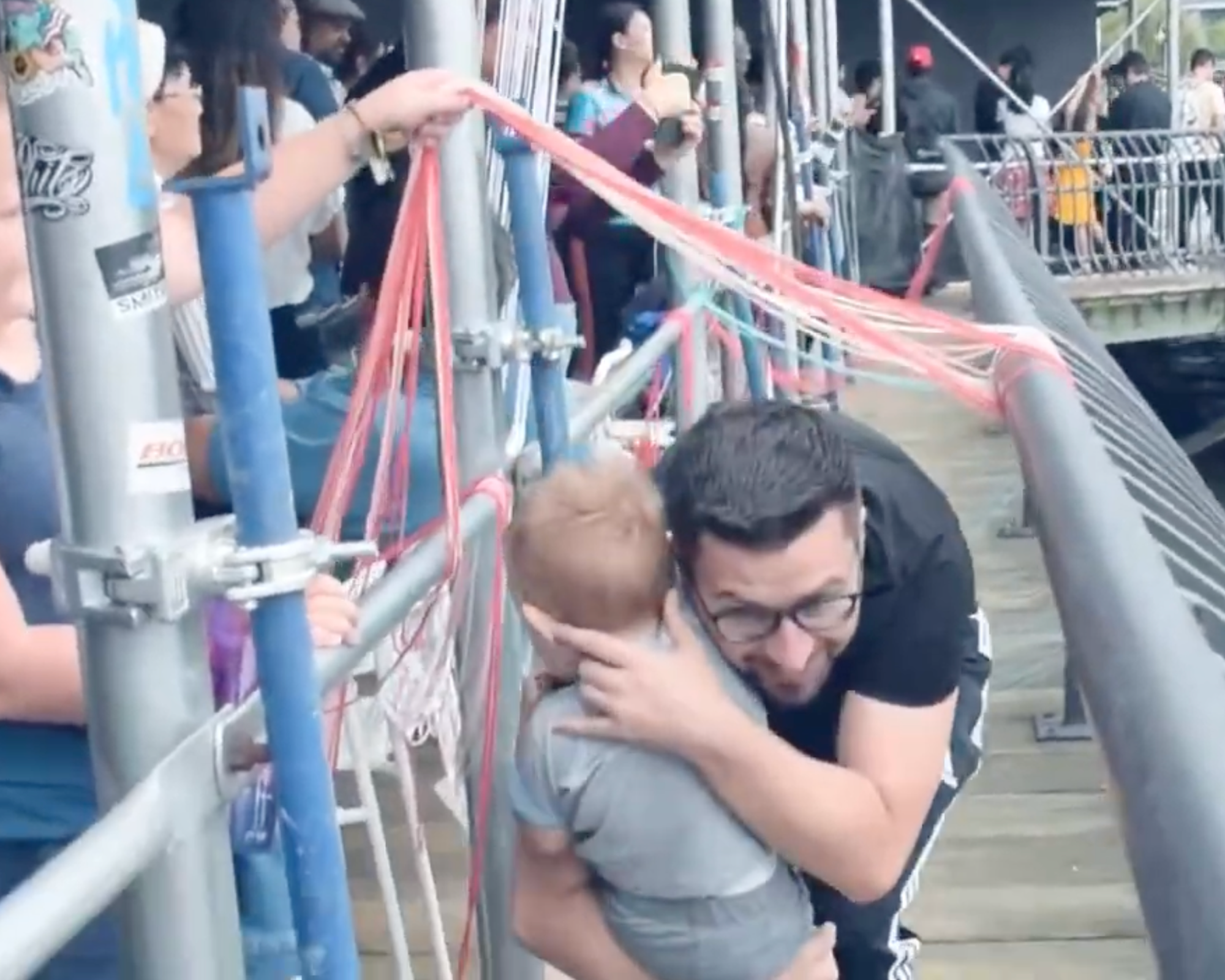
Why a commuter path, and not a gallery?
The ferry line is forced waiting. Nowhere else to be and nothing to do, which is the ideal condition for curiosity. Putting the work there rather than in a gallery tested whether the instinct exists in ordinary life or only in rooms set aside for art.
Cotton and chairs are understood through the hands. No screens and no technology — the oldest interface there is.
Public installation with chairs, cotton thread, and perforated pads
Chairs, thread, and whatever strangers decided to do.
The finished work is the documentation: several days of a ferry queue meeting an object nobody explained. Some wove, some watched, many kept their distance. The record of who did what is the piece.
Politeness blocks participation
People stayed away out of respect rather than disinterest, unwilling to disturb what might be someone's art. Public work has to grant permission as clearly as it extends invitation.
Hands decide first
Those who joined in reached for the thread before they had consciously chosen to. The body reads a physical affordance faster than the mind negotiates social permission.
The people who joined in reached for the thread before they decided to — their hands knew before their minds did.
- Taylor Su
- Shawn Zhang