Estée Lauder: Easing Her Journey
What if an airport could care for you the way your skincare routine does?

An airport is built for efficiency. Nobody is at their best inside one.
People move between gates dehydrated and tense, and their skin carries the evidence — recycled air, no sleep, hours of it. Estée Lauder asked us to rethink that experience through skincare, and the obvious answer was retail. We didn't take it.
The better question was what a brand can be in a physical space when it isn't selling: rest, knowledge, and something given — meeting people at their most depleted with something that isn't a transaction.
What if a brand's physical presence were built around an emotional state rather than a product catalogue?
What if skincare knowledge arrived exactly when it's needed — mid-transit, exhausted, rushed?
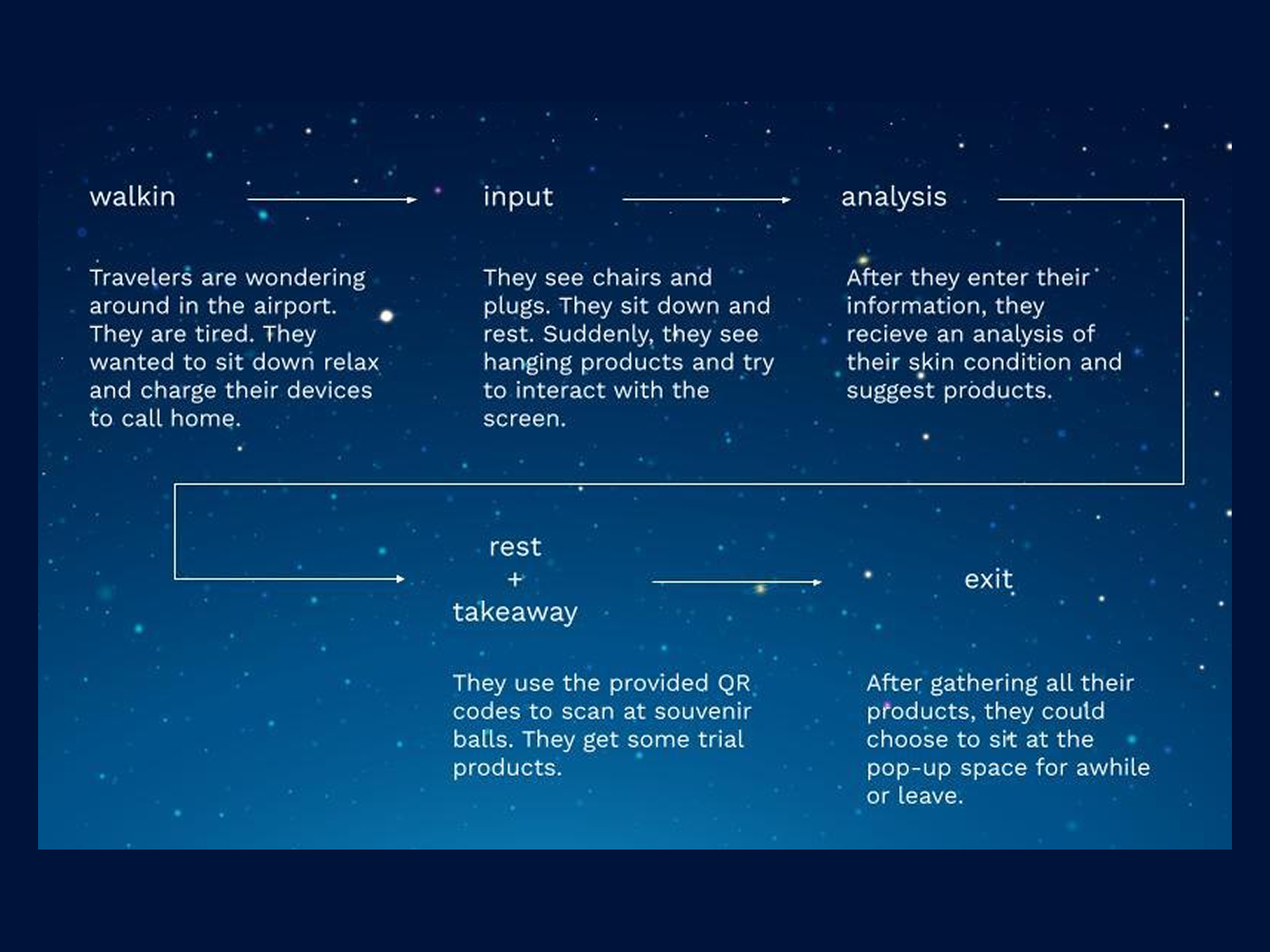
Mapping the emotional arc
We followed the shape of a journey: anxiety at security, boredom at the gate, exhaustion at boarding. Skin need peaked exactly where stress peaked — dehydration, tired eyes, a complexion holding the whole day. Whatever we built had to land at those points and read as care rather than commerce.
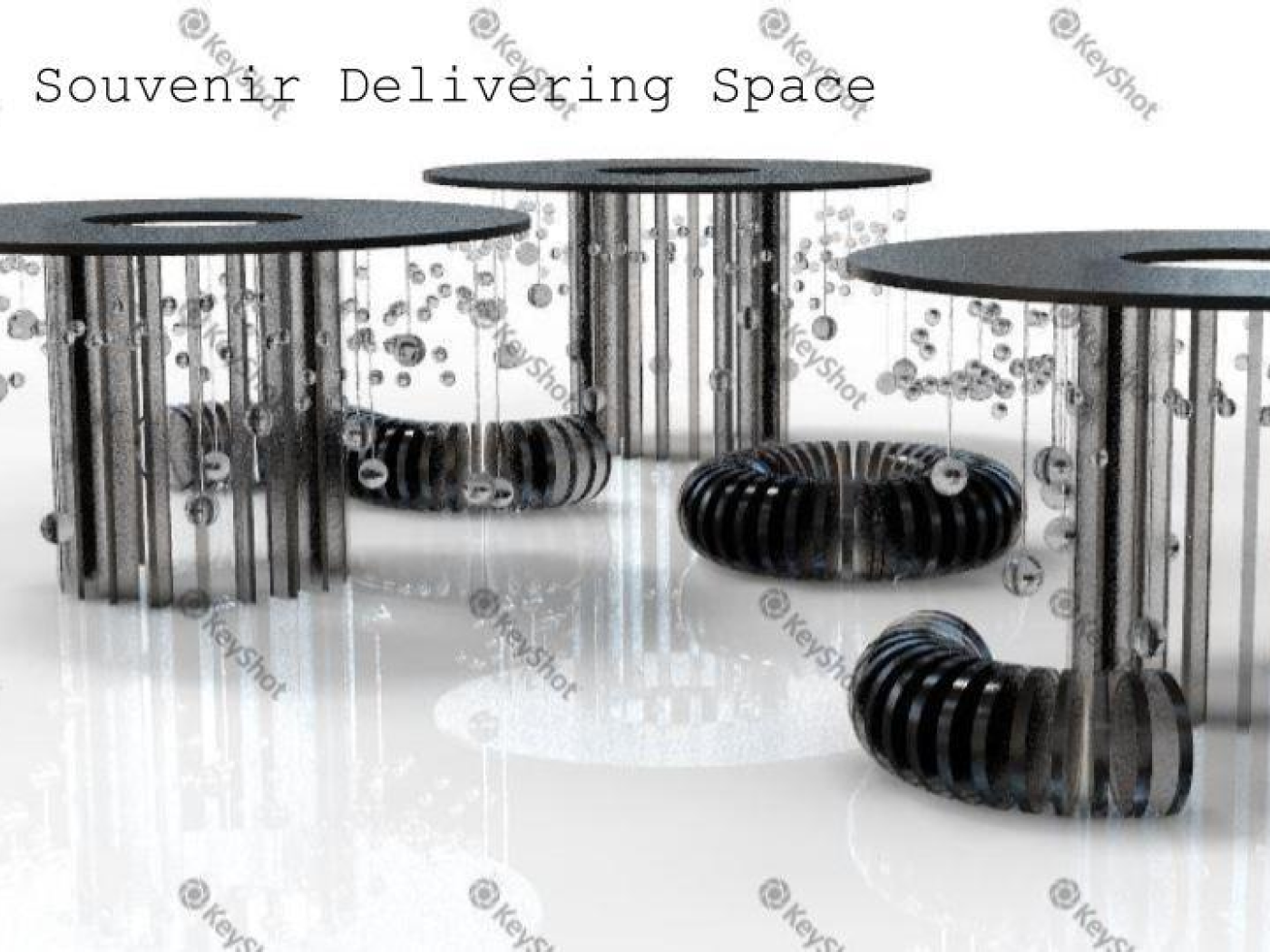
Building somewhere to stop
The pop-up was designed as an oasis: a place to sit, to learn what travel does to skin, and to receive something at the end of the journey. Every material argued against the terminal around it — soft where it was hard, warm where it was fluorescent.
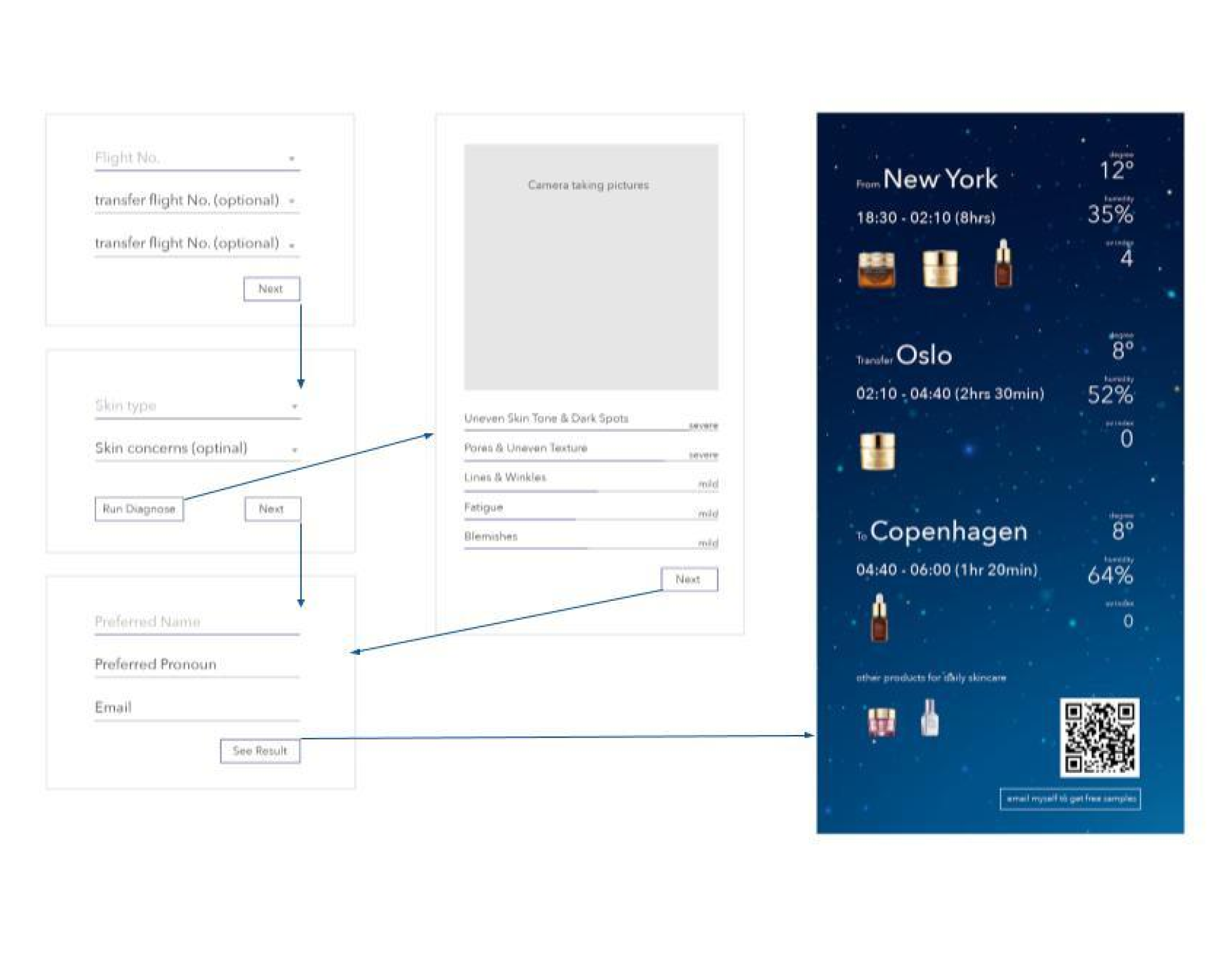
Why a physical pop-up, and not an app?
Skincare is felt. Texture between the fingers, the result in a mirror, the sensation on skin that has been awake too long. A recommendation engine can't do any of that. This put the product on actual skin in the exact place it was needed.
The location was the message. Meeting someone at their most frazzled rather than at a lit counter turns a product company into a company that cares — or exposes it if it doesn't.
Pop-up exhibition and experience design in airport terminal
An oasis in a terminal, and permission to stop.
The finished piece is a pop-up built for rest before anything else: seating, guidance on what travel does to skin, and a reward on completing the journey. The environment does the arguing — soft, warm and quiet against everything around it.
Context rewrites a brand
Meeting Estée Lauder while exhausted, with your skin suffering, is nothing like meeting it in a department store. The setting made it feel relevant instead of aspirational.
Rest is a material
The most used part was never the education. It was the seating — permission to stop, in a space that signalled care, did more than any of the content.
The best thing we designed wasn't skincare — it was permission to stop.
- Yunjia Wang