Jo Malone: Visualizing Scents
What if you could see a fragrance before you smell it?

Scent has no notation. No spectrum, no shared grammar.
Colour has a spectrum and sound has notation. Smell has neither — no system, no agreed vocabulary, nothing to point at. With Jo Malone we took the translation on directly: how do you carry an invisible, deeply private sensory experience into something another person can see and feel?
Not a branding exercise. A perceptual experiment — whether an image could be tied closely enough to a scent profile that seeing it would summon the memory of smelling it.
What if gradient, particle and form could carry a scent profile as precisely as a perfumer's notes?
What if mixed reality made sight and smell a single experience?
What if the feeling of a fragrance could be designed to arrive before the scent does?
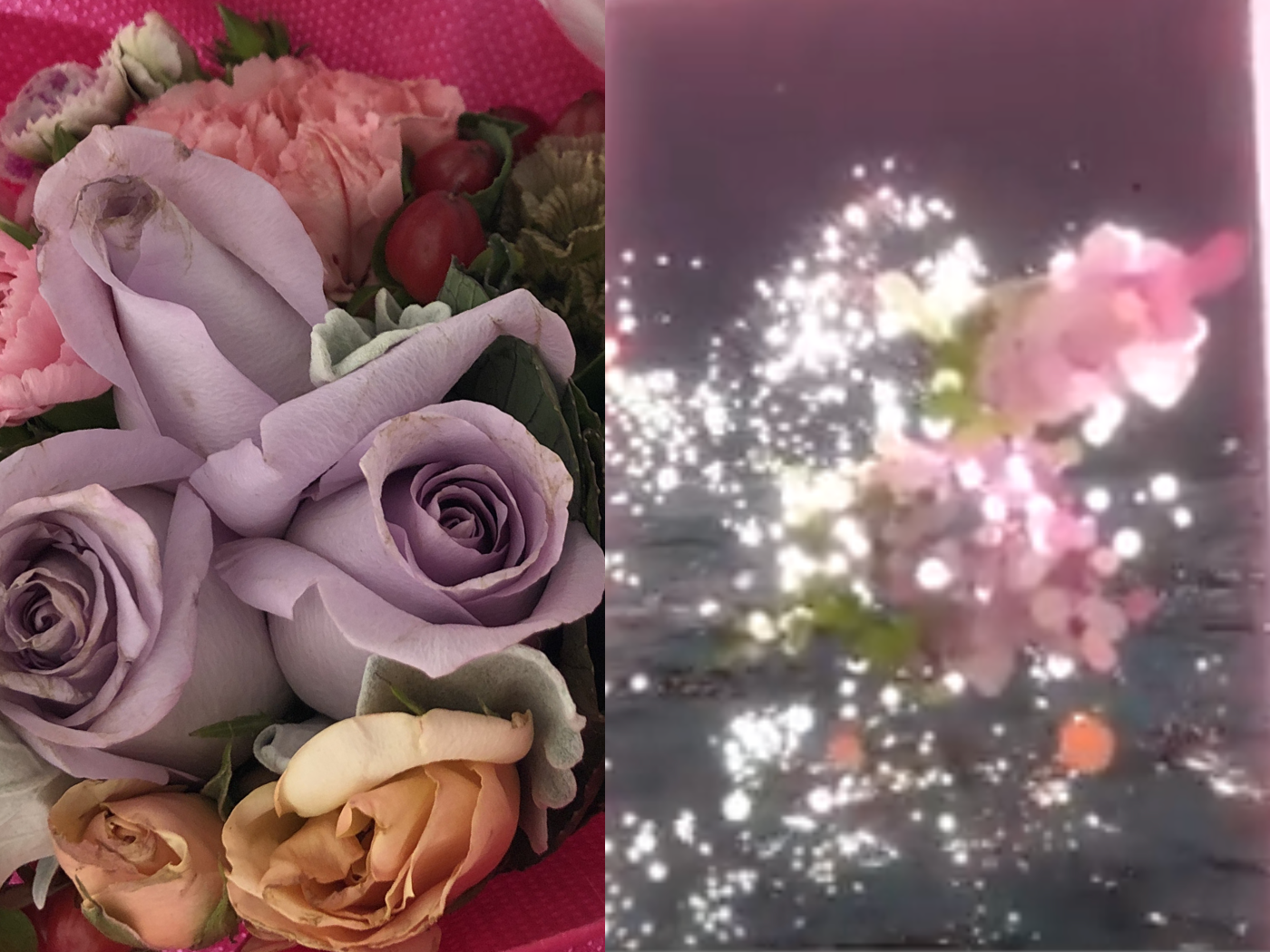
Mapping the invisible
We started from how perfumers already speak — top notes, heart notes, base notes — and looked for visual equivalents. Light, fleeting top notes became bright particles and quick movement; deep base notes became slow gradients and dense form. The grammar ended up feeling intuitive rather than assigned.
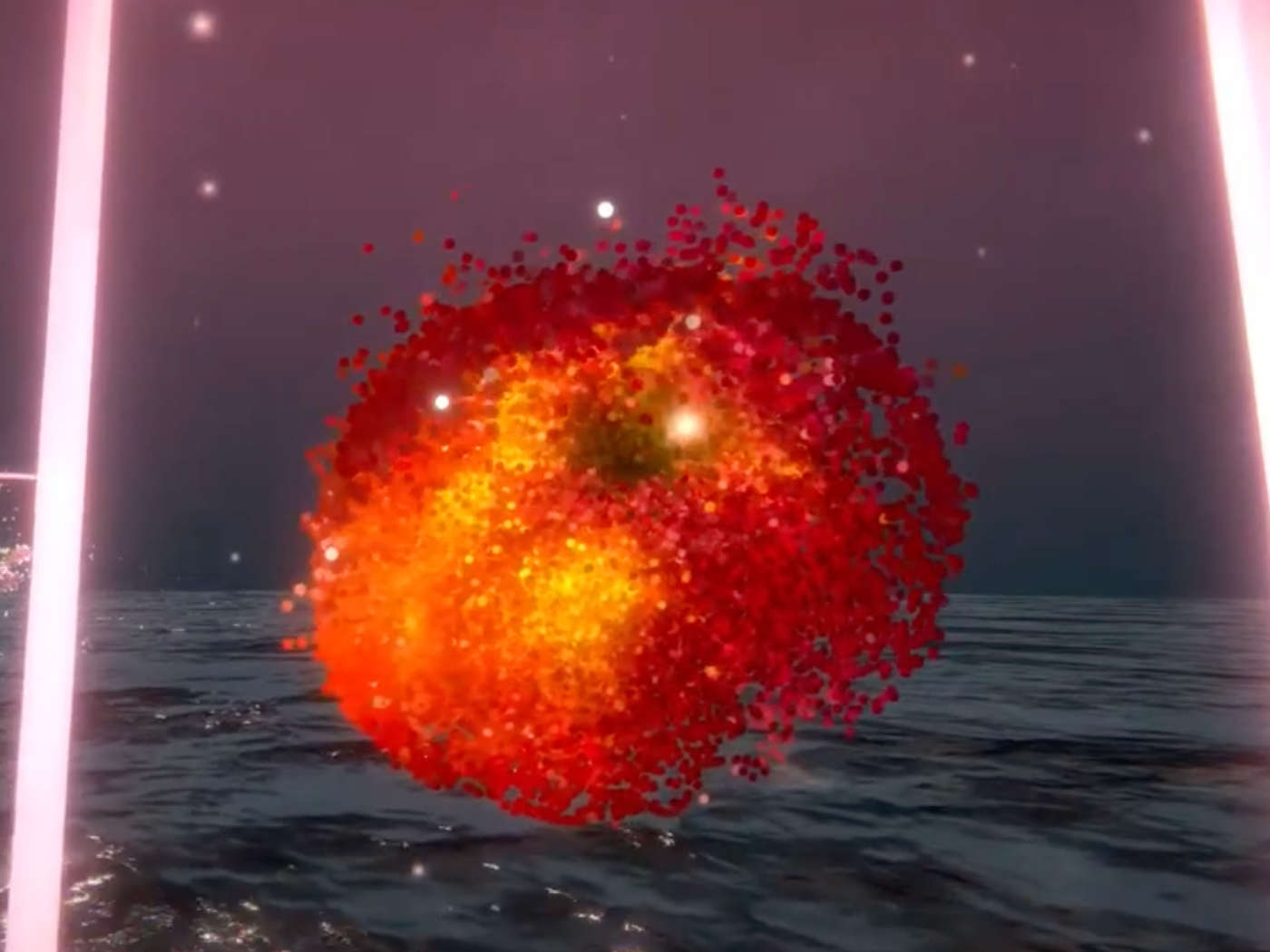
Building the scent spaces
In VR and MR each fragrance was given its own world. Lime Basil & Mandarin was effervescent, particles rising. Wood Sage & Sea Salt was horizontal and wide, muted colour moving like fog off water. What mattered was making them emotionally distinct, not merely different to look at.
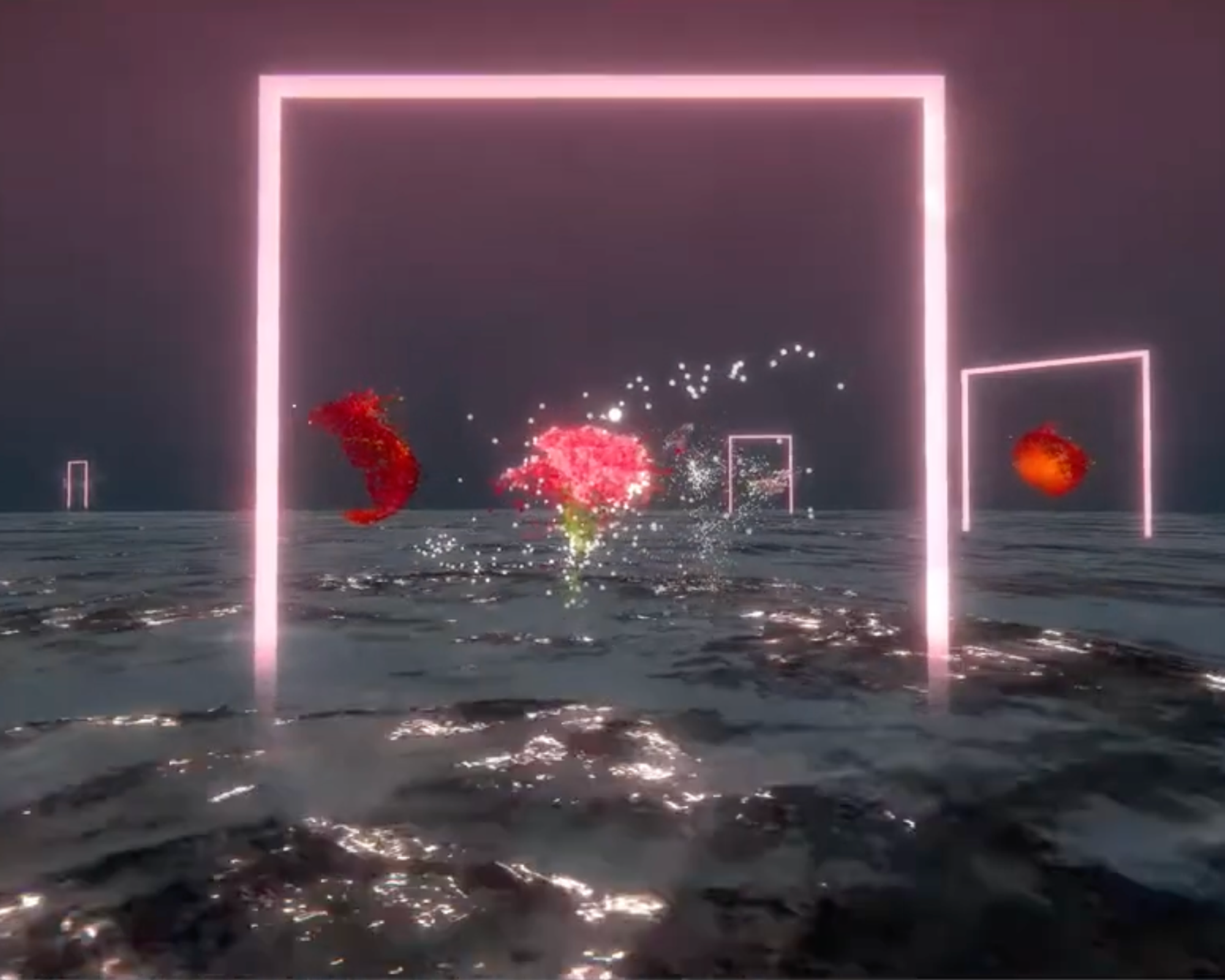
Why virtual and mixed reality, and not a screen?
Scent is environmental. It surrounds you, moves through the room, changes as it settles. A rectangle can't hold that. In VR the image of a fragrance occupied the same spatial relationship as the fragrance itself — all around you, impossible to frame.
It also let us time the real scent to the visual transitions, so that seeing and smelling arrived together. No other medium can do that.
Virtual and mixed reality immersive environments with scent synchronization
A world for each fragrance, entered rather than looked at.
The finished work is a set of immersive environments, one per fragrance, with the physical scent released in time with the visual transitions. Visitors stepped inside them rather than viewing them.
Synaesthesia can be designed
Participants described smelling the environments before any fragrance was released. The visual grammar reached olfactory memory on its own.
Emotion is the bridge
The pairings that worked were never the literal ones. A warm amber glow read as cosy far better than a photographic fire — emotional truth beat visual accuracy every time.
Seeing sharpens smelling
Afterwards, people described the real fragrances with more nuance than a control group. Having seen a scent in space, they had more language for it.
The best scent visualisation wasn't the most accurate — it was the one that made you close your eyes and breathe in.
- Nora Zhang