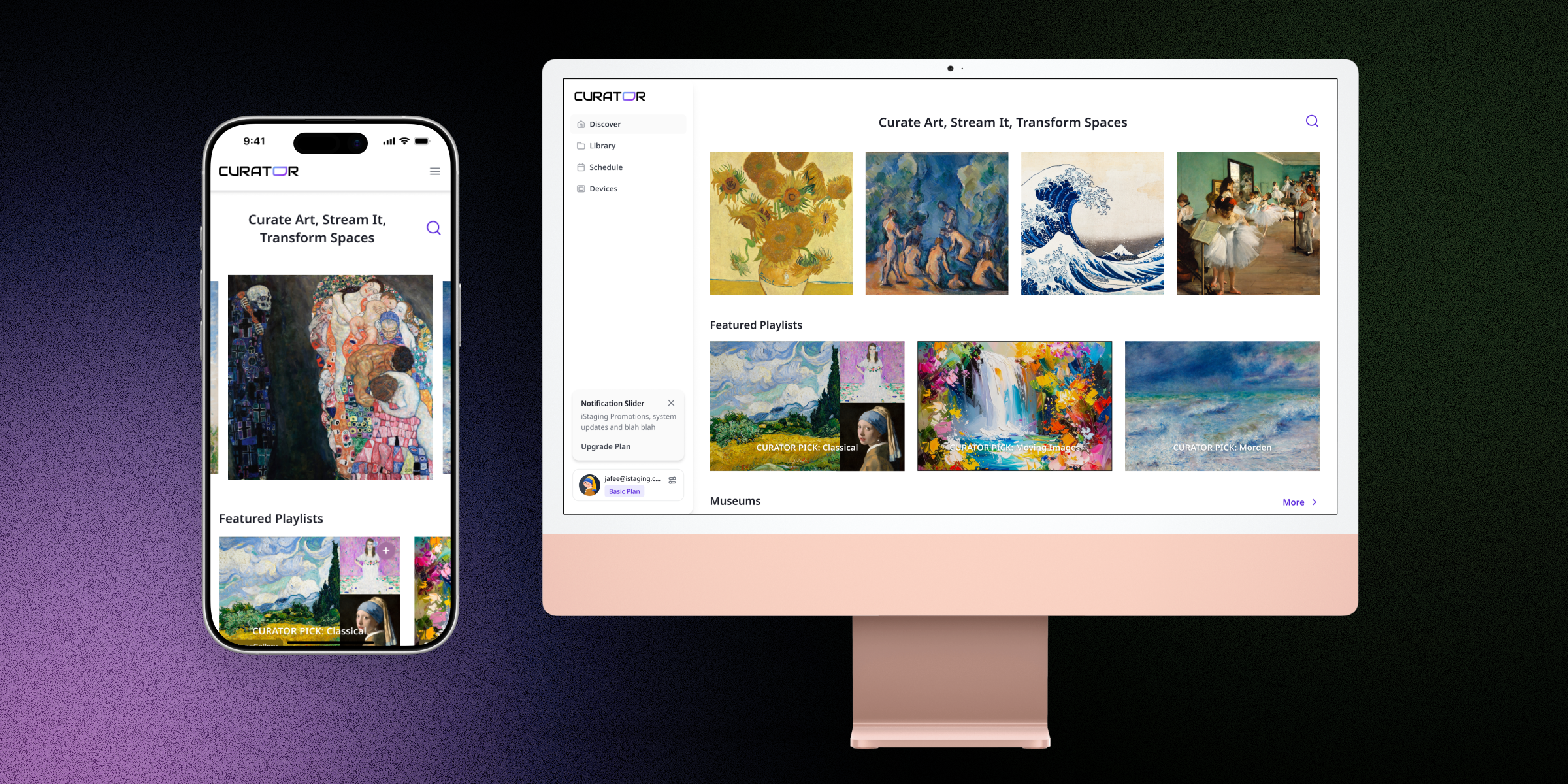
CURATOR's core design challenge was deceptively simple on the surface: build a content management system for digital picture frames. In reality, I was designing for three fundamentally different display products — each with unique screen technology and content requirements. InnoGallery uses an anti-glare panel optimized for fine art reproduction, rendering brush strokes and texture with near-physical fidelity. Éclat features a specialized surface that creates visible reflections on gold and metallic elements, producing a shimmering effect that makes decorative art feel tactile. N3D delivers glasses-free 3D, allowing viewers to experience depth and parallax from natural eye movement. Each device demands different content specifications, yet creators uploading artwork shouldn't need to understand the hardware. The platform had to abstract this complexity entirely.
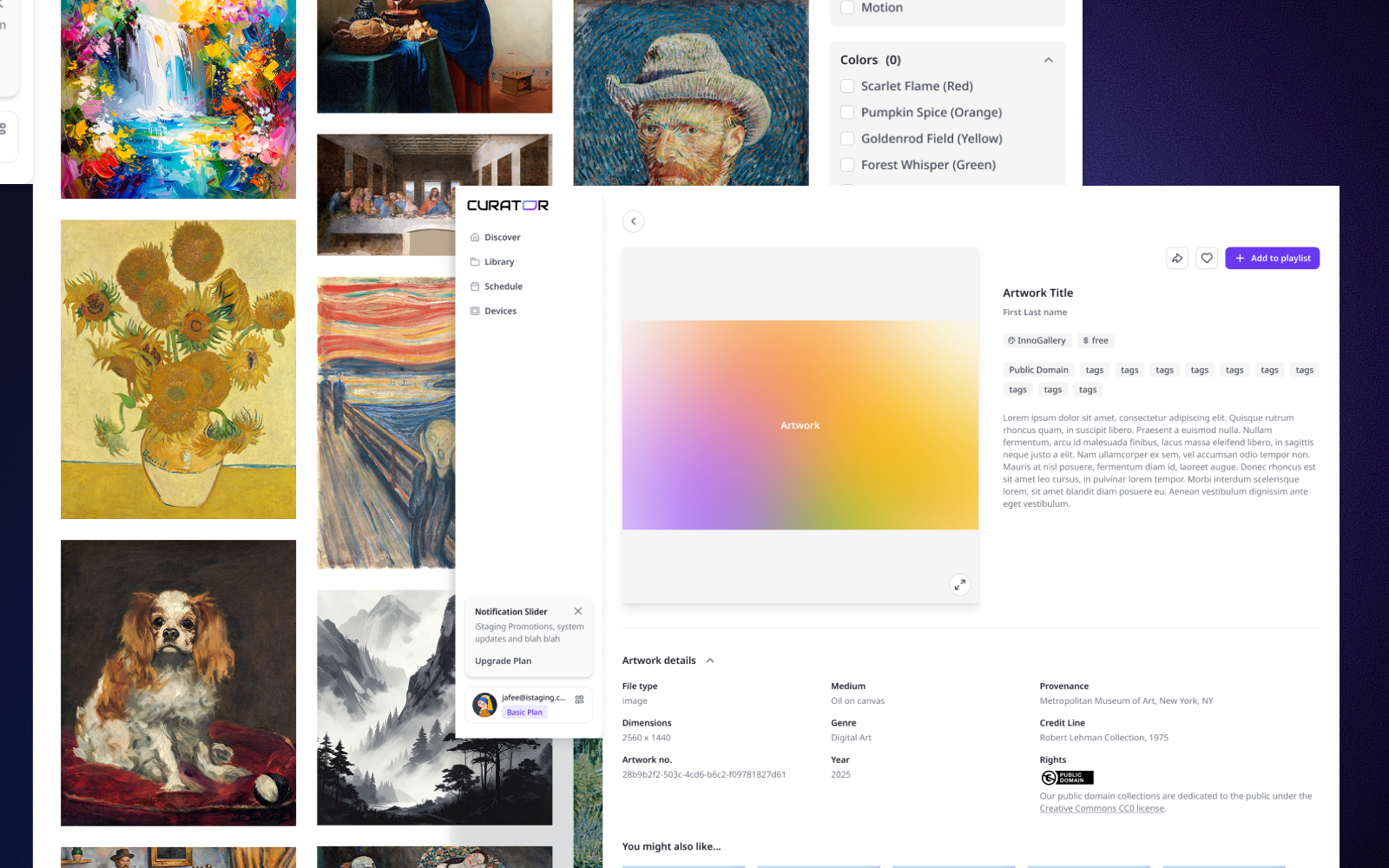
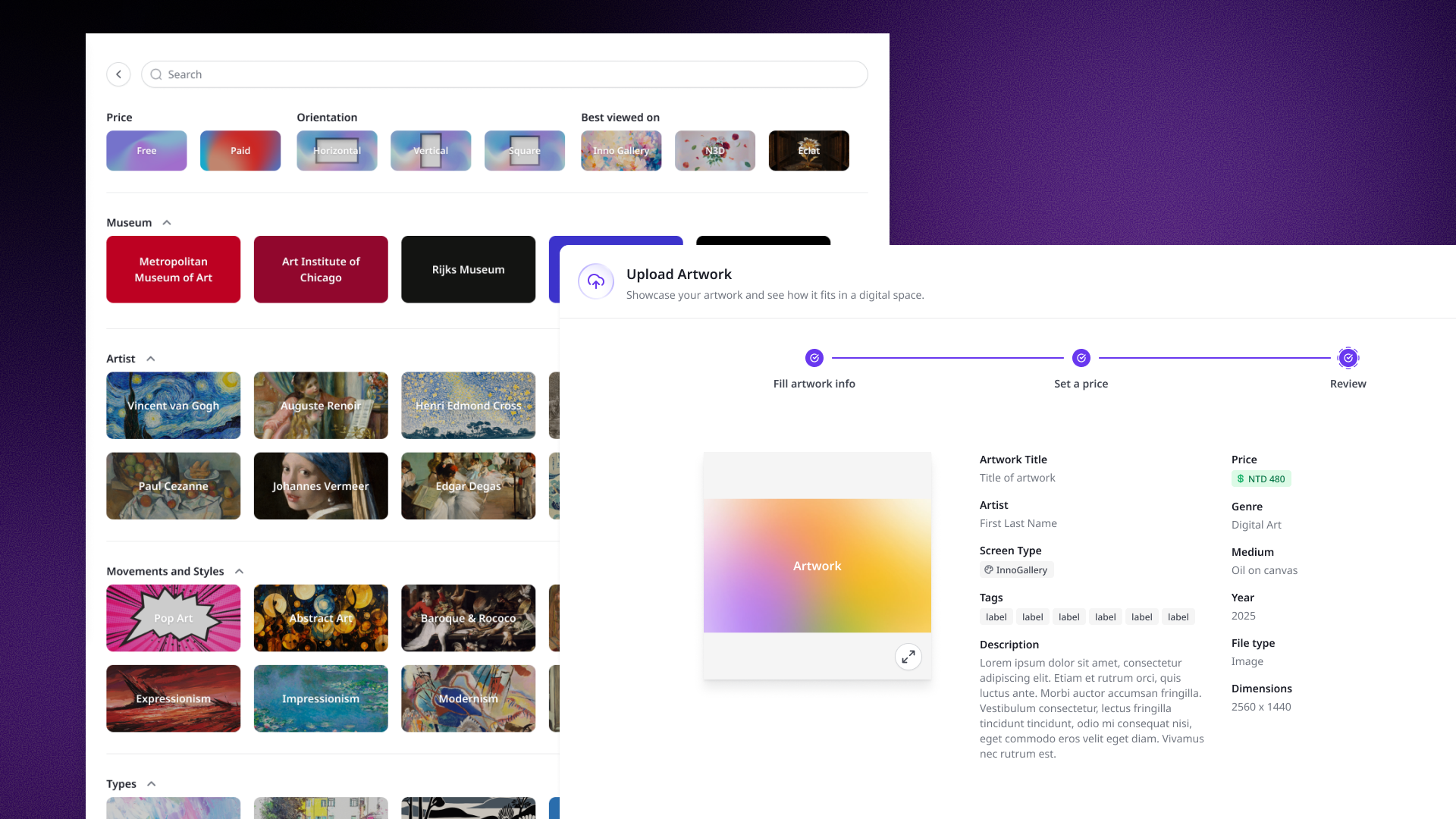
The second layer of complexity was content discovery and categorization at scale. With thousands of artworks spanning centuries of creative output, users needed an intuitive way to find pieces that matched their space and taste — without requiring art history expertise. I researched categorization patterns across museum databases, music streaming platforms, and e-commerce recommendation engines. From this research, I developed a multi-layered discovery system: first filtering by device compatibility (since some artwork cannot transfer across display types), then organizing by source — Creator Uploads, Creator Artwork (paid), Public Domain, Collaborative Gallery, and Private Collections. To power searchability, I designed an AI Art Librarian tagging system that analyzes each image and generates structured metadata across movement and style, medium and technique, subject and content, and color — using archival-quality descriptive naming like 'Scarlet Flame' for reds and 'Sapphire Dream' for blues rather than generic hex values.
With thousands of artworks entering the platform, I needed a discovery system that felt intuitive to non-art-experts while remaining precise enough for curators. I studied categorization patterns across museum collection databases (the Met, MoMA), music streaming recommendation engines (Spotify's genre taxonomy), and e-commerce visual search. The insight: users browse art the way they browse music — by mood, era, and visual character, not by academic classification. I designed an AI-powered tagging pipeline using an 'Art Librarian' prompt framework that analyzes each uploaded image and generates structured metadata across five dimensions: movement and style, medium and technique, subject matter, color palette (using archival descriptive names like 'Scarlet Flame' and 'Sapphire Dream' rather than hex codes), and device compatibility. The search interface layers these dimensions into progressive filters — users start broad and narrow intuitively.
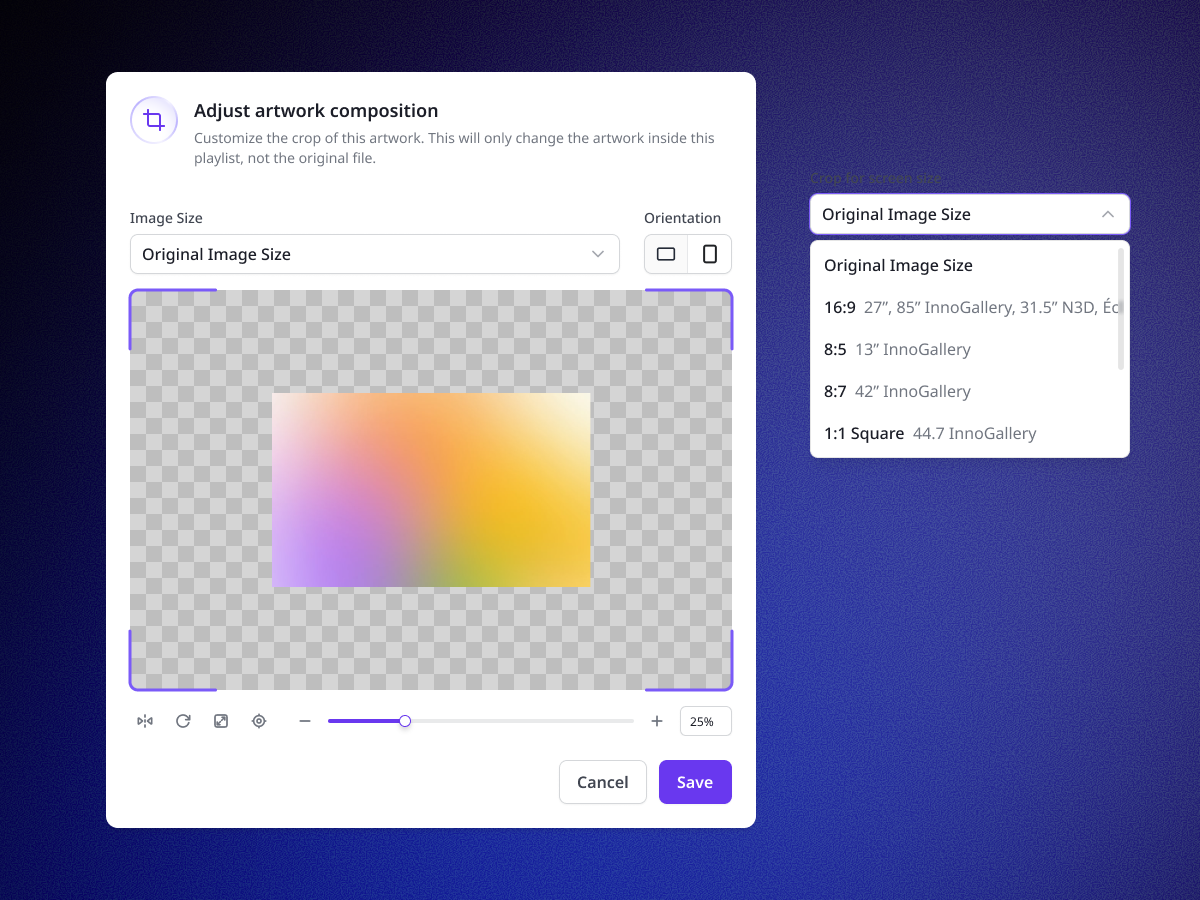
Every artwork uploaded once needs to display correctly on three devices with different aspect ratios and screen capabilities. I established a square-format upload standard as the universal baseline — a single asset that the system intelligently crops per device while keeping the composition intentional. For each artwork in a playlist, I designed fill/fit options that give subscribers control over how cropping behaves on their specific frame. The preview system renders device-accurate mockups so users see exactly what their InnoGallery, Éclat, or N3D will display before committing — eliminating the gap between CMS screen and physical wall.
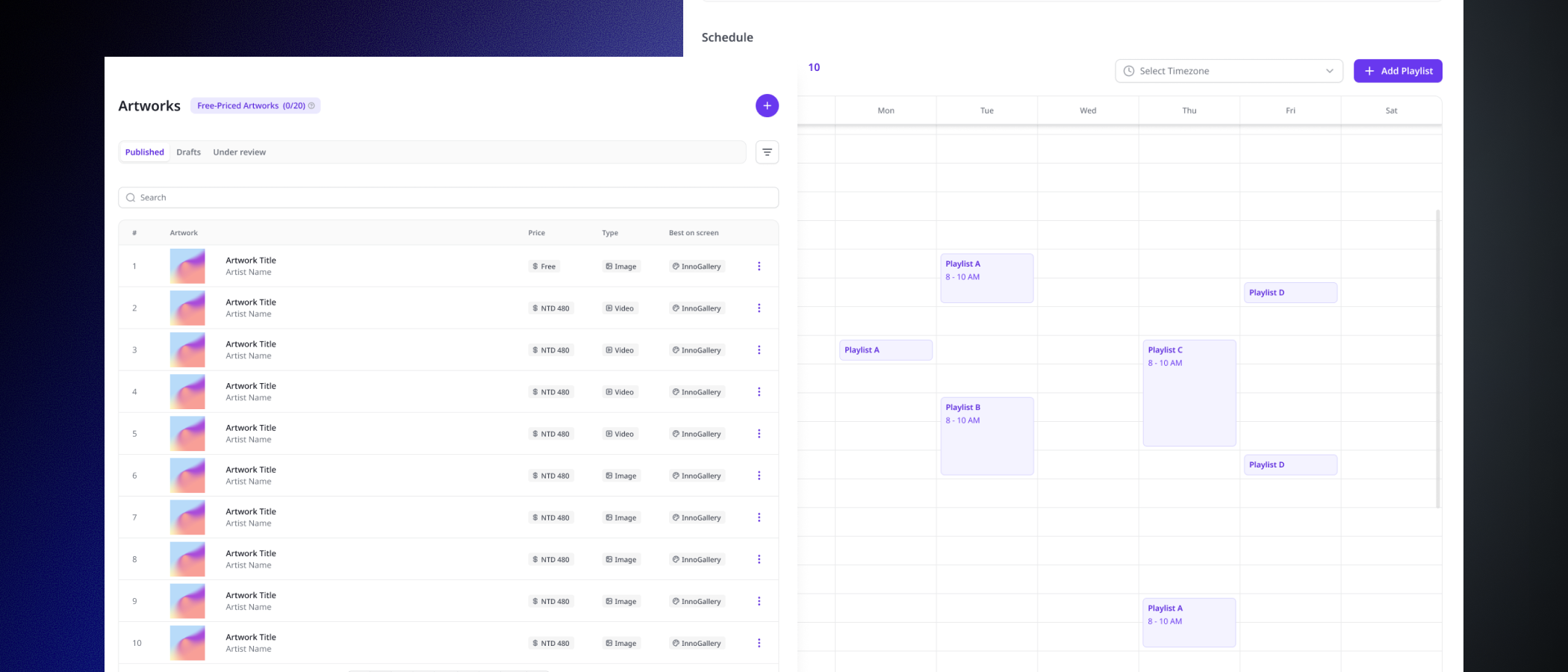
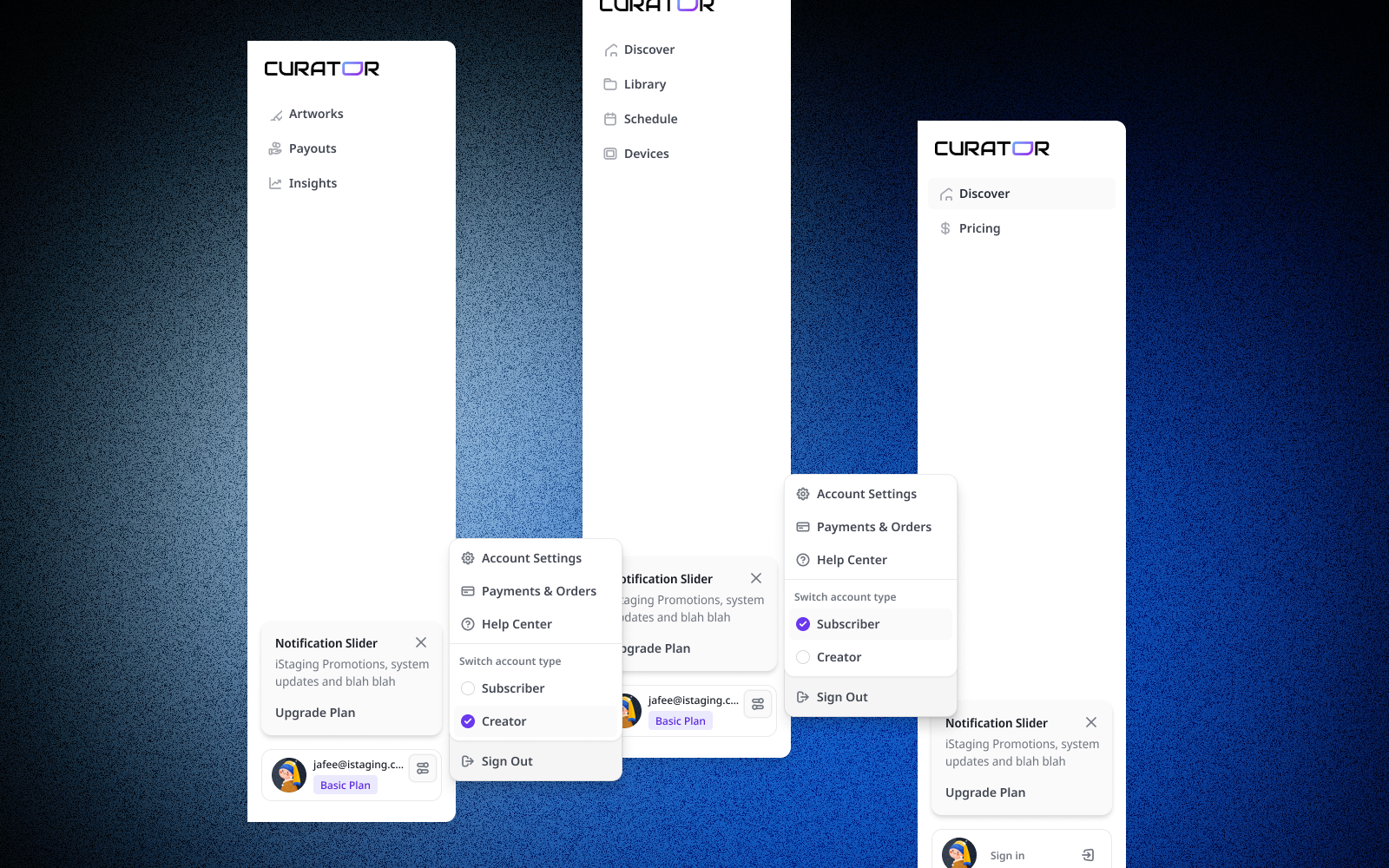
I designed two distinct but interconnected user journeys within a single platform. Subscribers manage their device fleet, curate playlists from the CC0 public domain library and paid creator subscriptions, and schedule content rotation around the 8-hour afterimage threshold. Creators upload and price their artwork, manage their subscriber base, track sales analytics, and monitor which pieces perform best across device types. The critical design challenge was containment: each role needed a focused, uncluttered experience without awareness of the other's complexity. I built a role-detection system that adapts navigation, permissions, feature visibility, and even the dashboard layout based on account type — while keeping shared touchpoints like the marketplace and device management consistent across both roles.
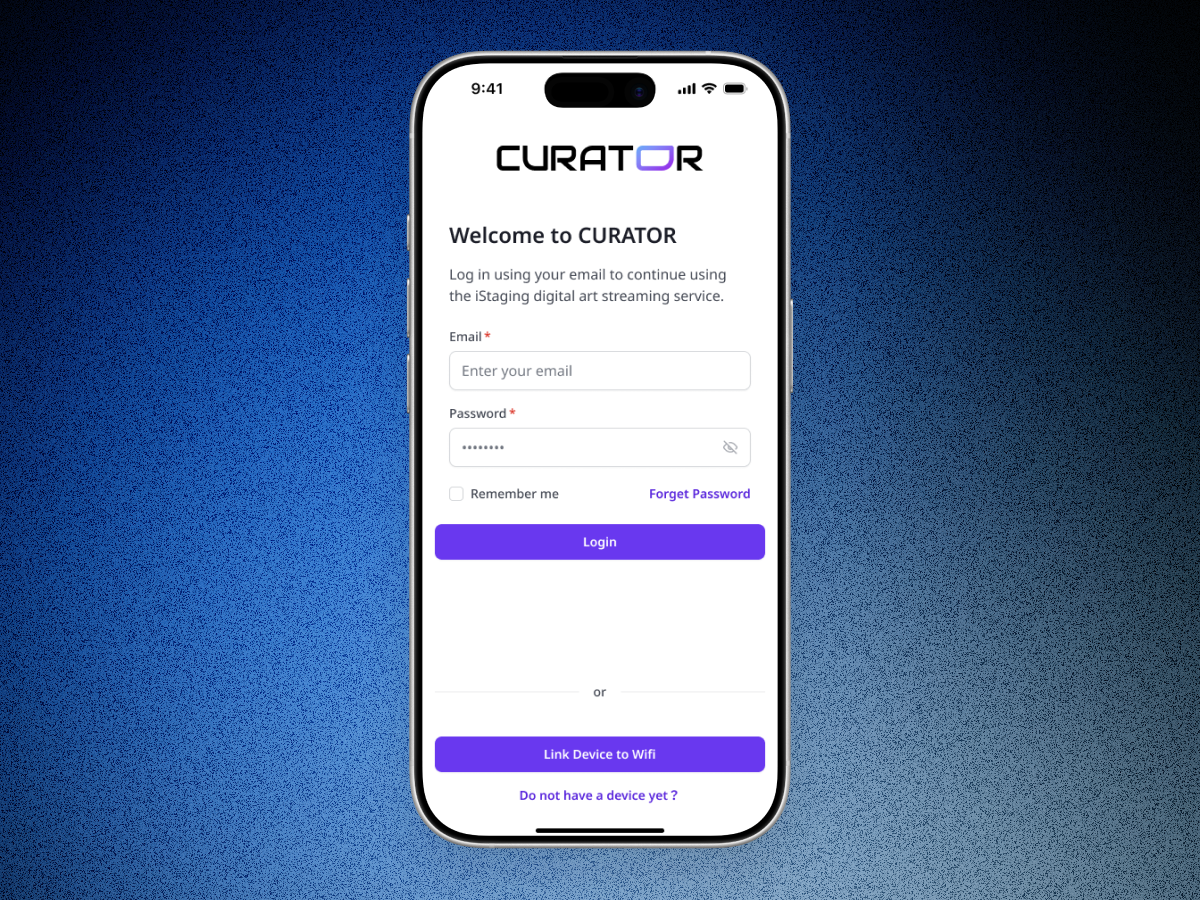
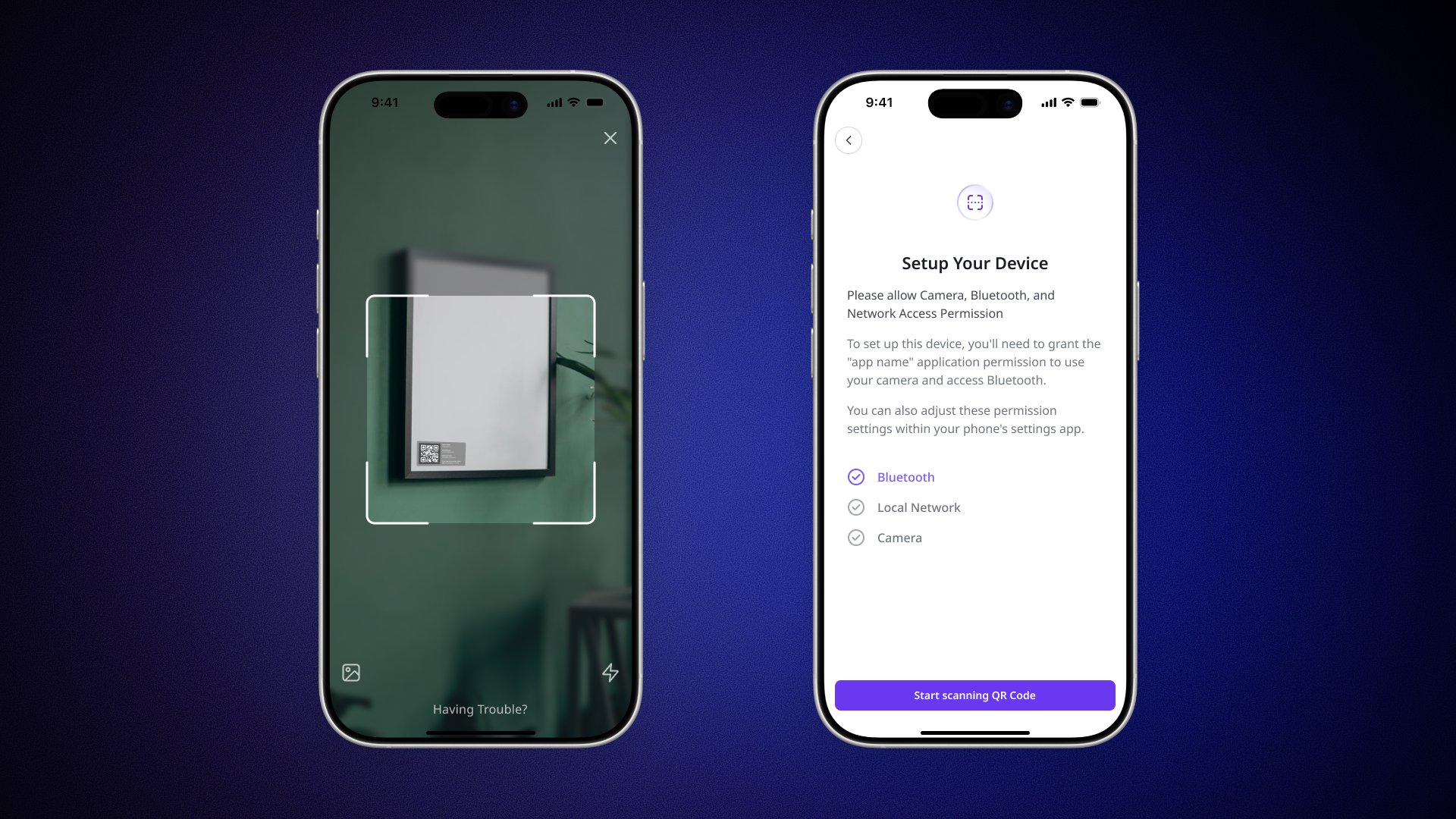
Device pairing is the critical first-impression moment — a physical frame arriving at a hotel or gallery needs to connect to the CMS reliably in commercial environments where network conditions are unpredictable. I designed a resilient pairing flow with real-time status feedback, progressive troubleshooting prompts, and graceful error recovery that never leaves the user stranded. For subscriptions, I mapped the complete tier upgrade journey: one subscription covers 10 devices, and businesses scaling beyond that encounter an in-context upgrade prompt during device pairing — showing the cost delta and preserving all existing configurations. No disruption to running devices, no re-pairing. The flow treats growth as a natural extension of setup, not a separate billing exercise.
Rather than requiring creators to produce multiple asset sizes, I established a square upload standard that could be intelligently cropped to any frame’s aspect ratio while remaining visually presentable. This dramatically simplified the creator experience while ensuring content looked intentional on every device — not stretched, not awkwardly cropped.
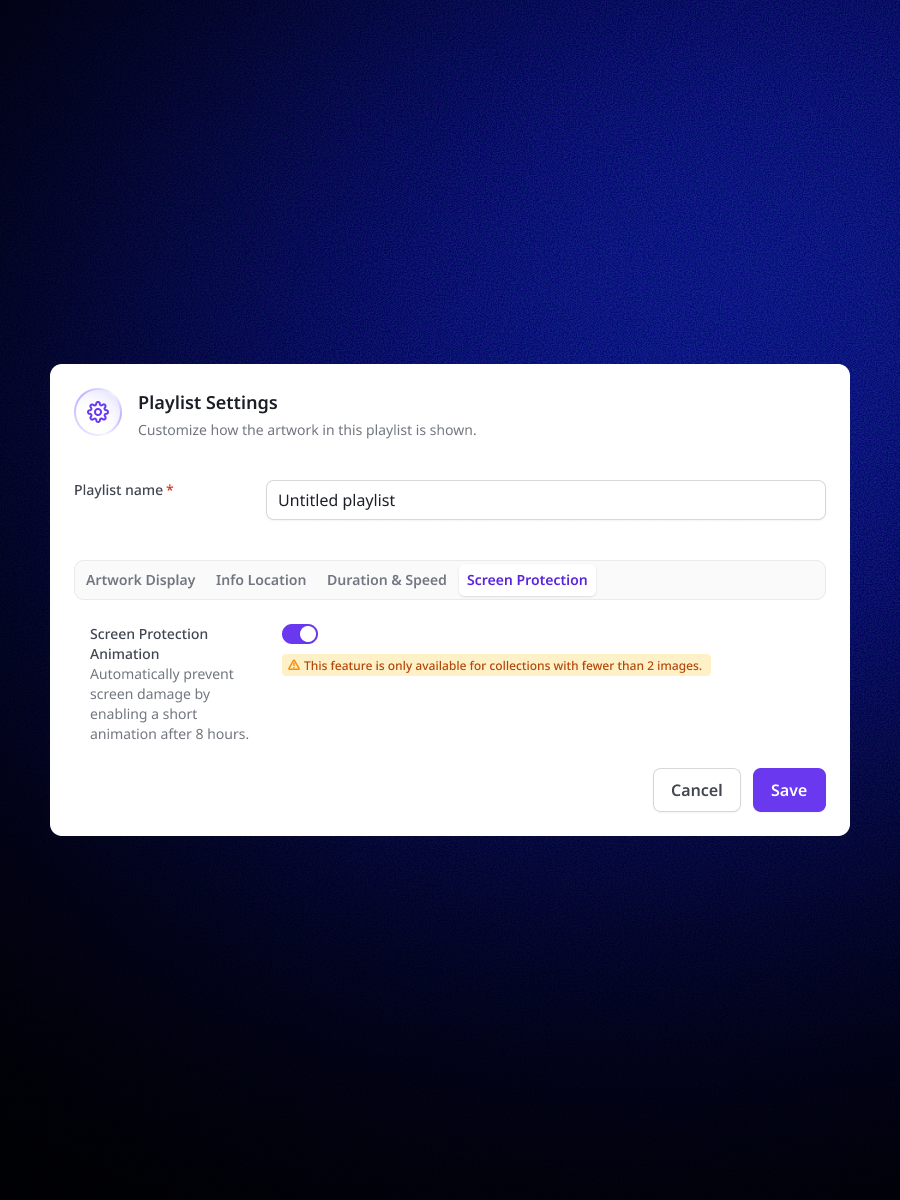
Digital frames displaying the same image for extended periods risk permanent screen burn-in. Rather than burying this as a technical setting, I designed it as a visible scheduling feature: content automatically rotates after 8 hours, and the UI communicates this as a curation benefit (keep your space fresh) rather than a hardware limitation. Turning a constraint into a feature.
Subscribers and creators have fundamentally different goals, but forcing them into separate apps would fragment the marketplace. I designed a role-based architecture where the platform adapts its navigation, permissions, and feature set based on account type — while keeping shared spaces (the marketplace, device management) consistent. The sign-in system detects role type and routes to the appropriate experience seamlessly.
CURATOR launched as the software companion for InnoLux’s premium digital frame lineup, targeting hotels, galleries, restaurants, and retail spaces. The platform supports the full lifecycle from device unboxing and pairing through content curation, scheduling, and marketplace transactions — all managed from a single CMS.
This was the most systems-heavy project in my portfolio, and it taught me that the hardest design problems are not in any single screen — they are in the invisible connections between systems. The relationship between content format, device capability, subscription logic, and user roles created a web of constraints that could not be solved screen-by-screen. It required zooming out to the system level and designing the rules before designing the interfaces.