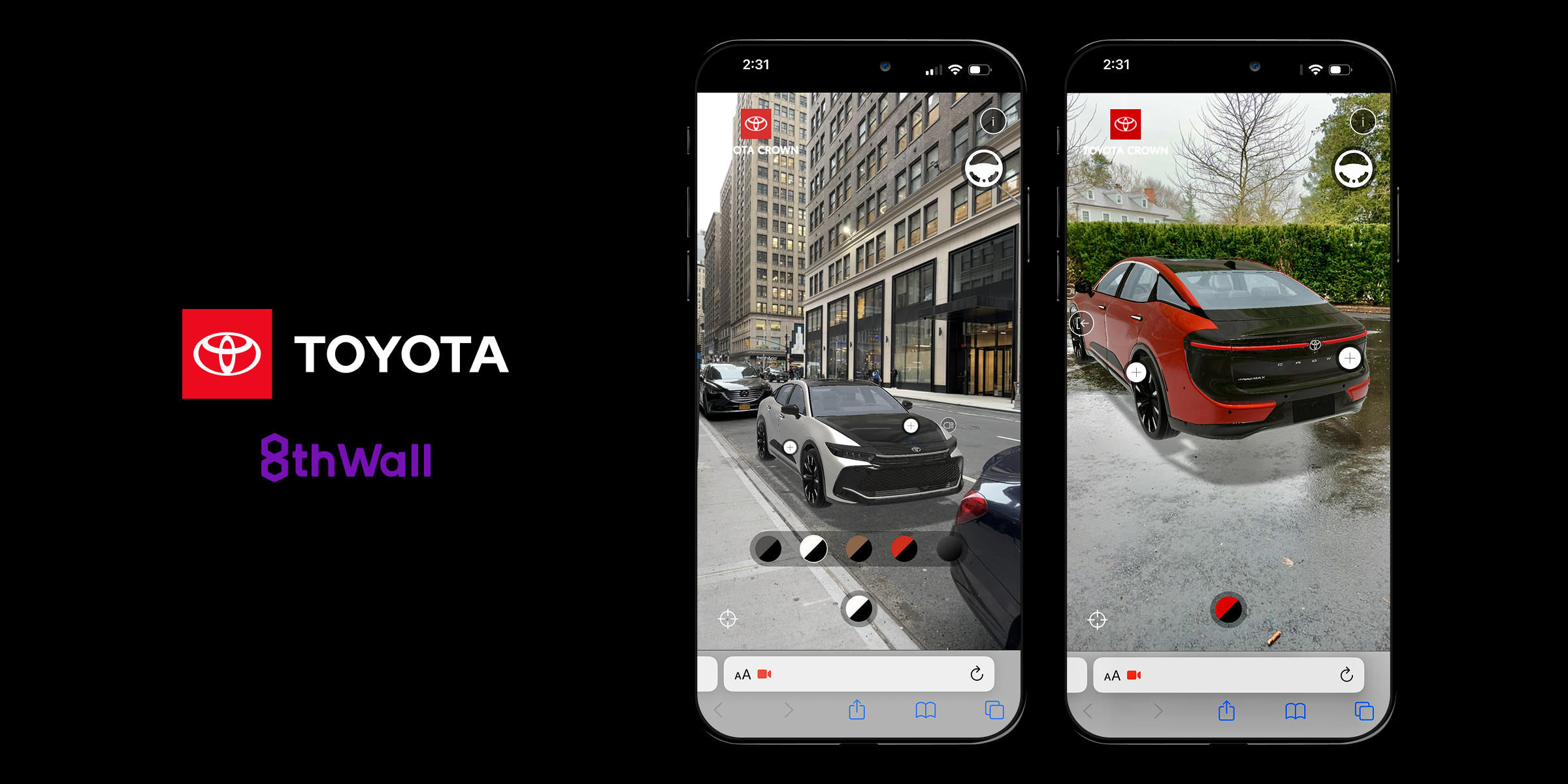
Toyota Crown — A Test Drive Without the Dealership
An app-free WebAR experience that let buyers place, explore, and virtually test-drive the 2023 Crown from any phone — no download required.




A 70-year nameplate, completely reinvented — and nowhere to touch it.
Business
- Launch the redesigned Crown with real interaction
- One endpoint for DOOH, display, and CTV traffic
User
- Experience the car before the dealership
- No app download for a 30-second scan moment
Technical
- Vehicle-grade 3D rendered in the browser
- Acceptable frame rates on mid-range devices
Friction kills conversion
A 60–90 second app install would erase most DOOH scan traffic.
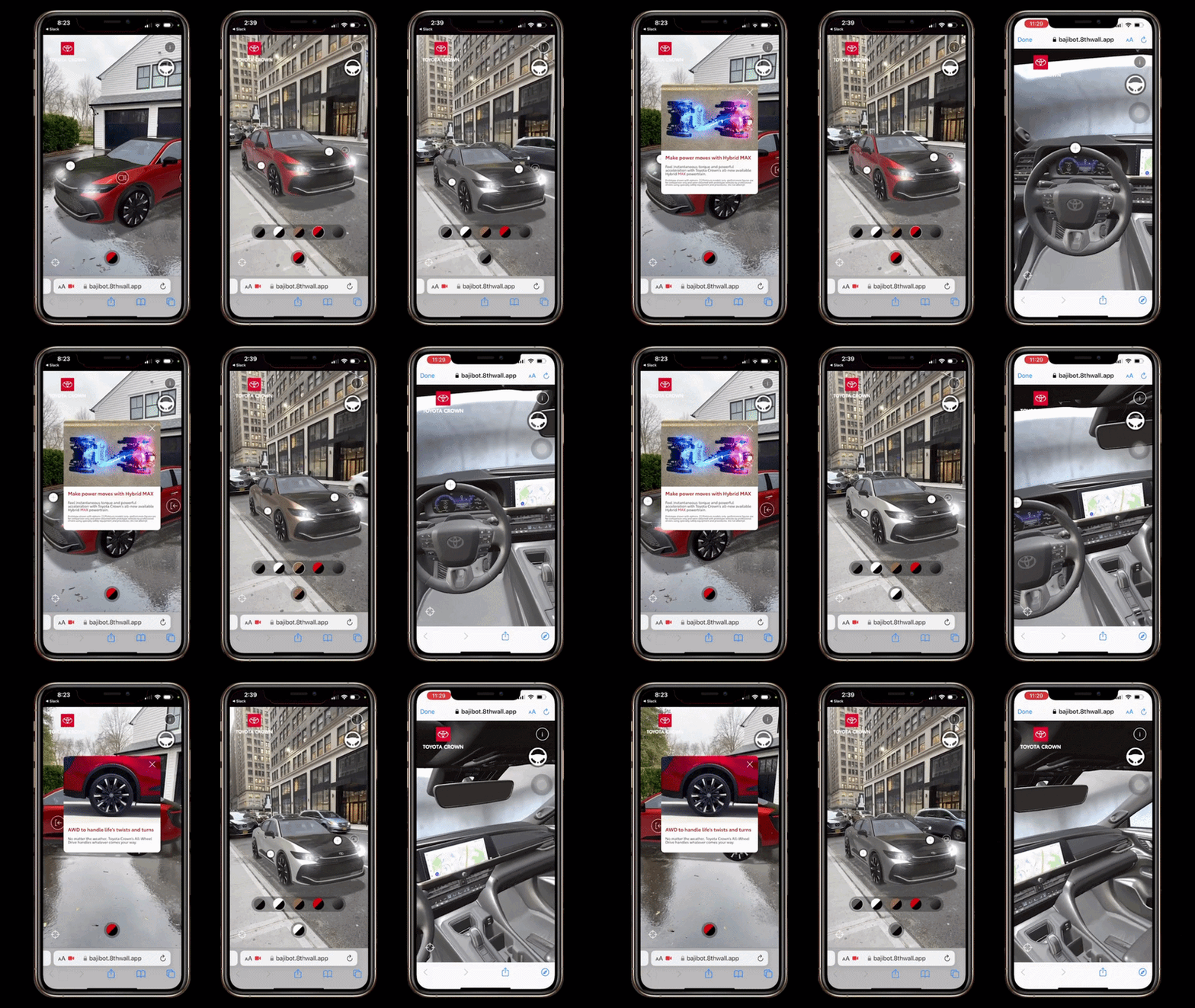
A car in a browser
A detailed vehicle model at mobile frame rates, with lighting estimation.
Three experiences in one
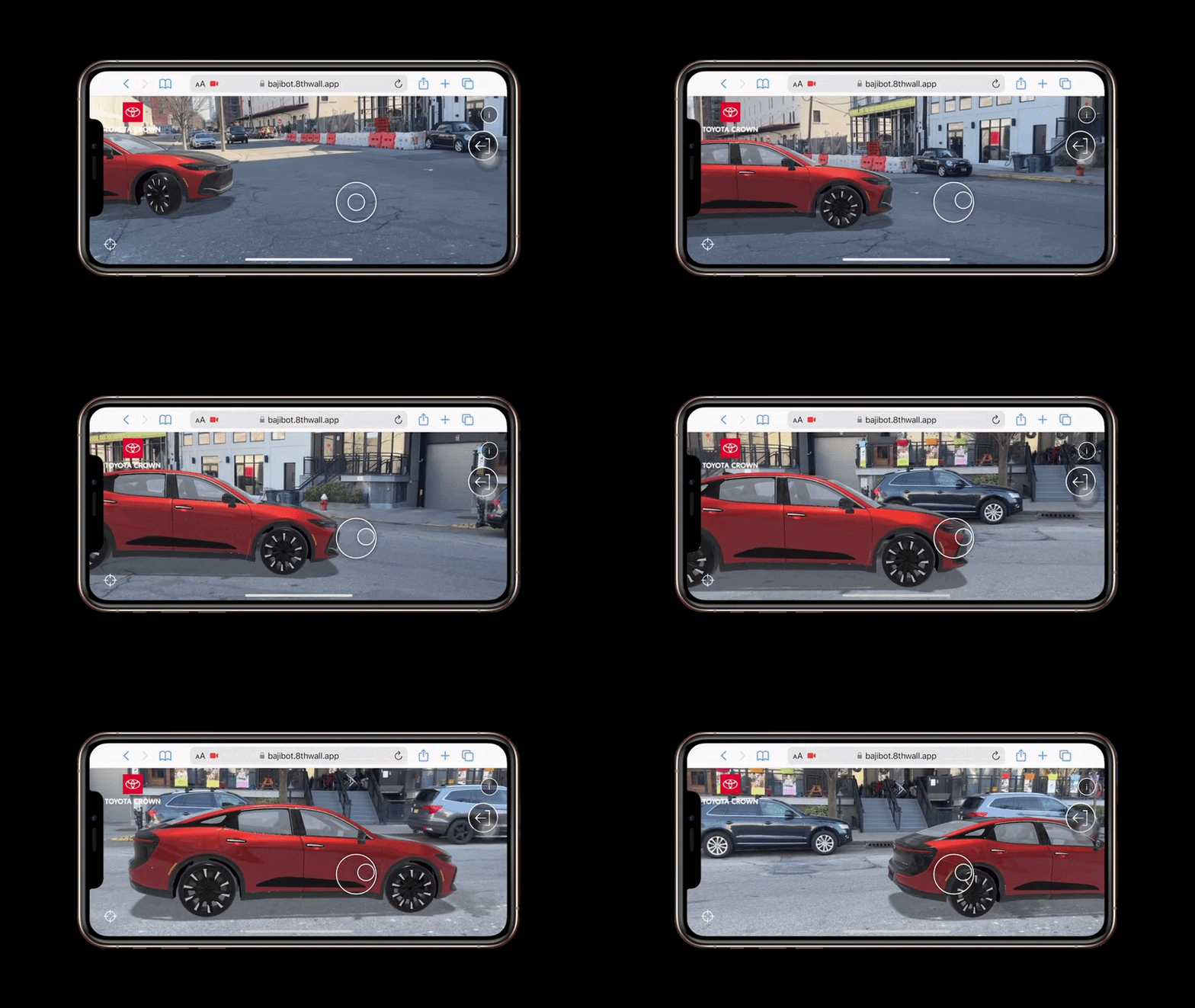
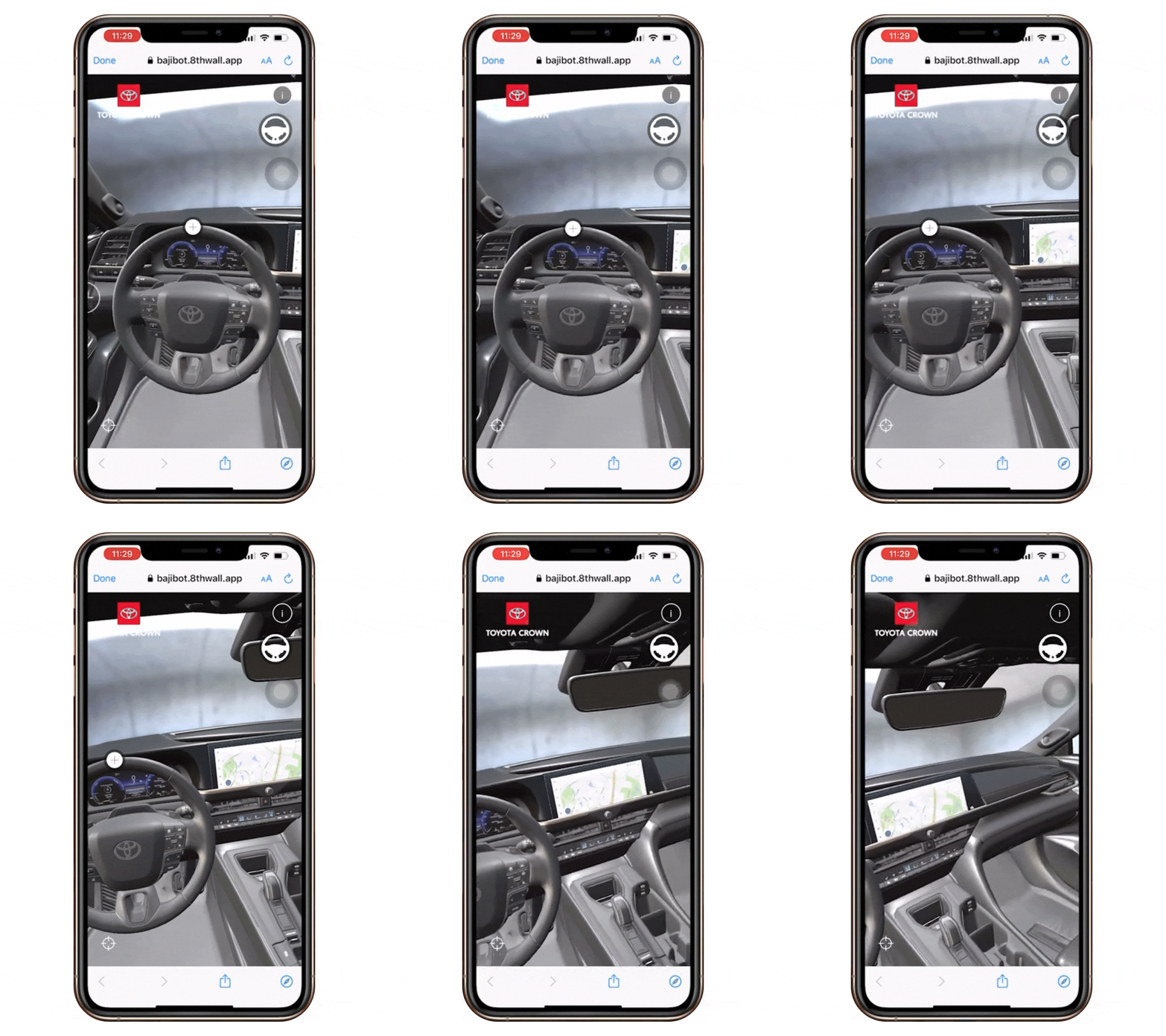
Walk around it, sit inside it, drive it — each with its own interaction model.
Campaign as data
The experience had to report preferences, not just impressions.
I produced and designed the AR experience — from pitch to platform.
Owned
- Creative Pitch
- Multi-Mode AR UX
- Interaction & Hotspot Design
- Technical Platform Research
Collaborated with
- Creative Director
- AR Developer
- UI/UX Designer
The decisions that mattered happened before Figma opened.
WebAR — reach as a design decision
A native AR app gatekeeps the experience behind a 60–90 second install.
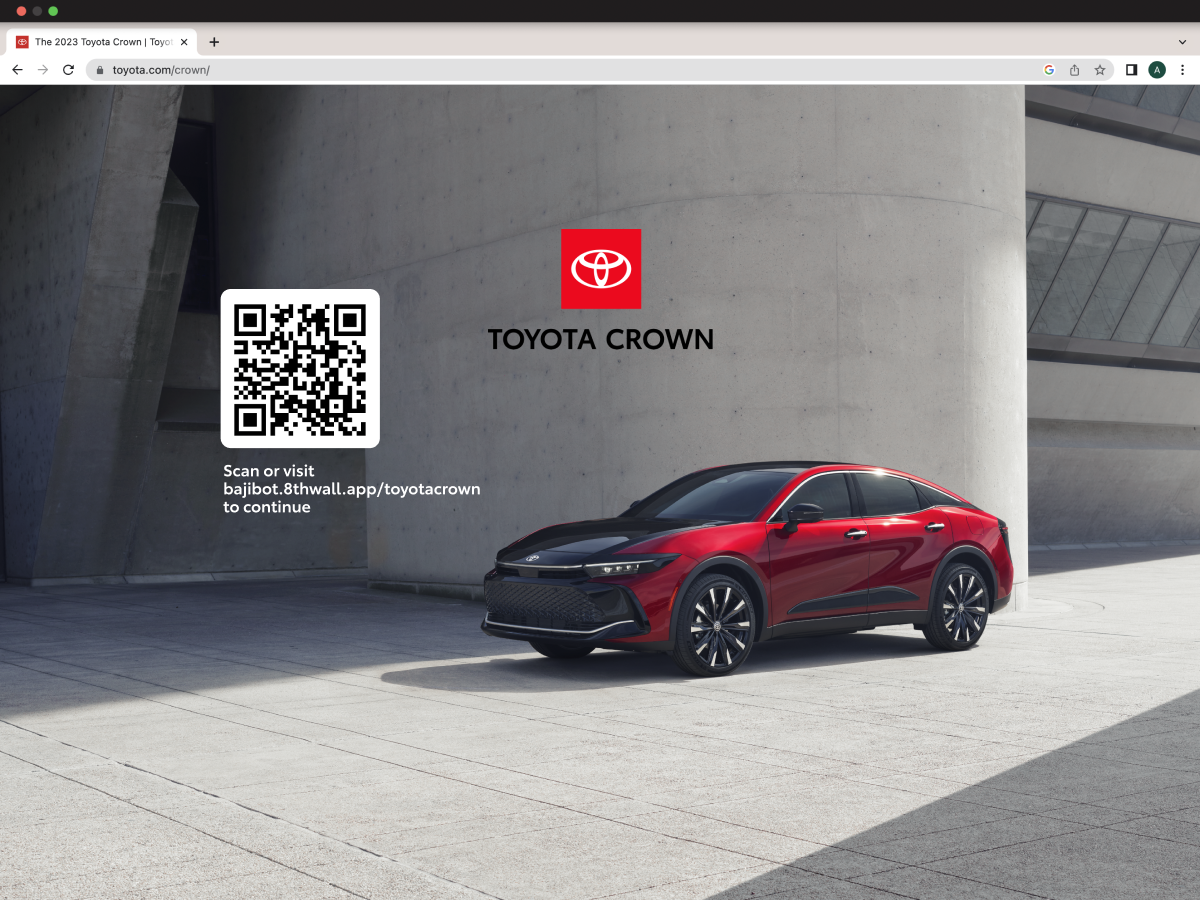
8th Wall WebAR, loading straight from a QR scan in any mobile browser.
From billboard scan to a Crown in your driveway in under 10 seconds — or nobody comes.
Made the entire multi-channel campaign strategy viable.
Three modes that mirror a real dealership
A single 3D view is technically impressive but experientially shallow.
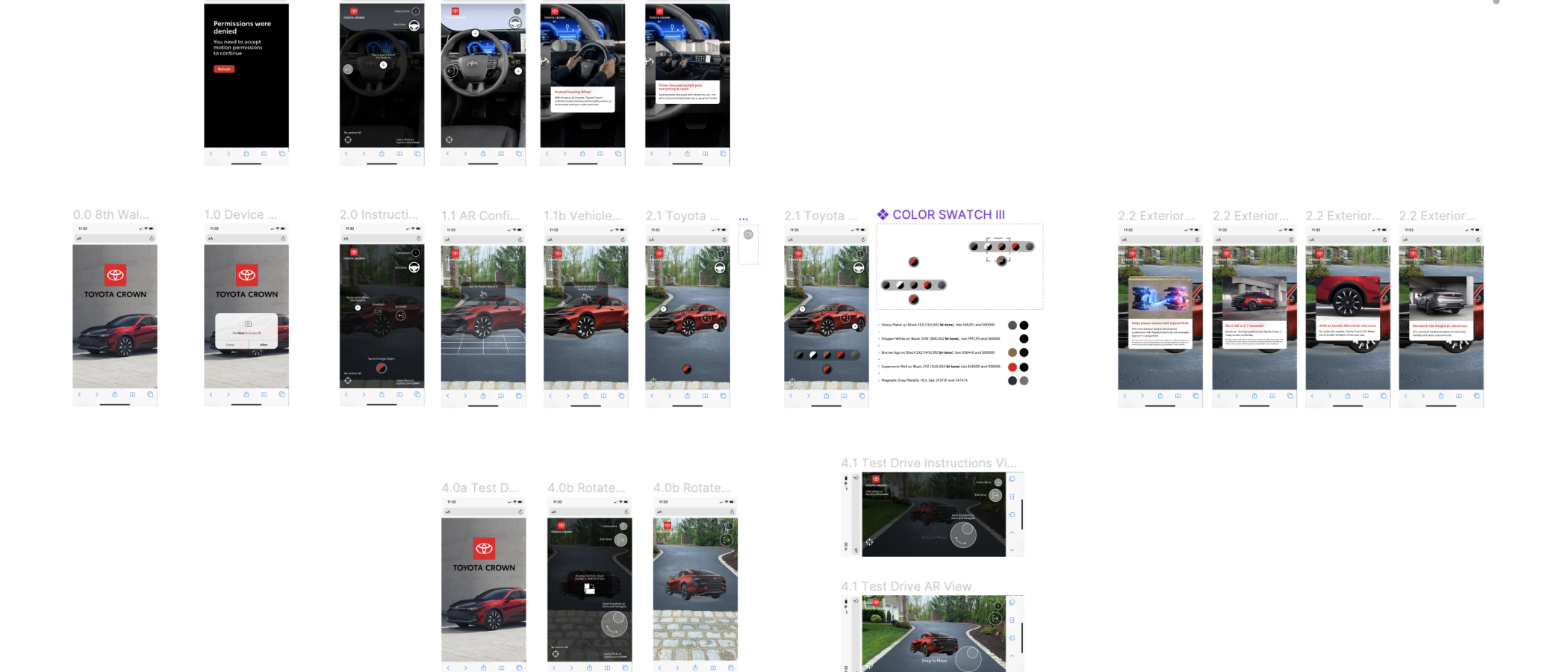
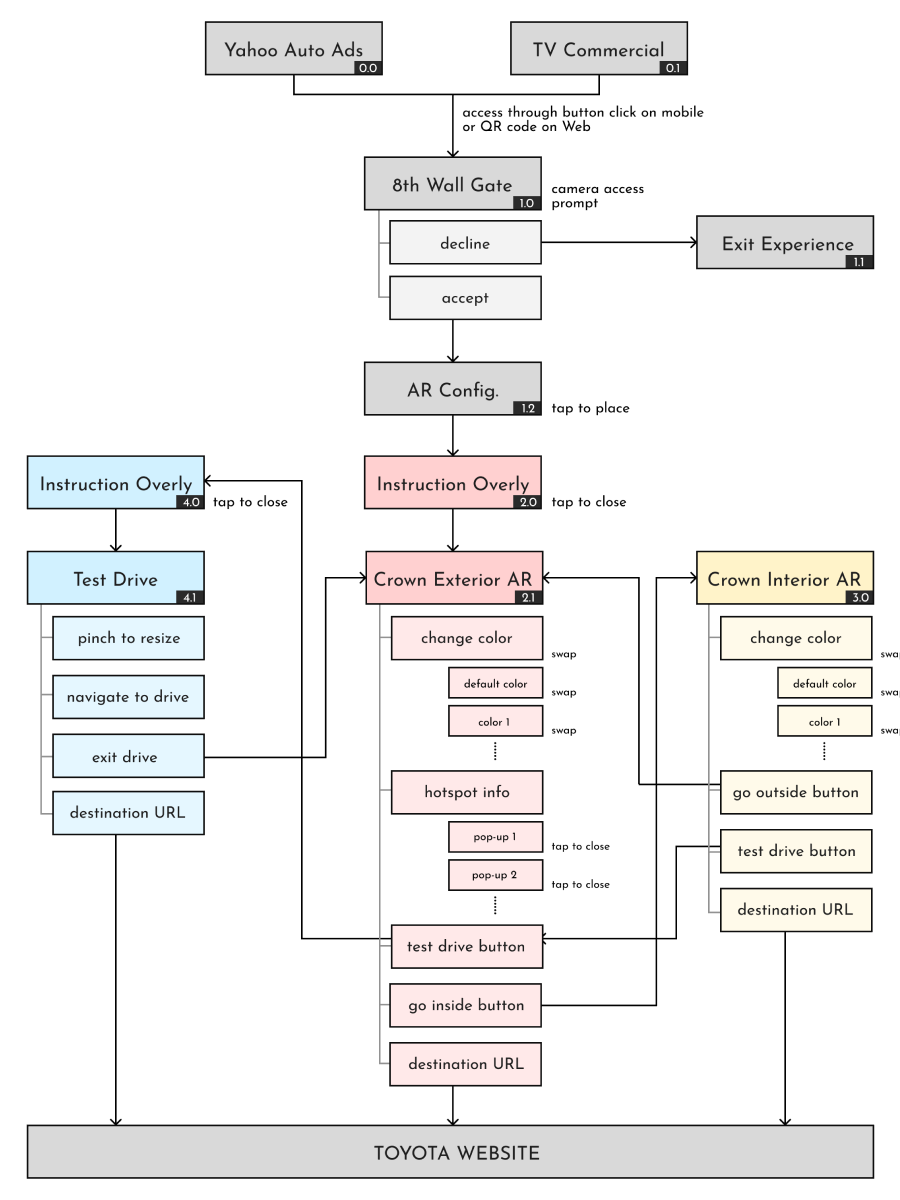
Exterior walkaround, interior immersion, and virtual test drive — with spatial transitions.
It maps to how buyers evaluate a car: walk around it, sit in it, drive it.
A genuine preview, not a marketing gimmick.
A campaign that listens
Most AR brand pieces measure success by session count alone.
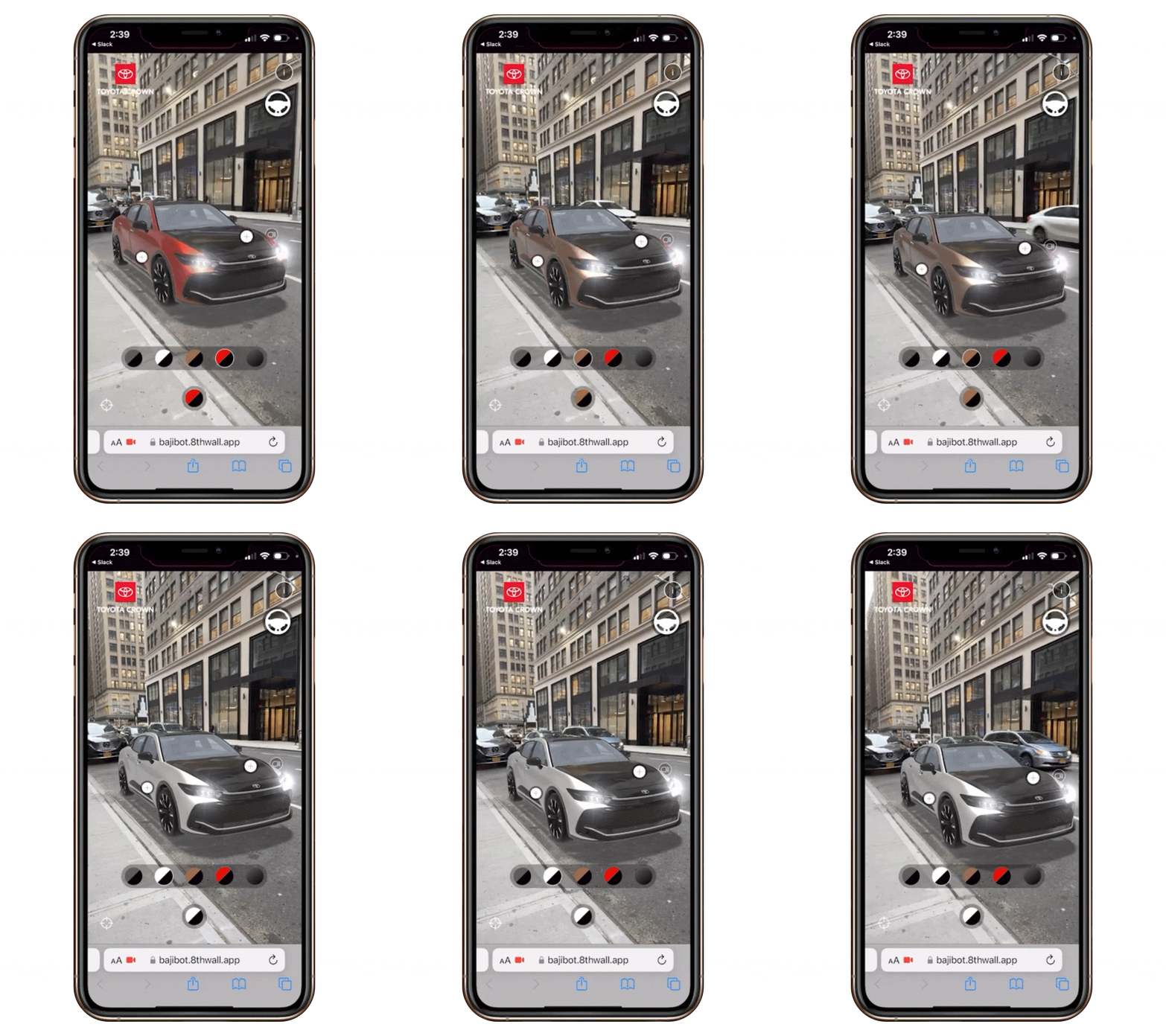
Track color choices, hotspot taps, and mode engagement as a preference layer.
Configuration behavior tells Toyota which Crowns resonate — awareness becomes insight.
The campaign doubled as a consumer-insights engine.
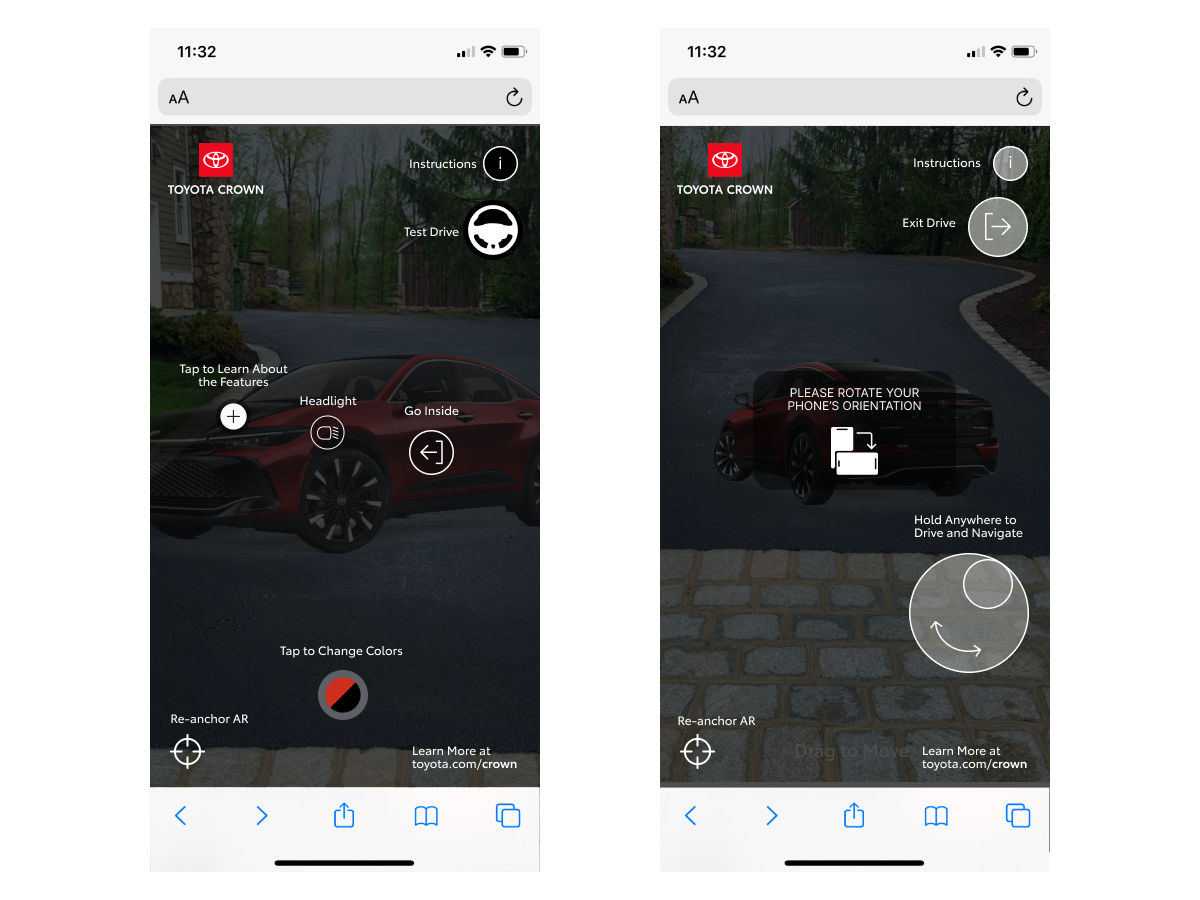
Zero-install AR
Full vehicle exploration from a QR scan — no app, no waiting.
Spatial mode transitions
Moving between exterior, interior, and driving feels physical, not screen-based.
Preference telemetry
Color and feature interactions captured as consumer insight.
The trade-off — I chose browser reach over native fidelity. WebAR caps visual quality, but a zero-install experience was worth more than the last 10% of rendering.
What I'd improve — the virtual test drive was the shallowest of the three modes; I would deepen its physics and feedback before adding anything new.
Next time — platform, access model, and entry point shape everything downstream — the most consequential design decisions happen before the first screen is drawn.