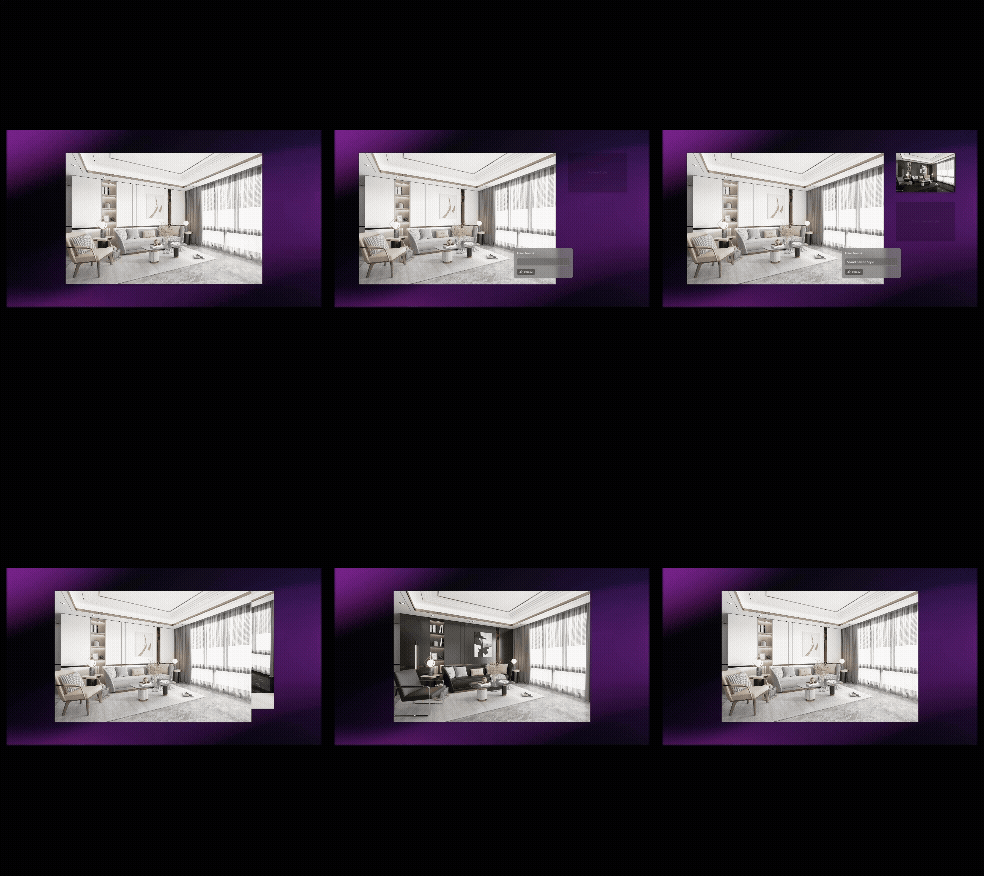
Deco AI — Virtual Staging Users Can Trust
AI staging and cleanup for virtual tours — real-estate professionals turn occupied rooms into aspirational listings without re-shooting, and without misrepresenting.

Real rooms rarely photograph like listings — and staging costs thousands per property.
Business
- Create a premium revenue stream for VR Maker
- Offer a scalable alternative to physical staging
User
- Present potential without misrepresenting reality
- Regenerate freely without losing good results
Technical
- Paid generation credits — every run costs money
- AI output must live inside an existing viewer
Trust is the product
The line between enhancement and misrepresentation is professional liability for agents.
AI unpredictability
Results vary — the UX must absorb bad generations gracefully.
Bolt-on risk
The feature had to feel native to a mature viewer, not attached to it.
Paid generations
Every credit spent must feel controlled and worthwhile.
I designed the AI experience end to end — from framing to monetization.
Owned
- AI Feature UX
- Generation Workflow
- Viewer Integration
- Credit & Purchase Flow
Collaborated with
- Product Manager
- Platform Director
- Engineering
Making AI feel like a tool, not a trick.
A presentation tool, not an editor
Image manipulation reads as fabrication in property marketing.
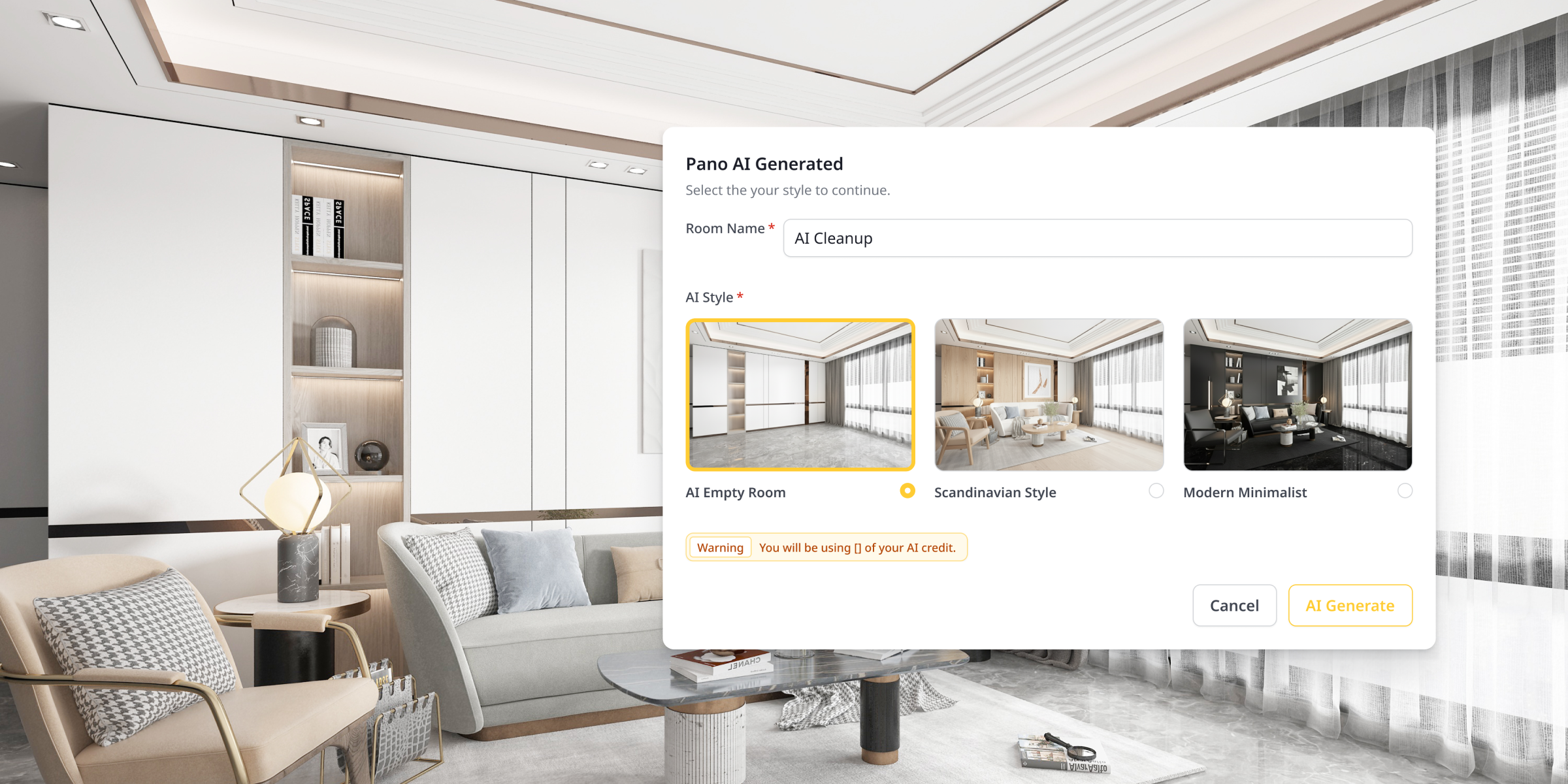
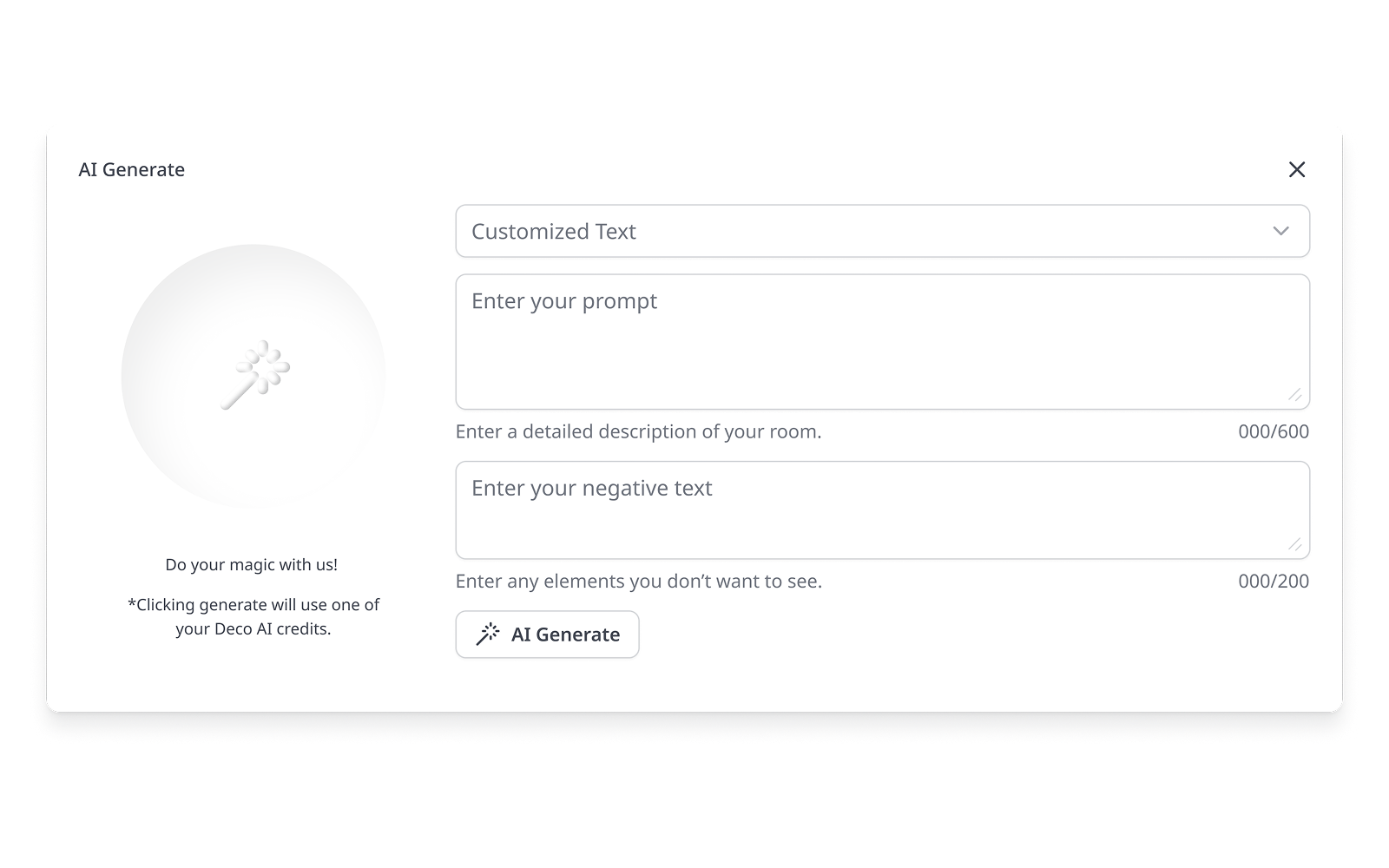
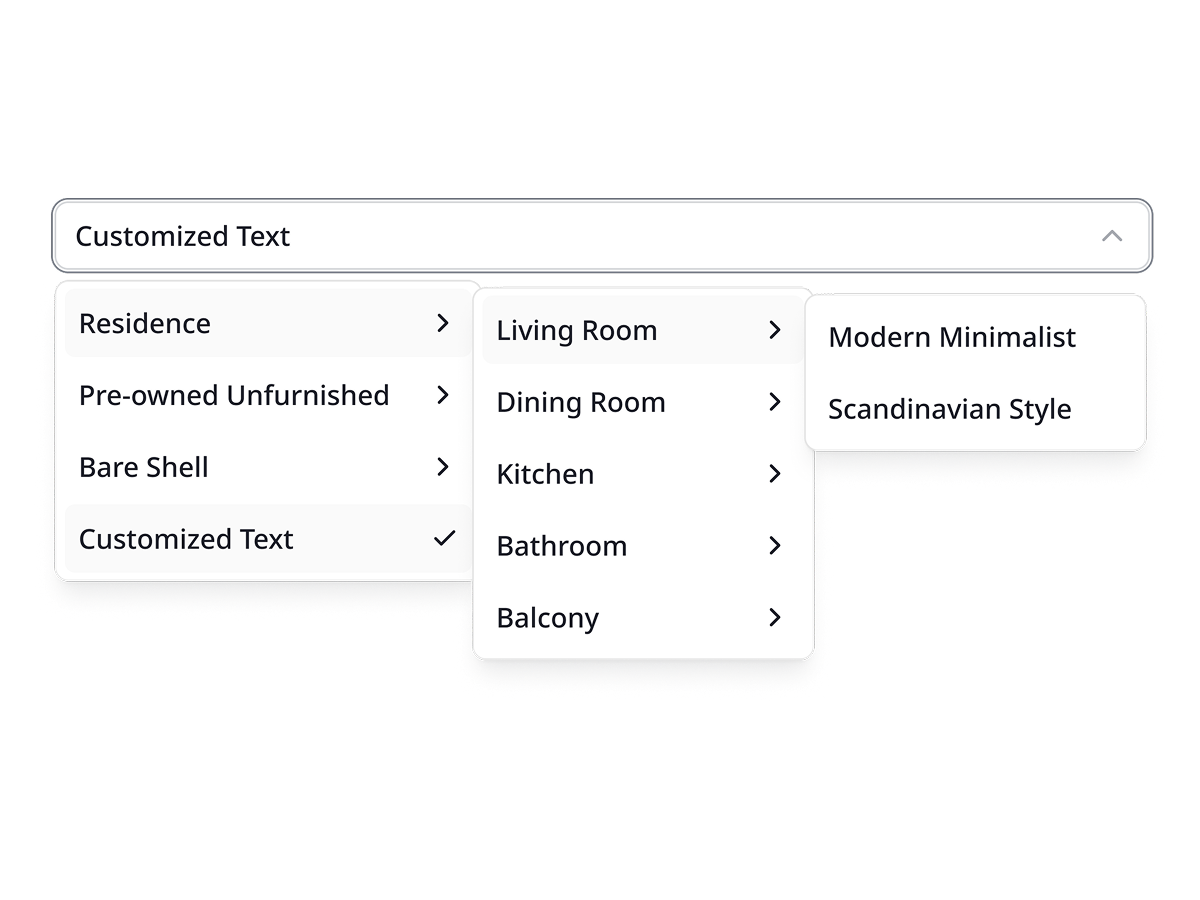
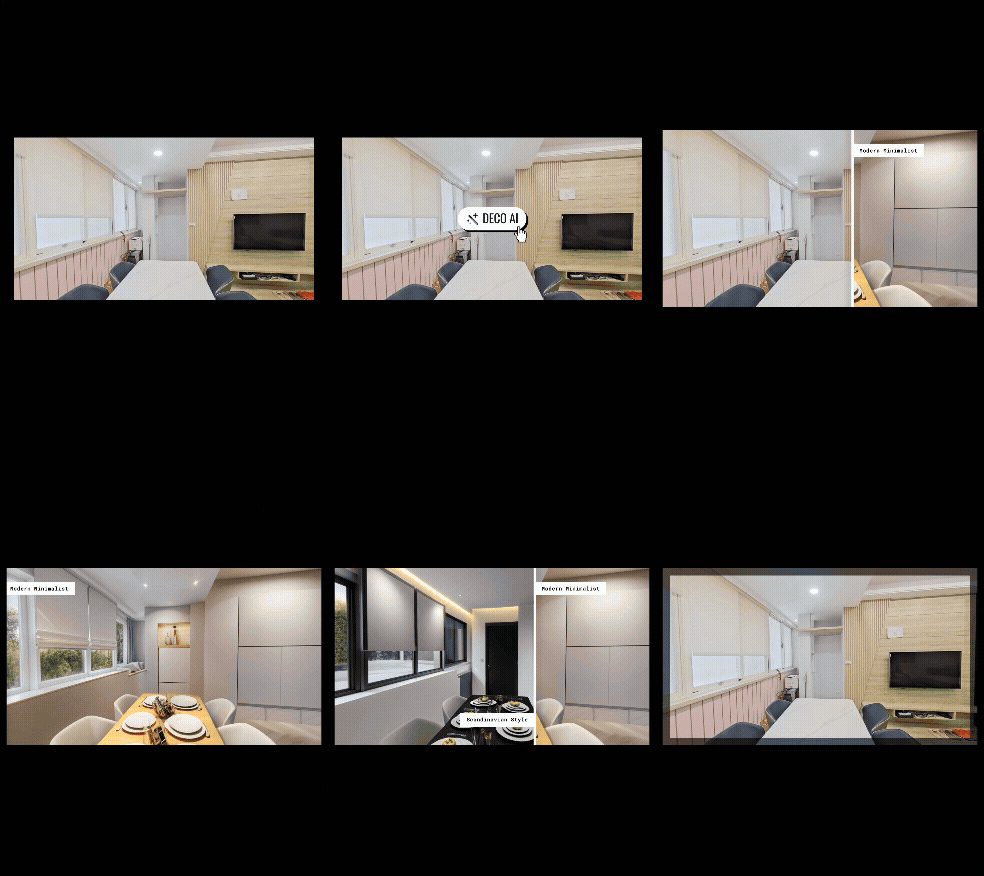
Frame Deco AI as showing style options: pick a room, pick a style, generate, compare.
Agents show clients potential — an ethical distinction that also simplified the UX.
No editing controls to learn; staging became a styling choice.
The original is always one tap away
AI output disconnected from its context breeds distrust.
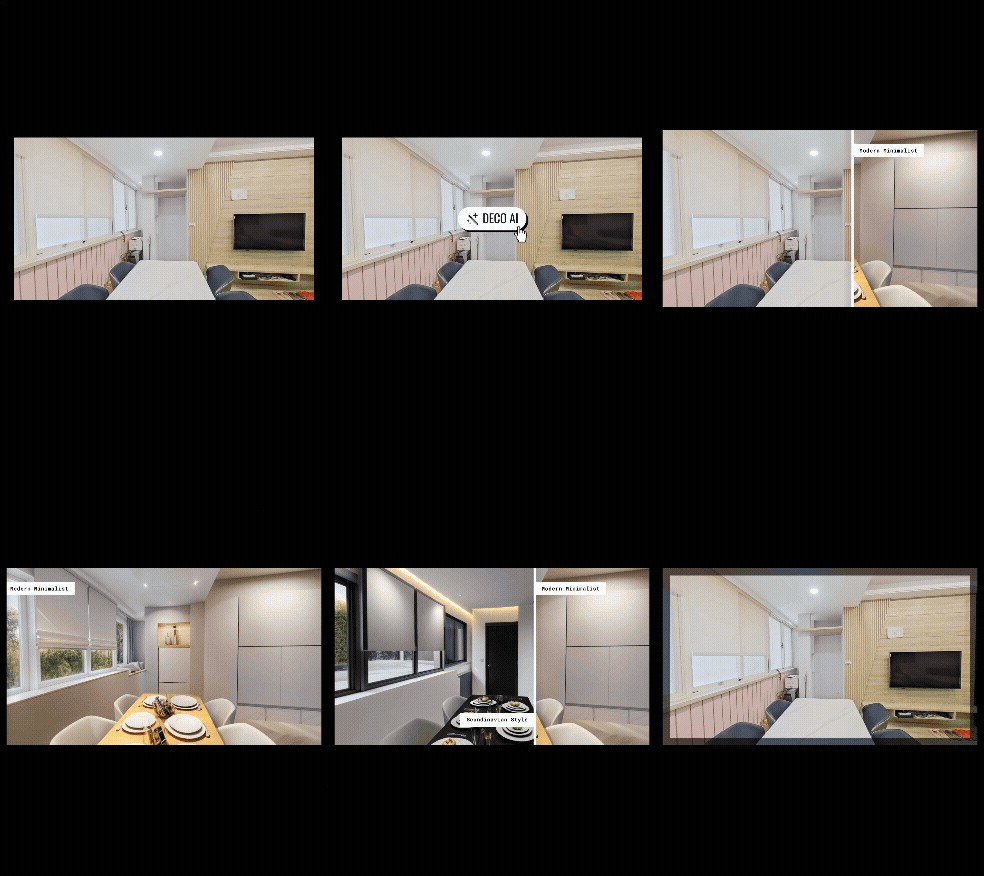
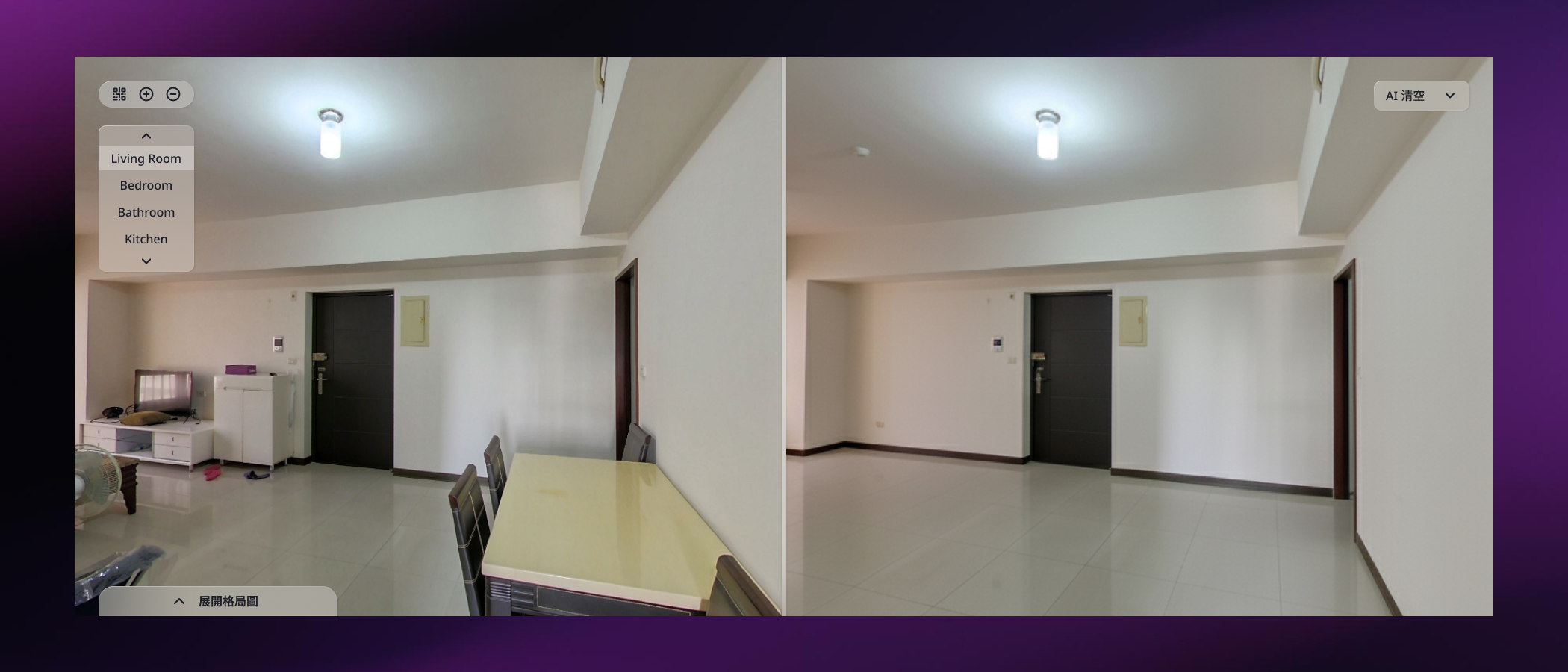
Generated versions live inside the tour viewer, toggled against the original panorama.
Reality stays accessible; possibility is a dropdown, not a replacement.
AI staging reads as a natural part of the tour.
Non-destructive, always
Paid credits plus irreversible actions equals user anxiety.
Every generation is preserved in history; regeneration never overwrites.
There is no wrong choice when nothing is permanent.
70% credit utilization — users experiment with confidence.
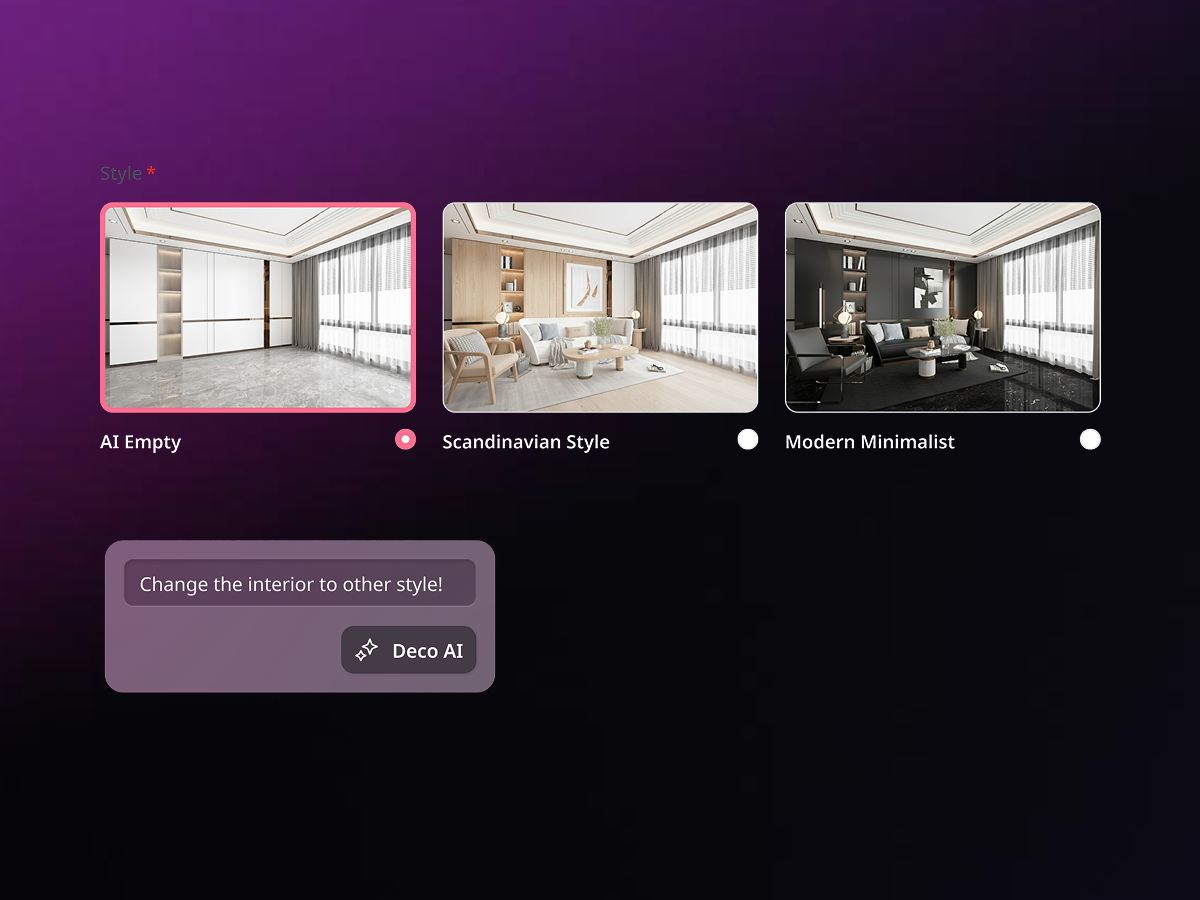
Style-first generation
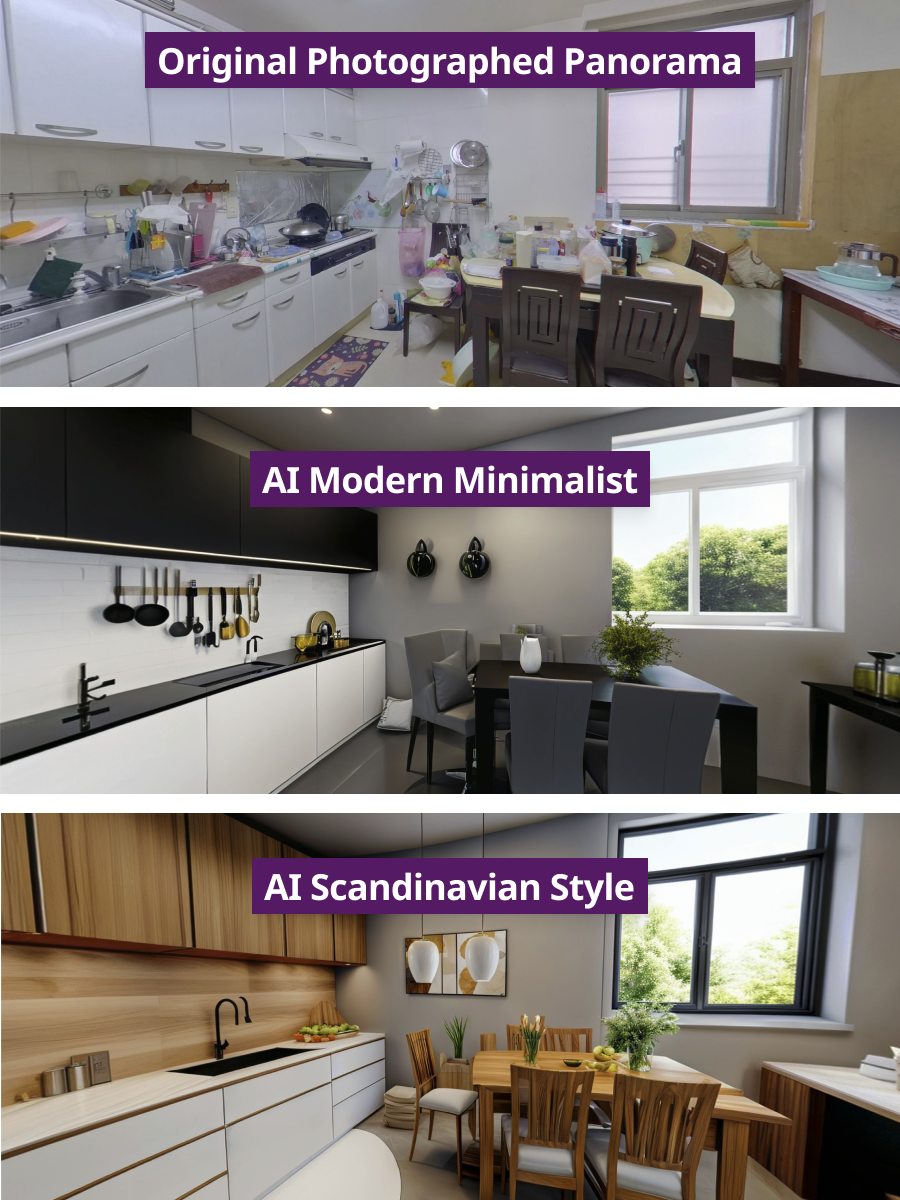
Choose an aesthetic before generating — multiple variations from one panorama.
In-viewer comparison
Tour visitors toggle original and AI-styled rooms in place.
Transparent credits
Balance, low-credit warnings, and top-ups inside the workflow.
The trade-off — I constrained the feature to style selection instead of open-ended editing. Power users asked for finer control, but the constraint is what kept results trustworthy and the UX simple.
What I'd improve — style discovery. Thumbnails preview aesthetics, but showing each style applied to the user's own room before spending a credit is the obvious next step.
Next time — AI features earn adoption through trust mechanics — history, transparency, reversibility — before they earn it through output quality.