Tattooed Chef — Navigation That Sells Food
A one-month navigation and discovery redesign for a plant-based food brand — reorganized around how shoppers think, built entirely on Shopify-native architecture.

A lifestyle brand whose website didn't reflect its food.
Business
- Align the storefront with the brand's identity
- Serve seasonal campaigns without developer time
User
- Shoppers think in meals, not SKU categories
- Find a specific product type in seconds
Technical
- Shopify-native only — no custom backend
- One-month timeline, end to end
Internal taxonomy exposed
The catalog was organized for the company, not the customer.
One month, no slack
Every idea validated against Shopify constraints before sketching.
Appetite as UX
Frozen food sells through imagery, not copy.
Marketing needs too
Featured products and seasonal rotations inside the same structure.
I redesigned discovery end to end — taxonomy, navigation, and the CMS behind it.
Owned
- Navigation Strategy
- Discovery UX
- Shopify CMS Framework
- Content Guide
Collaborated with
- Creative Director
- Tattooed Chef Marketing
Discovery-first e-commerce.
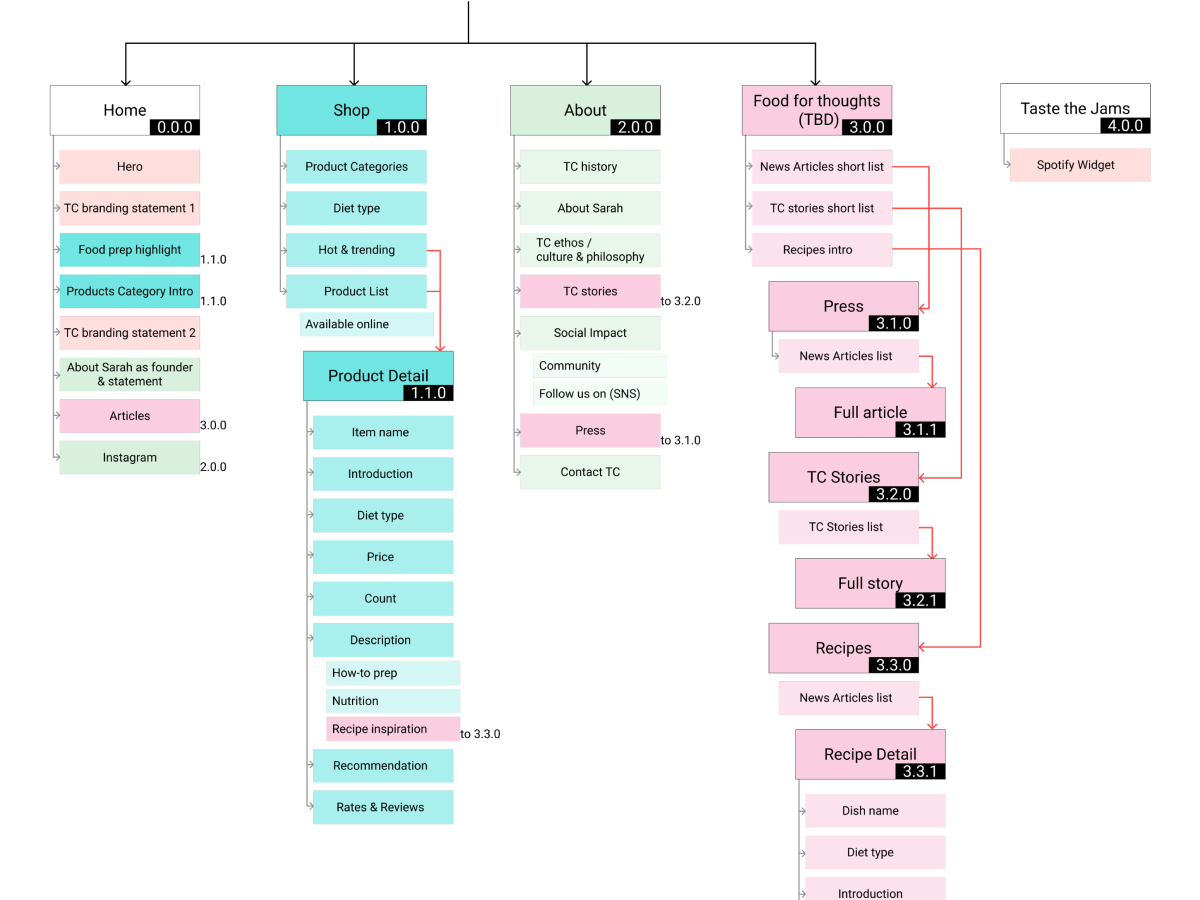
Let the catalogue name its own categories
Over a hundred products, and no agreed way to group them — shoppers landed on a flat grid and had to do the sorting themselves.
Run a Python analysis across the whole catalogue to find the types and categories the products genuinely fall into, and build the navigation from what it returned.
A structure derived from the catalogue keeps working as products are added; one invented in a workshop starts drifting immediately.
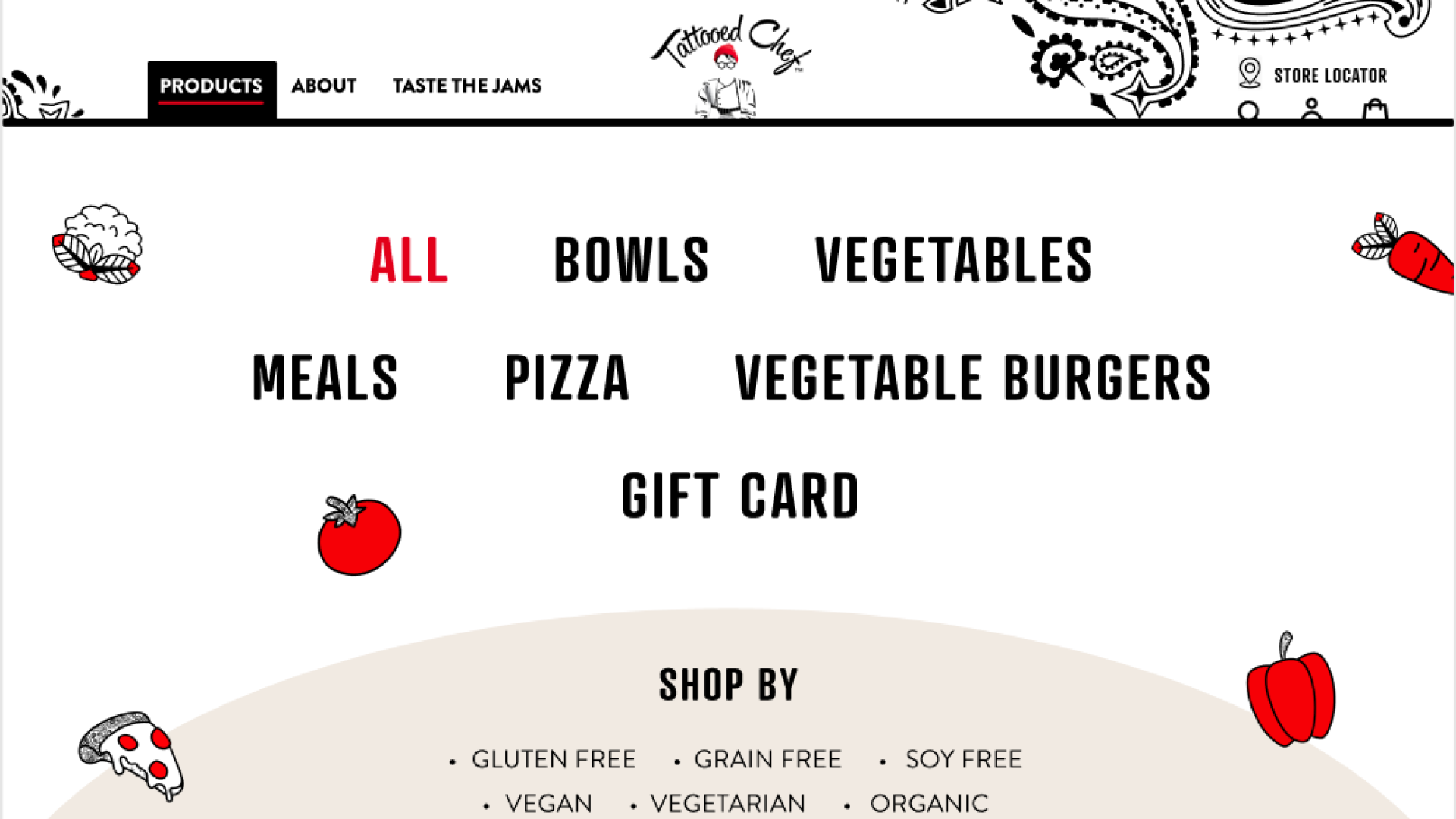
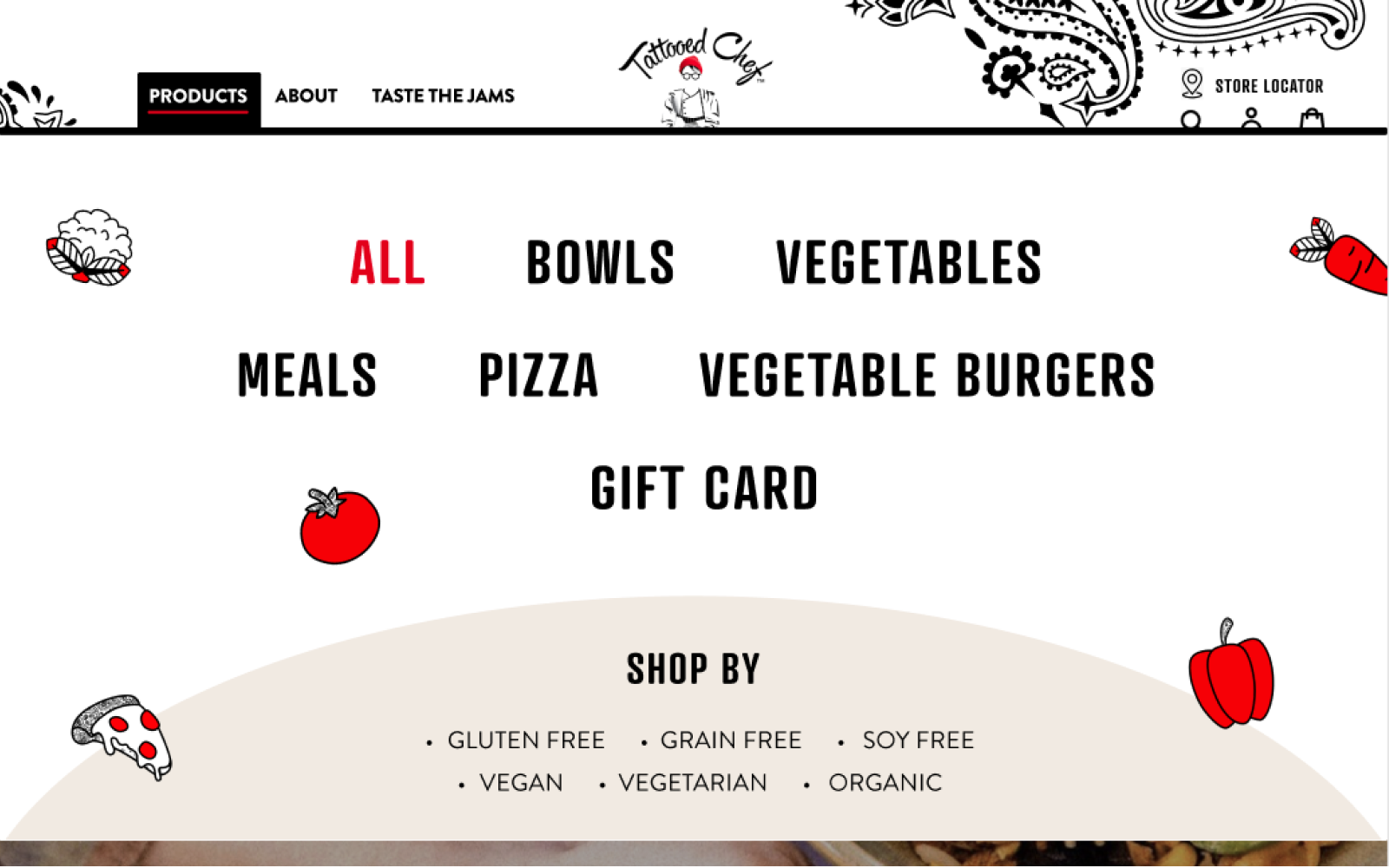
Category-first navigation shoppers could locate themselves in, instead of a wall of products.
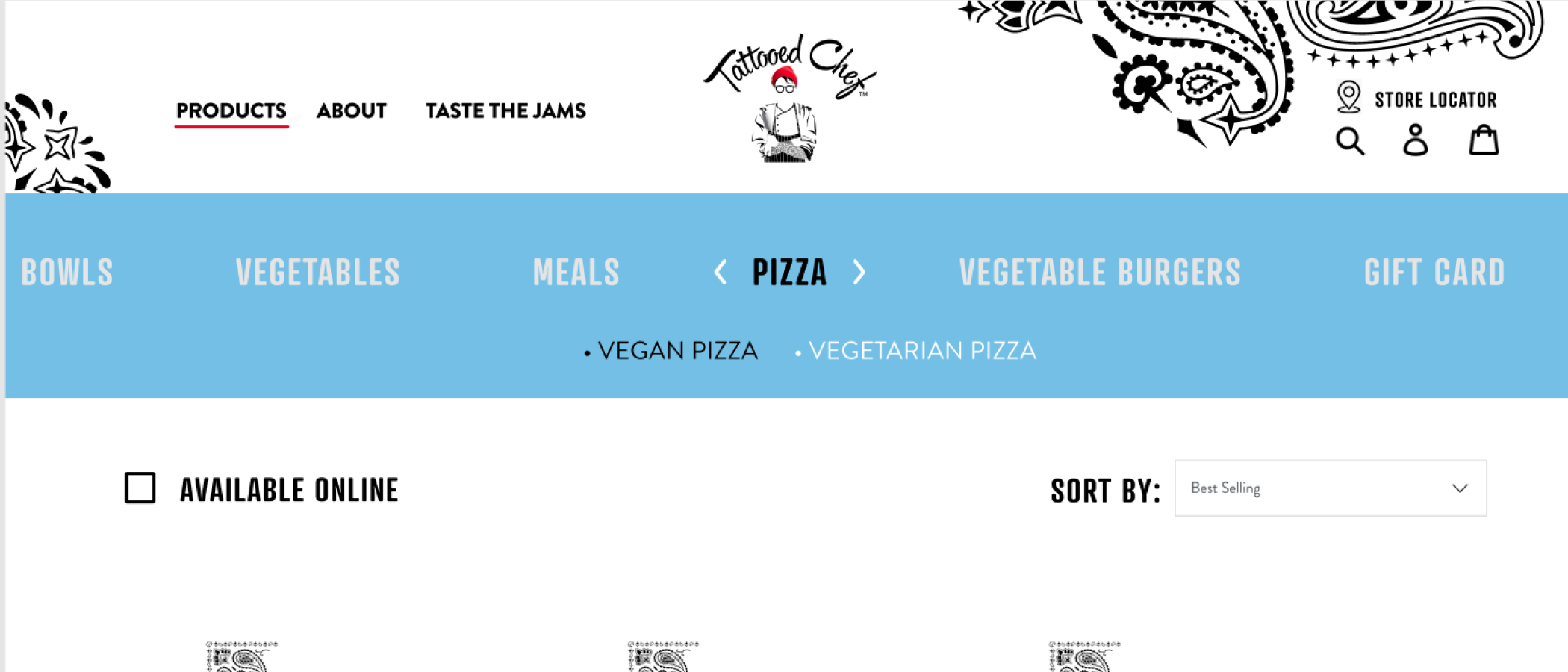
Show everything, flag what's in stock
The site had to present the full range, but not every product type was actually in stock to buy.
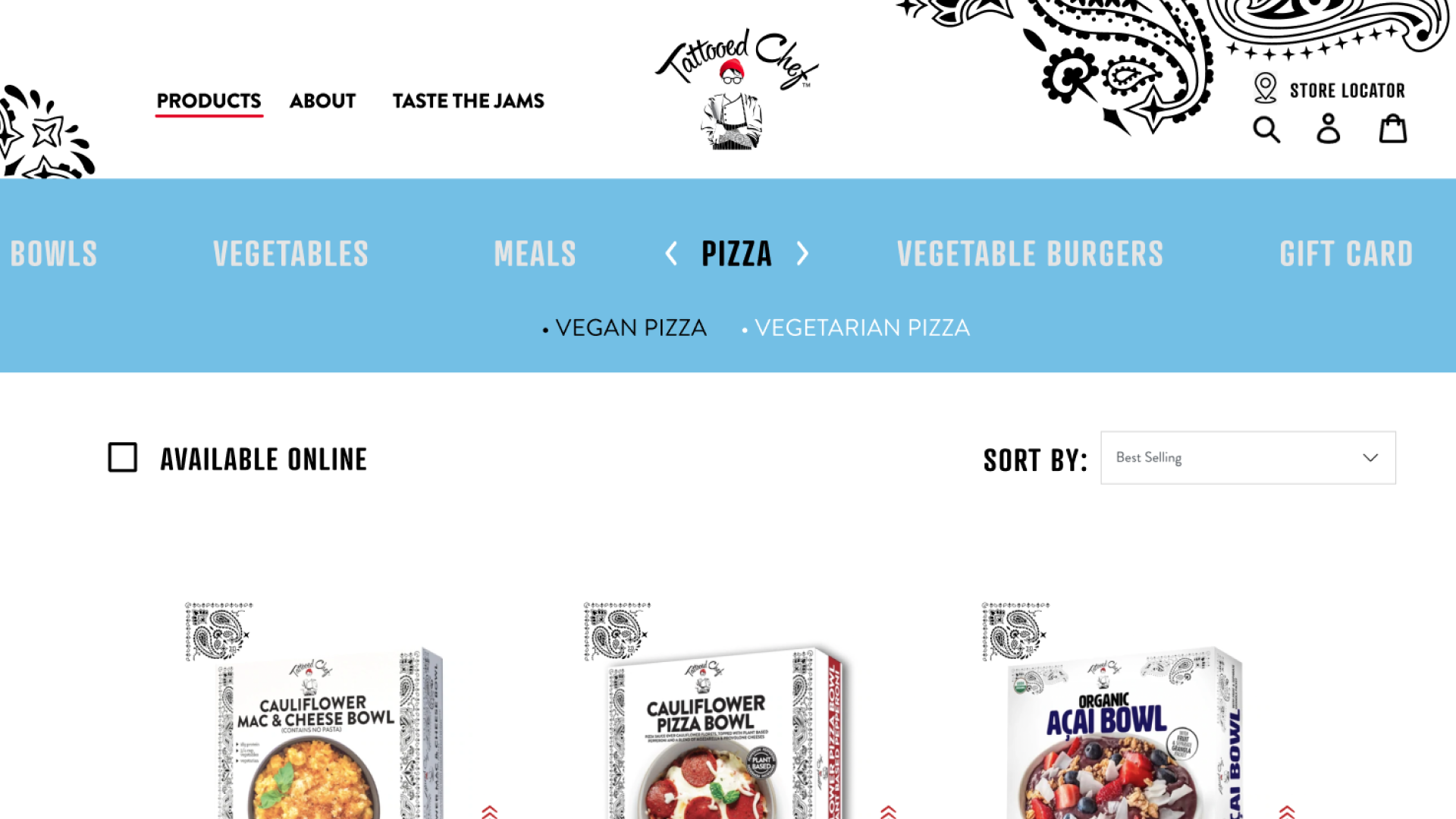
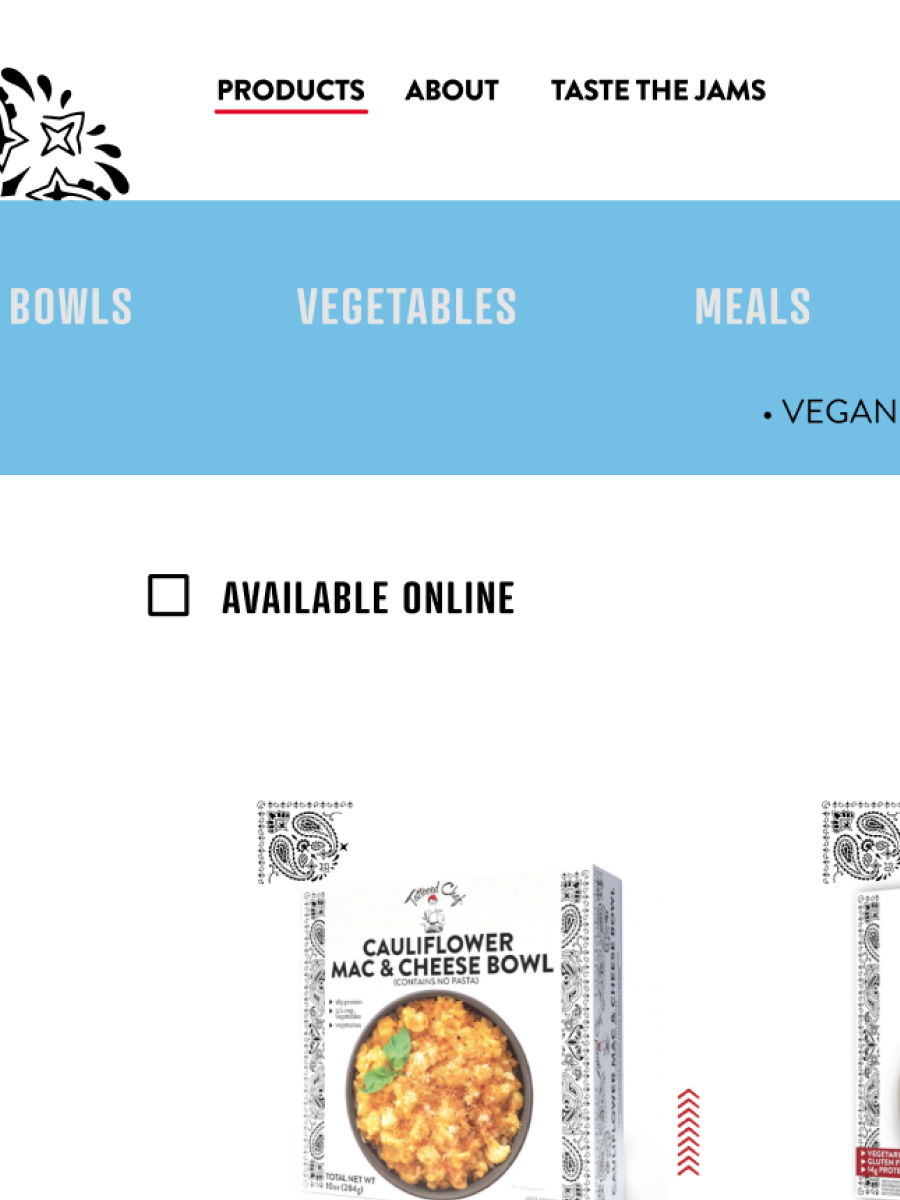
Keep the entire catalogue browsable and add an Available now checkbox that filters to what can be ordered today.
Hiding unavailable lines makes the range look thin; showing them without a filter spends the shopper's time on things they can't buy.
The full range stays visible, and buying intent lands on products that are actually there.
Catalog-in-navigation
Featured products, availability, and add-to-cart inside the nav.
Meal-occasion taxonomy
Categories matching how customers actually think about food.
Self-serve merchandising
Seasonal rotations managed without a developer.
The trade-off — I accepted Shopify's constraints as the design brief. Some discovery ideas died early, but nothing shipped that the platform — or the team — couldn't sustain.
What I'd improve — search. Category browsing improved dramatically, but on-site search still ran on defaults and deserved the same taxonomy work.
Next time — speed projects reward one ruthless focus — here, making food easier to find — and the discipline to defer everything else.