TAMED
Can a machine learn to calm the feelings you haven't noticed yet?

We dress our feelings before we feel them.
Every morning I choose what to wear in a few seconds and never think about it again. The colours, the layers, the things I reach for without deciding — they carry information I never examine.
So I built something to read that choice back to me. Not style advice: a diary written in colour instead of words, kept by a machine patient enough to notice what I was standing too close to see.
What if the colours you reach for are a language your subconscious speaks fluently and your conscious mind can't read?
What if a machine could notice the pattern before you needed it named?
What if self-knowledge starts with watching a habit rather than with introspection?
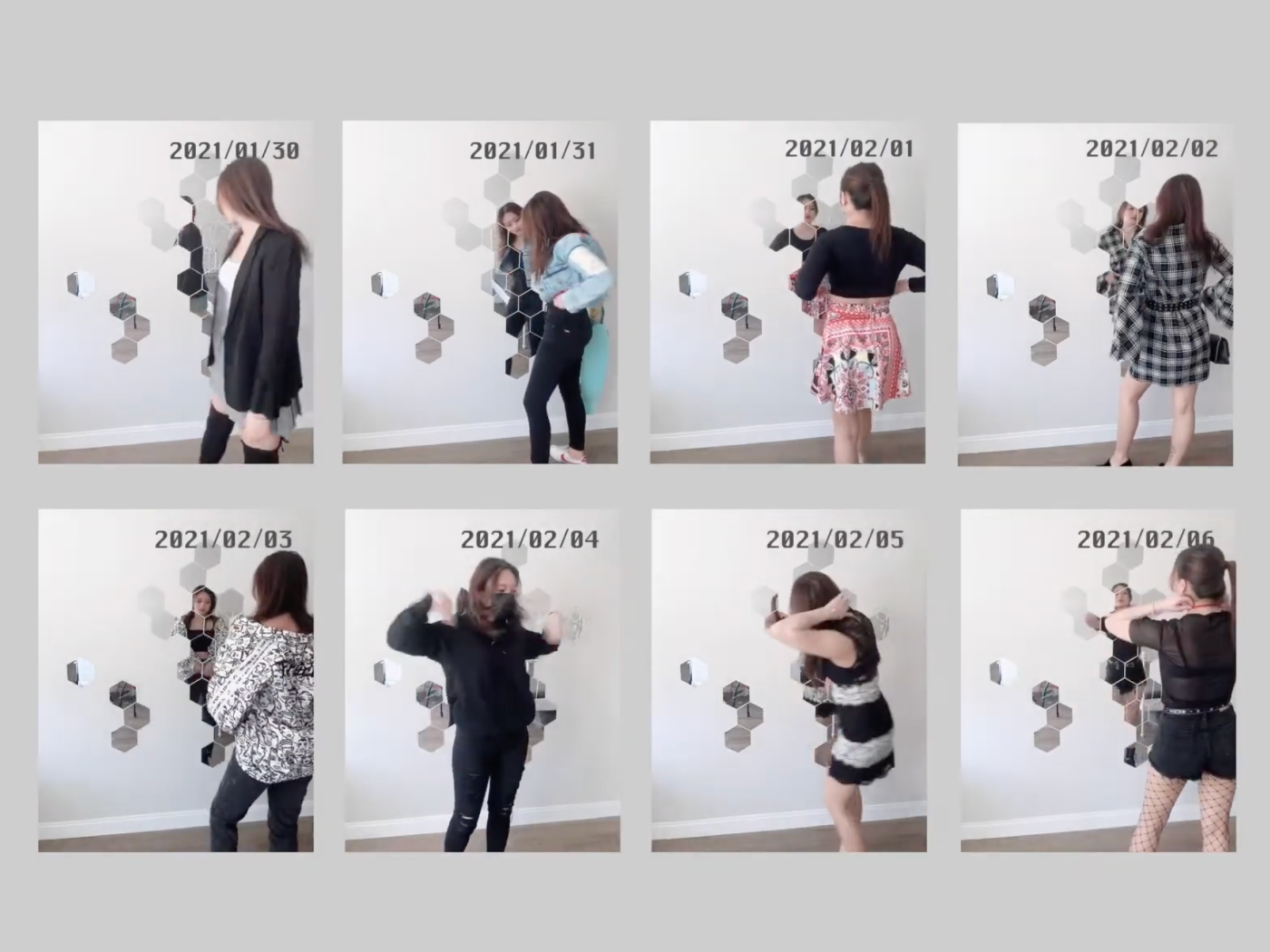
Making myself the material
For months I photographed what I was wearing each morning and kept a diary of how I felt beside it — two records, one visual and one written, neither allowed to explain the other. Patterns surfaced before any machine did: certain combinations gathering in the anxious weeks, others in the calm ones. The watching was already doing something. I wanted to know whether it could be read.
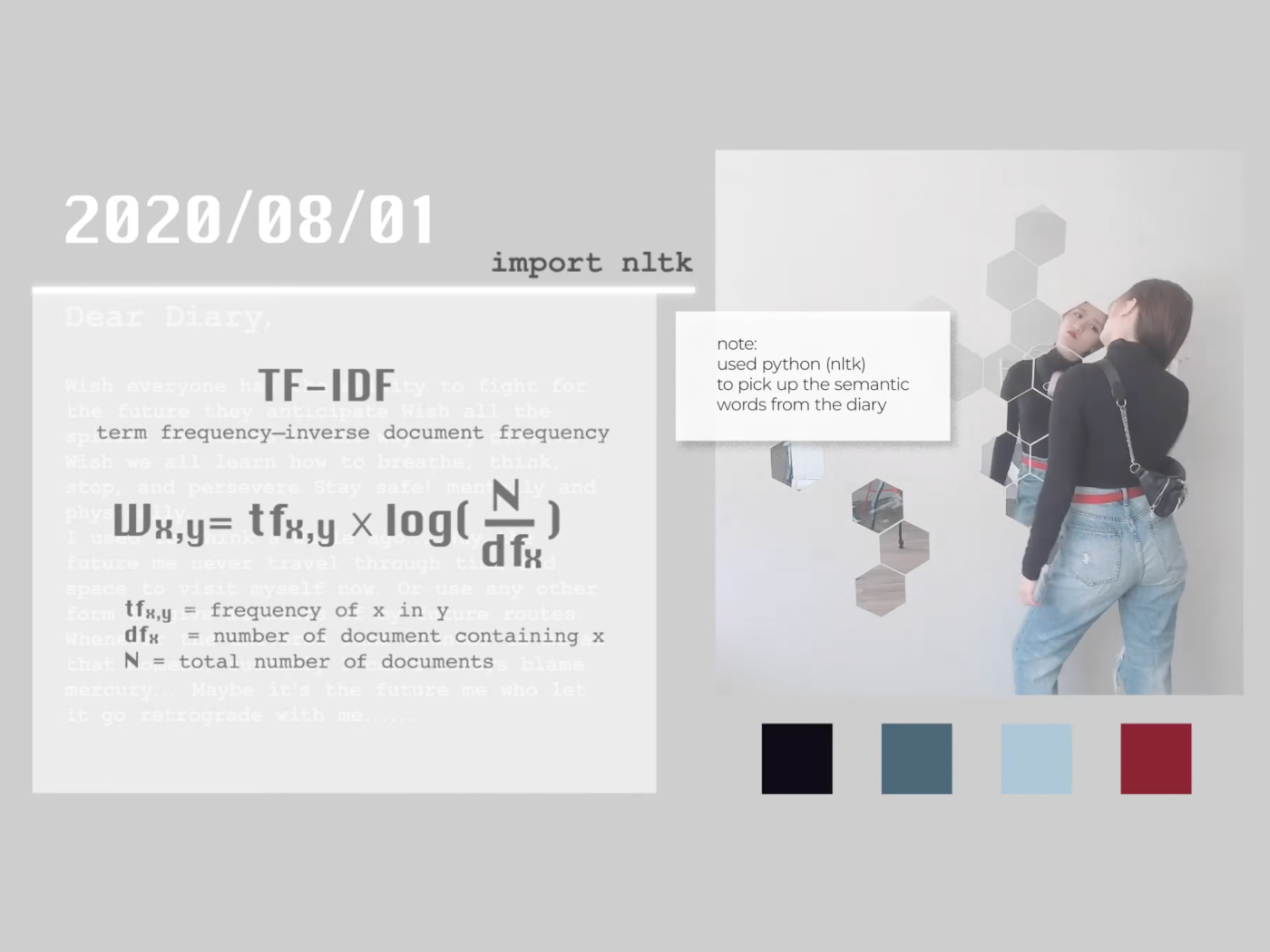
Teaching it my vocabulary
I built a system that read the colour composition of each outfit against the diary entries. What it learned was never colour theory — it was my own emotional vocabulary, spoken in clothing. It predicted my mood from colour alone more accurately than I was comfortable with.
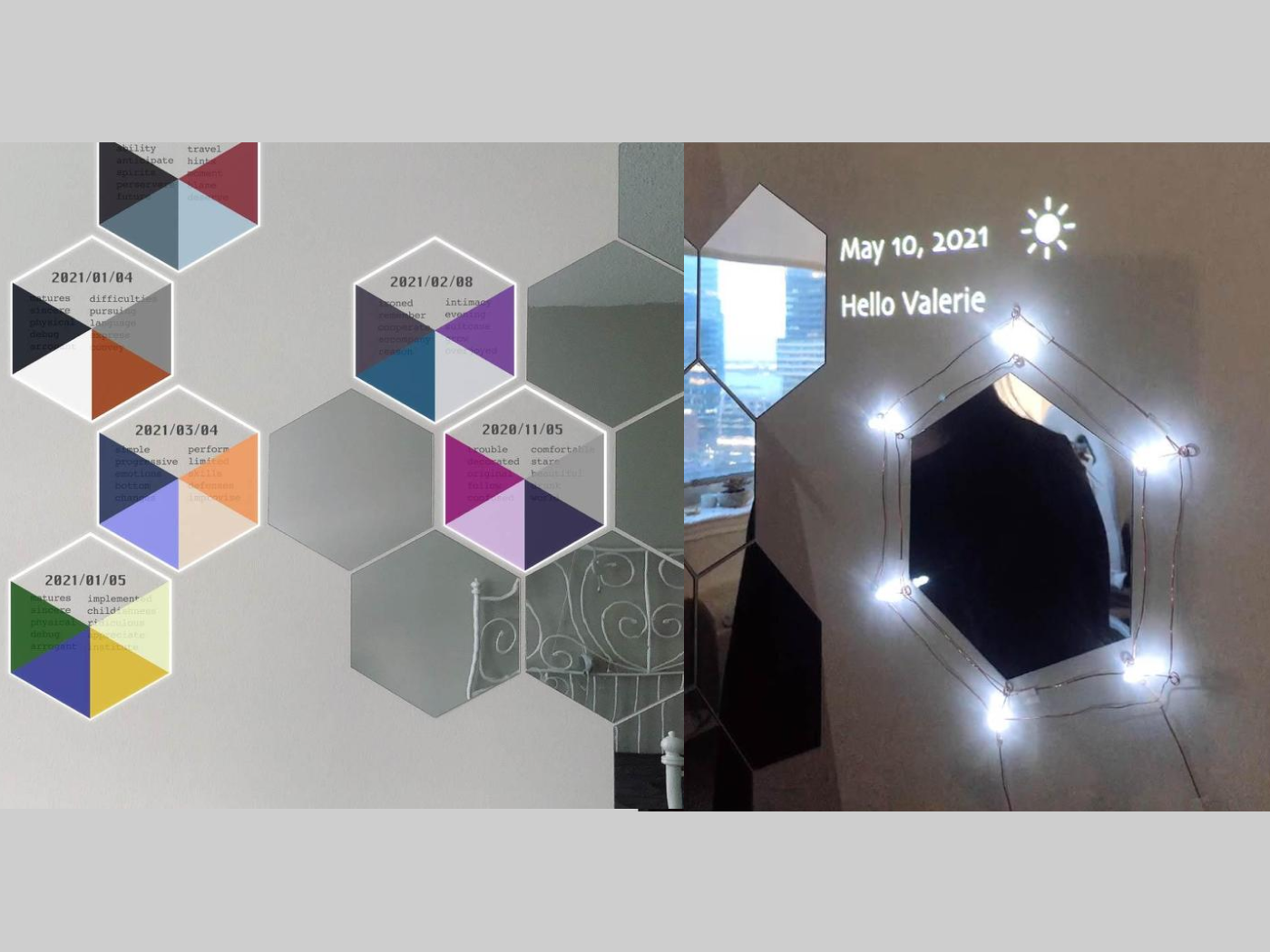
A line that reflects, not diagnoses
The output is a tamed quote: a sentence generated where what I wore meets what I felt. It doesn't score or prescribe. It holds a mirror to a state I might not have recognised, and then stops. Shown at PARALLEL, it left visitors to consider their own unconscious expressions.
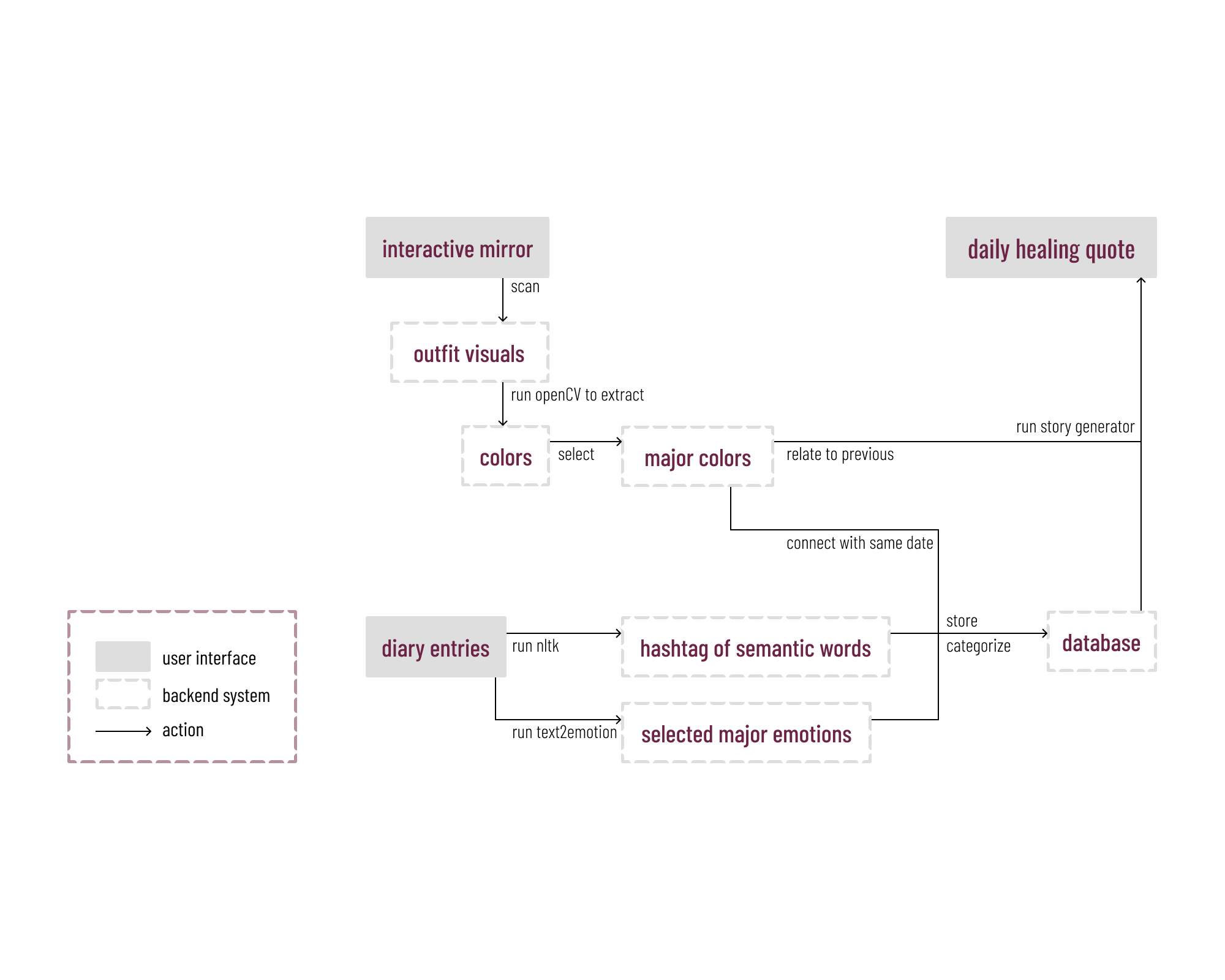
Why a machine, and not a journal?
A journal asks you to know first — you have to name the feeling before you can write it down. This works in the opposite direction: it watches behaviour and surfaces the feeling underneath.
Showing it as an installation was the whole point. My emotional record on a wall, photographs beside generated lines, put a distance between me and my own year — and that distance is what made it legible.
Machine learning installation with color analysis and generative text
Outfit photographs, each answered by a single line.
The finished piece sets the record beside its reading: the morning as photographed, and the sentence the system drew from it. Nothing on the wall advises or scores. Visitors at PARALLEL walked the sequence and were left to make the connection themselves.
We dress feelings before we feel them
Colour combinations correlated with the states the diary had already recorded — what I'd suspected but couldn't prove. The choice carries the feeling before language arrives.
Recognition, not diagnosis
Receiving a line about a state I hadn't consciously processed felt like being understood rather than assessed. Visitors described the same thing, catching their own habits inside someone else's record.
Machines can extend empathy
It never understood anything. It surfaced patterns precise enough that I could tell when it was wrong, and that was exactly what made it worth listening to.
We dress our feelings before we feel them — the most honest diary I ever kept was my closet.